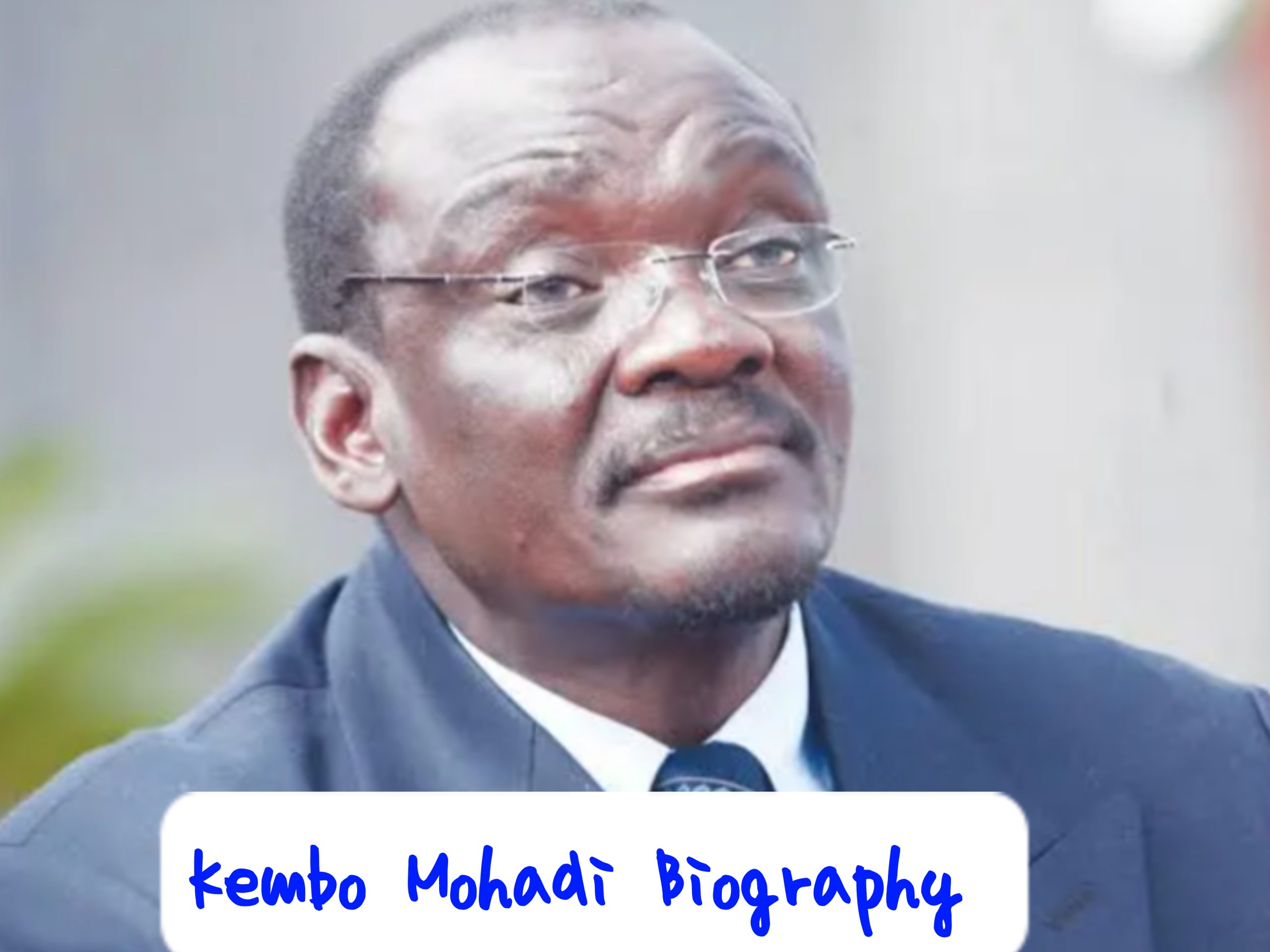
Kembo Dugish Campbell Muleya Mohadi (born 15 November 1949) is a Zimbabwean politician who has served as Vice-President of Zimbabwe. He represents a key figure in the country’s post-independence political landscape, with deep roots in the liberation struggle and decades of service in senior government positions.
Mohadi’s career spans military involvement during the fight against colonial rule, parliamentary representation, and high-level ministerial roles focused on security and home affairs. His path reflects the broader history of Zimbabwe, from the armed struggle to nation-building efforts amid economic and political challenges. He maintains strong ties to his home region in southern Zimbabwe.
Kembo Mohadi Early Life
Kembo Dugish Campbell Muleya Mohadi was born on 15 November 1949 in Beitbridge, in what was then Southern Rhodesia and is now Zimbabwe. Beitbridge lies in Matabeleland South Province, near the border with South Africa. This location shaped much of his early experiences.
Beitbridge serves as a busy commercial hub with significant cross-border trade. The area features ethnic diversity, including Ndebele, Venda, and other groups. Growing up here exposed Mohadi to practical issues of security, resource management, and community relations in a multi-ethnic setting influenced by regional trade and occasional tensions.
Mohadi came from a family of six children, with three sons and three daughters. His father, Sukumani Dugishi Mohadi, passed away in early 2007. Family bonds provided important support during his formative years. The border environment fostered self-reliance and an early awareness of administrative and security matters.
Kembo Mohadi Education
Mohadi began his primary education at Mtetengwe Primary School in Beitbridge, attending from Sub A to Standard One. He continued at Gwanda Primary School for Standard Two. For secondary education, he enrolled at Manama Secondary School in Matabeleland South but did not complete his studies after expulsion. Some accounts mention time at Goromonzi High School where he was also asked to leave while in Form Three.
Formal higher education records remain limited. His later achievements stemmed more from practical experience in the border region and involvement in the liberation struggle than from extended academic pursuits. This background highlights how many leaders of his generation prioritized national service over conventional schooling paths.
Kembo Mohadi State of Origin
Mohadi hails from Beitbridge in Matabeleland South Province, specifically areas like Mtetengwe village, about 25-40 kilometers west of the town along the Bulawayo highway. This region forms part of Zimbabwe’s southern borderlands, characterized by arid to semi-arid conditions, livestock farming, and vibrant informal trade with South Africa.
The area has historical significance in trade routes and cultural exchanges. Communities here include Venda and Ndebele influences, with economies reliant on cross-border activities, agriculture, and small-scale enterprises. Mohadi’s origins in this dynamic yet challenging environment influenced his focus on border security and regional development throughout his career.
Beitbridge remains central to his identity. Local initiatives, such as plans for Mohadi Square in the town’s central business district, recognize his contributions. He has supported community projects, including donations to local schools like Beitbridge Mission Primary School.
Kembo Mohadi Liberation Struggle Involvement
Mohadi joined the liberation struggle in the early 1970s, around age 27, leaving for Zambia via Botswana. He received military training in Zambia and further intelligence training in Russia (with KGB involvement) and possibly Egypt. He served as an urban warfare intelligence operator with ZIPRA, the military wing of ZAPU under Joshua Nkomo.
Upon return, he worked in the Zimbabwe Intelligence Services under ZAPU. Rhodesian forces arrested him in Bulawayo around 1975-1976. He endured detention and reported torture at Khami Prison until his release at independence in 1980. This period tested his commitment and contributed to his credentials as a war veteran.
After independence, Mohadi played roles in post-war reconciliation, including efforts following the 1987 Unity Accord between ZANU and ZAPU. He helped integrate former structures and supported broader nation-building. His experiences in intelligence and logistics during the war informed his later security-focused portfolios.
Kembo Mohadi Political Career
Mohadi entered politics after independence. He represented the Beitbridge East constituency as a Member of Parliament, winning seats in elections such as 1985 under PF-ZAPU with a strong margin. He maintained representation in the area for many years.
Early roles included Deputy Minister of Sport and Recreation and Deputy Minister of Local Government. In August 2002, he became Minister of Home Affairs, serving until 2015 (co-minister during the 2009-2013 Government of National Unity with Giles Mutsekwa). He oversaw policing, immigration, and internal security during turbulent periods.
In 2015, President Robert Mugabe appointed him Minister of State for National Security. Following the 2017 political transition, Emmerson Mnangagwa named him Minister of Defence, Security and War Veterans briefly. On 23 December 2017, Mohadi became Vice-President of ZANU-PF and was sworn in as Second Vice-President of Zimbabwe on 28 December 2017.
As Vice-President, he handled national security, peace, and reconciliation portfolios. He survived an explosion at a 2018 rally in Bulawayo, described as an assassination attempt targeting the leadership. Mohadi resigned on 1 March 2021 but was reappointed as Second Vice-President on 8 September 2023. He also serves as Second Secretary of ZANU-PF.
Kembo Mohadi Ministerial Roles
Under Home Affairs, Mohadi addressed border control, crime, and public order. During the unity government, the co-minister arrangement aimed to build trust across parties. Post-2013, he resumed sole responsibility.
As National Security Minister, he focused on internal threats and intelligence. The Defence role was short but aligned with his veteran background. These positions emphasized stability amid economic sanctions and political transitions.
Kembo Mohadi Vice Presidency
Mohadi’s first Vice-Presidency (2017-2021) involved oversight of security and support for national development. He promoted team efforts in government. Reappointment in 2023 reaffirmed his standing within ZANU-PF.
In recent years, as Acting President at times, he has spoken on infrastructure, agriculture (including Pfumvudza/Intwasa and wheat production), digital transformation, and regional cooperation. He led delegations, such as to Expo 2025 in Japan, and advocated for African self-determination.
Kembo Mohadi Awards
Mohadi received recognition for his liberation role and public service. Great Zimbabwe University conferred an honorary Doctor of Social Sciences in Leadership (Honoris Causa) in October 2025. He accepted it as tribute to collective contributions.
Other honors include the Induna Matshe Leadership Excellence Award in 2025 for loyalty, leadership, and agricultural contributions. These awards highlight his veteran status and long service.
Kembo Mohadi Contributions to Zimbabwe
Mohadi contributed to security sector stability, border management, and post-independence reconciliation. He supported unity efforts after the 1987 Accord and worked on practical governance issues like crime prevention and regional trade facilitation.
In agriculture and development, he backed modernization programs and community projects in Matabeleland South. His advocacy for ICTs, education digitization, and infrastructure aligns with national goals for upper-middle-income status by 2030.
He emphasized honoring liberation heroes, including those in unmarked graves, and promoted inclusive development focusing on women and youth.
Kembo Mohadi Personal Life
Mohadi married Tambudzani Muleya Budagi in 1981; the marriage ended in divorce in 2017. In 2018, he married Catherine Muleya. He has six children, including son Campbell Trevor Mohadi and daughter Abigail Millicent Mohadi Ambrose, an accountant appointed as a Zimbabwe Electoral Commission commissioner.
Family life faced public scrutiny during his divorce and later events. Mohadi engages in farming in Matabeleland South. He maintains connections to his roots through local initiatives.
Kembo Mohadi Controversies
In February 2021, leaked audio recordings alleged Mohadi solicited sexual favors from women, including subordinates and married individuals. He denied the claims, citing voice cloning, political sabotage, and character assassination. He resigned on 1 March 2021 to protect the government’s image while vowing to clear his name.
The episode sparked public debate on accountability. Mohadi maintained his innocence and returned to senior roles later. Such incidents reflect broader challenges in Zimbabwean politics.
Conclusion
Kembo Mohadi’s journey from Beitbridge to national leadership embodies resilience shaped by the liberation struggle and dedication to public service. His career includes security governance, parliamentary representation, and vice-presidential duties through Zimbabwe’s evolving political eras. While facing personal and political hurdles, he continues contributing to development discussions on security, agriculture, and regional integration. His story ties closely to Zimbabwe’s history of independence, unity, and ongoing nation-building.
FAQs
Who is Kembo Mohadi?
Kembo Mohadi is a Zimbabwean politician and Vice-President known for his roles in the liberation struggle and various government positions focused on security.
When and where was Kembo Mohadi born?
He was born on 15 November 1949 in Beitbridge, Zimbabwe.
What political party does Kembo Mohadi belong to?
He belongs to ZANU-PF and serves as its Second Secretary.
What major positions has Kembo Mohadi held?
Key positions include Minister of Home Affairs, Minister of National Security, Minister of Defence, Security and War Veterans, and Vice-President.
What happened in Kembo Mohadi’s 2021 resignation?
He resigned amid allegations from leaked audio recordings, which he denied as fabrication and sabotage.
Does Kembo Mohadi have children?
Yes, he has six children.
What awards has Kembo Mohadi received?
He received an honorary doctorate from Great Zimbabwe University and the Induna Matshe Leadership Excellence Award.