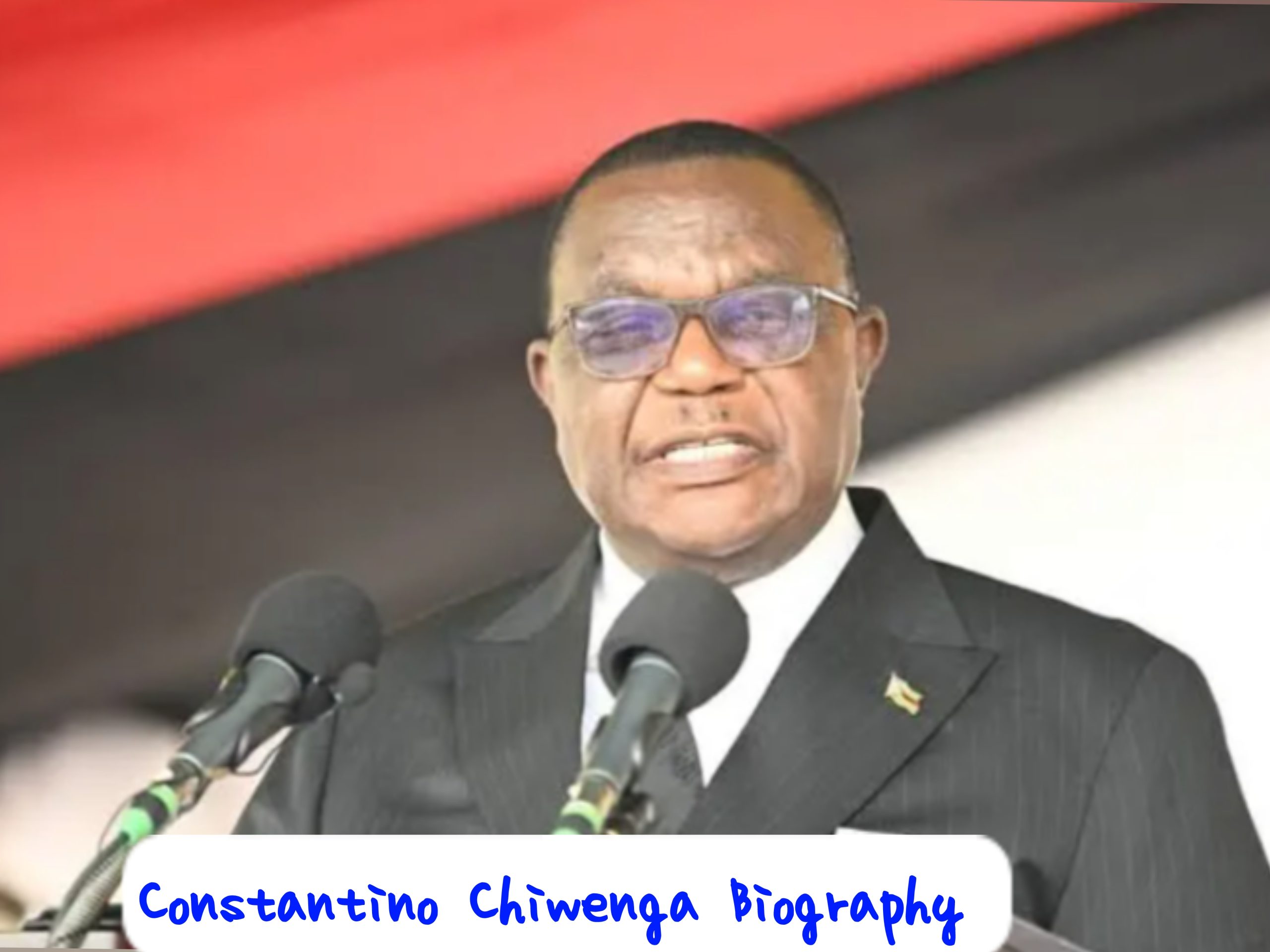
Constantino Guveya Dominic Nyikadzino Chiwenga (born Constantine Guveya Chiwenga on 25 August 1956) is a prominent Zimbabwean politician, former army general, and the current First Vice-President of Zimbabwe. He has played a central role in the country’s military and political history, from his participation in the liberation struggle against colonial rule to leading key aspects of the 2017 transition that removed long-time President Robert Mugabe from power. A veteran of the Zimbabwe African National Liberation Army (ZANLA), Chiwenga rose through the ranks of the post-independence military to become Commander of the Zimbabwe Defence Forces before entering civilian politics.
His career reflects dedication to national service, marked by strategic leadership during turbulent times, contributions to regional stability, and efforts to address governance and health challenges in the Second Republic under President Emmerson Mnangagwa. Chiwenga’s journey from rural Mashonaland East to the highest levels of state leadership highlights themes of resilience, military discipline, and political evolution in Zimbabwe’s post-colonial era.
Constantino Chiwenga Early Life
Constantino Guveya Dominic Nyikadzino Chiwenga was born on 25 August 1956 in Wedza (now Hwedza) District, Mashonaland East Province, in what was then the Federation of Rhodesia and Nyasaland (later Southern Rhodesia, now Zimbabwe). He comes from a Shona background in a rural area where many families faced the hardships of colonial rule, including limited access to land, education, and economic opportunities.
Hwedza District lies in the Mashonaland East region, known for its agricultural potential and strong cultural ties among Shona communities. During the colonial period, residents experienced restrictions typical of the era, which fueled broader resistance movements. Chiwenga’s early environment instilled values of community, perseverance, and awareness of social injustices that later shaped his path into the liberation struggle. He grew up in a period of increasing political awareness as African nationalism gained momentum across the continent.
Chiwenga attended St Mary’s Mission in Hwedza for his early education, reaching O Level (Form 4). He studied alongside future military figures such as Perrance Shiri (later Air Marshal) and Shungurirai (later Brigadier General). This shared educational experience at a mission school, which often provided better opportunities than government institutions for African students, fostered lasting connections among a generation that would lead Zimbabwe’s armed forces. He left school around Form Three to join the liberation war, a common decision for many young patriots at the time.
Constantino Chiwenga Education
Chiwenga’s formal schooling at St Mary’s Mission provided a foundation in basic academics and exposure to discipline and moral values. Mission schools in colonial Rhodesia often blended education with Christian teachings and offered a relatively structured environment amid systemic inequalities. His classmates included individuals who later held senior military positions, underscoring the role of such institutions in nurturing future leaders.
After independence and during his military career, Chiwenga pursued higher education. He earned several advanced qualifications, demonstrating commitment to self-improvement. These include an Executive Diploma in Business Leadership, a First Class Master’s Degree in Business Administration from the Zimbabwe Open University, a Master’s Degree in International Relations from the University of Zimbabwe, and a Doctor of Philosophy (PhD) in Ethics from the University of KwaZulu-Natal in South Africa in 2015. His doctoral thesis reportedly examined ethical issues in international humanitarian missions, including alleged double standards by the United Nations Security Council.
On 29 July 2016, he formally changed his name to Constantino Guveya Dominic Nyikadzino Chiwenga, reflecting personal and cultural significance. His academic pursuits later in life complemented his practical military and political experience, equipping him with broader perspectives on leadership, ethics, and international affairs.
Constantino Chiwenga Military Career
Chiwenga’s military journey began in 1973 when he joined the liberation struggle as a teenager. He received training in Mozambique as a member of ZANLA, the armed wing of ZANU. Adopting the war name “Dominic Chinenge,” he rose through the ranks amid the intense Rhodesian Bush War. He served as Provincial Commander for Masvingo/Gaza Province, with George Chiweshe as deputy, and later became ZANLA Deputy Political Commissar under Josiah Tungamirai in the High Command by 1978. His involvement included logistical and political roles that supported guerrilla operations.
Following Zimbabwe’s independence in 1980, Chiwenga integrated into the new national army. In 1981, he was commissioned as a Brigadier commanding the First Brigade in Bulawayo. He advanced to Major General and, upon the formation of the Zimbabwe Defence Forces (ZDF) in 1994, became Lieutenant General and Commander of the Zimbabwe National Army (ZNA). In 2003–2004, after the retirement of General Vitalis Zvinavashe, he was promoted to full General and appointed Commander of the Zimbabwe Defence Forces, a position he held until 2017.
As ZDF Commander and chairman of the Joint Operations Command (JOC), Chiwenga oversaw coordination among the army, air force, police, intelligence, and prisons. He participated in the land reform program and benefited from it with a farm near Harare. His tenure involved maintaining military readiness and addressing internal security matters during politically challenging periods. He also engaged in regional operations, including contributions noted in peacekeeping or support contexts in places like Somalia and the Democratic Republic of Congo.
Challenges during his military education included an incident in the early 1980s at the Zimbabwe Staff College where he faced allegations related to course examinations, leading to personal difficulties. He recovered and continued his ascent, illustrating resilience.
Constantino Chiwenga Role in the Liberation Struggle
Chiwenga joined the Second Chimurenga (liberation war) at a young age, training in Mozambique and contributing to ZANLA efforts. His progression from fighter to high command reflected dedication to ending colonial minority rule. As a political commissar, he helped motivate and organize forces, emphasizing the goals of independence, land redistribution, and majority rule. Many contemporaries credit his generation with sacrifices that secured Zimbabwe’s freedom in 1980.
Constantino Chiwenga Post-Independence Contributions
After 1980, Chiwenga focused on building a professional national army from integrated former guerrillas and Rhodesian forces. His leadership emphasized discipline, training, and national unity. He held commands in key locations like Bulawayo and contributed to the military’s role in defending sovereignty and supporting government initiatives.
Constantino Chiwenga 2017 Political Transition
Chiwenga played a pivotal role in the November 2017 events, often described as Operation Restore Legacy. Tensions escalated after Vice President Emmerson Mnangagwa’s dismissal. While on a visit to China, Chiwenga faced reported arrest threats upon return but arrived safely with loyal support. On 13 November, he issued a statement criticizing purges within ZANU-PF and warning of military intervention to protect the revolution.
Military movements followed, leading to Mugabe’s house arrest and eventual resignation. Chiwenga and others emphasized it was not a full coup but an intervention to address national challenges. This bloodless transition paved the way for Mnangagwa’s presidency and Chiwenga’s entry into high political office.
Constantino Chiwenga Political Career
In December 2017, Chiwenga retired from the military and was appointed First Vice-President of Zimbabwe and Second Secretary of ZANU-PF alongside Kembo Mohadi. He briefly served as Minister of Defence and War Veterans Affairs. In 2020, he took on the additional role of Minister of Health and Child Care amid the COVID-19 pandemic, focusing on containment, vaccination rollout, and health system management. He was reappointed First Vice-President after the 2023 elections.
As Vice-President, he supervises various ministries, supports national development strategies like Vision 2030, and promotes unity, anti-corruption efforts, and economic recovery. His military background informs his approach to governance and security.
Constantino Chiwenga Awards and Recognitions
Chiwenga has received military and national honors for his service, including the Grand Commander of the Zimbabwe Order of Merit, the Liberation Decoration, and Liberation Gold and Silver Medals. These acknowledge his contributions to the independence struggle and long-term national service.
Constantino Chiwenga Personal Life
Chiwenga has been married multiple times. His first marriage ended before 1998, when he wed Jocelyn Jacobsen (née Mauchaza); they divorced in 2012 with no children from that union. In 2011, while still married to Jocelyn, he married former model Marry Mubaiwa. They had three children: sons Gamuchirai Constantine Jnr and others, and a daughter. The marriage ended in a contentious divorce finalized around 2019–2020, involving public disputes, legal battles, and allegations including attempted murder (which Chiwenga leveled against her during his 2019 hospitalization) and counter-claims.
In June 2022, Chiwenga married Colonel Miniyothabo Baloyi, a serving Zimbabwe National Army officer. The union was solemnized in a church ceremony in December 2023. Baloyi, from Matabeleland South, has a background in education and military service.
Chiwenga has faced significant health challenges, including a serious illness in 2019 requiring treatment in South Africa, India, and China (reportedly involving oesophageal issues). He has spoken publicly about a skin condition and other ailments. These episodes drew media attention and personal strain during his divorce.
Constantino Chiwenga Health and Public Service
During his time as Health Minister, Chiwenga oversaw responses to COVID-19, including public communications and program implementation. He has advocated for health system improvements while dealing with personal medical needs abroad. His experiences have informed perspectives on national healthcare resilience.
Constantino Chiwenga Legacy and Impact
Chiwenga’s career spans liberation fighter, military commander, and senior statesman. Supporters highlight his role in stabilizing transitions and commitment to ZANU-PF principles and national sovereignty. Critics point to controversies, including sanctions related to past events and political interventions. His story remains intertwined with Zimbabwe’s modern history.
Conclusion
Constantino Chiwenga has dedicated decades to Zimbabwe’s service, evolving from a young freedom fighter to a key figure in its governance. His contributions continue to influence the nation’s path forward.
FAQs
Who is Constantino Chiwenga?
Constantino Chiwenga is the First Vice-President of Zimbabwe, a retired General, and former Commander of the Zimbabwe Defence Forces.
When and where was Constantino Chiwenga born?
He was born on 25 August 1956 in Hwedza District, Mashonaland East Province, Zimbabwe.
What is Constantino Chiwenga’s educational background?
He attended St Mary’s Mission and holds advanced degrees, including a PhD in Ethics from the University of KwaZulu-Natal.
What was Constantino Chiwenga’s role in the liberation war?
He joined ZANLA in 1973, trained in Mozambique, and rose to Deputy Political Commissar using the name Dominic Chinenge.
How did Constantino Chiwenga contribute to the 2017 transition?
He issued a key statement and supported the military actions that led to Robert Mugabe’s resignation.
Who are Constantino Chiwenga’s spouses?
He has been married to Jocelyn Jacobsen (divorced), Marry Mubaiwa (divorced), and currently to Colonel Miniyothabo Baloyi.
What health challenges has Constantino Chiwenga faced?
He has undergone treatment for serious conditions, including in China and South Africa, and a notable skin ailment.
What positions does Constantino Chiwenga currently hold?
He serves as First Vice-President, ZANU-PF Second Secretary, and has held ministerial portfolios in Defence and Health.