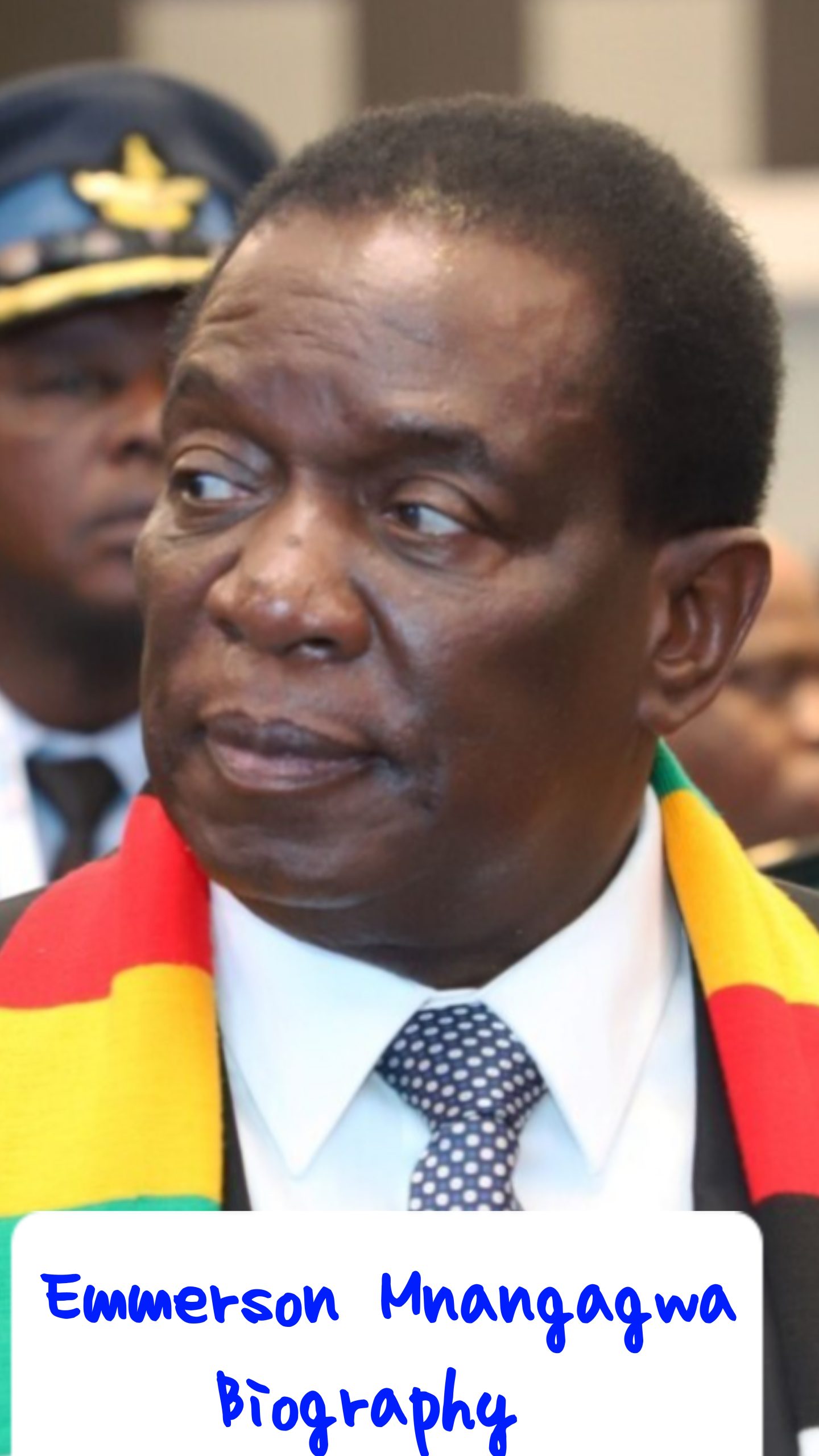
Emmerson Dambudzo Mnangagwa is the President of Zimbabwe. He has served in this role since November 24, 2017. A veteran of the liberation struggle against colonial rule, Mnangagwa rose through the ranks of the Zimbabwe African National Union–Patriotic Front (ZANU–PF) to become one of the country’s most influential political figures. His journey from a young activist imprisoned for sabotage to the nation’s leader reflects decades of involvement in Zimbabwe’s political landscape, marked by both contributions to independence and complex challenges in governance.
Known by the nickname “Ngwena” or “Garwe” (meaning crocodile in Shona), Mnangagwa earned this moniker for his strategic and resilient approach during the guerrilla war. He played key roles in security and justice ministries under Robert Mugabe before succeeding him amid a military intervention in 2017. His presidency has focused on economic reform promises, international re-engagement, and navigating domestic political dynamics in a nation seeking stability after years of economic hardship.
Emmerson Mnangagwa Early Life
Emmerson Dambudzo Mnangagwa was born on 15 September 1942 in Shabani (now Zvishavane), a mining town in central Southern Rhodesia, which is today’s Zimbabwe. He belongs to the Karanga subgroup of the Shona people. His parents, Mafidhi and Mhurai Mnangagwa, were farmers and politically active. The family lived in a large extended household. His grandfather had multiple wives and many sons, and Mnangagwa was the third of ten siblings from his father’s side.
The Mnangagwa family faced colonial pressures early. Mafidhi Mnangagwa resisted policies that disadvantaged Black farmers, including destocking of cattle. In the mid-1950s, around 1955, the family relocated to Northern Rhodesia (present-day Zambia) due to these conflicts with colonial authorities. They settled in areas like Mumbwa. This move exposed young Emmerson to different colonial realities and anti-colonial sentiments in the region.
In Zambia, Mnangagwa continued his early education. The family’s relocation shaped his worldview as he witnessed broader African nationalist movements. His father’s activism and the hardships of colonial rule instilled a strong sense of resistance that would define his later path. Zvishavane and the Midlands Province remain central to his identity. He maintains strong ties to this region, often referred to as his home base where he is seen as a prominent figure or “godfather” in local political circles.
Emmerson Mnangagwa Education
Mnangagwa started primary education at Lundi Primary School in Mnangagwa Village near Zvishavane. After the family move to Zambia, he attended Mumbwa Boarding School and completed further standards there. He then enrolled at Kafue Trade School for industrial building courses and progressed to Hodgson Technical College.
His education faced interruptions due to political involvement. In 1960, he was expelled from Hodgson Technical College for participating in student demonstrations linked to the United National Independence Party (UNIP) Youth League in Zambia. Despite these setbacks, he pursued studies persistently.
During his ten-year imprisonment in Rhodesia starting in 1965, Mnangagwa continued his education through correspondence. He completed secondary-level exams and earned a Bachelor of Laws (LLB) degree from the University of London in 1972 while incarcerated. After release and deportation to Zambia in 1975 or around that period, he studied at the University of Zambia, completing aspects of his legal training. He was admitted to the Bar of the High Court of Zambia in 1976. He also received military training in places like Egypt and China earlier in his activist years.
This blend of formal legal education and practical experience in politics and military affairs equipped him for high-level roles in post-independence Zimbabwe.
Emmerson Mnangagwa Liberation Struggle Involvement
Mnangagwa joined the anti-colonial movement in his youth. He became active in UNIP in Zambia around 1959-1960. In 1962, he linked with the Zimbabwe African People’s Union (ZAPU) and soon shifted to the Zimbabwe African National Union (ZANU) in 1963. He underwent military training in Tanganyika (Tanzania), Egypt, and other locations.
In 1964, he returned to Rhodesia as leader of the “Crocodile Gang,” a group that conducted sabotage operations against white-owned farms in the Eastern Highlands. His most notable action came in 1965 when he participated in bombing a train near Fort Victoria (now Masvingo). Arrested in Highfield, he was initially sentenced to death, later commuted to ten years in prison. He served time in facilities like Khami Prison, where he reportedly shared a cell with Robert Mugabe at one point. Torture during imprisonment affected his hearing in one ear.
Released around 1975, he was deported to Zambia. There, he practiced law briefly before moving to Mozambique to rejoin ZANU forces. He served as an assistant and bodyguard to Robert Mugabe. He accompanied Mugabe to the Lancaster House negotiations in 1979, which paved the way for Zimbabwe’s independence in 1980. His wartime contributions and resilience earned him respect within the liberation movement.
Emmerson Mnangagwa Political Career
Mnangagwa’s post-independence career spanned multiple senior positions in government and the ruling party.
Emmerson Mnangagwa Ministerial Roles After Independence
Upon Zimbabwe’s independence in 1980, Mnangagwa became the first Minister of State Security, overseeing the Central Intelligence Organisation (CIO) until 1988. This period included the controversial Gukurahundi operations in Matabeleland in the 1980s, where thousands of civilians, mainly from the Ndebele ethnic group, were killed. Mnangagwa has denied direct responsibility, noting he did not hold command positions in the military at the time.
He served as Minister of Justice and Legal Affairs from 1988 to 2000, and briefly as Minister of Finance in the mid-1990s. From 2000 to 2005, he was Speaker of the National Assembly. Subsequent roles included Minister of Rural Housing and Social Amenities (2005-2009), Minister of Defence (2009-2013), and again Minister of Justice. In 2014, Mugabe appointed him First Vice President, positioning him as a potential successor.
Emmerson Mnangagwa Path to Presidency
Tensions within ZANU-PF intensified in the 2010s. Mnangagwa’s Lacoste faction competed with others, including those aligned with Grace Mugabe. In November 2017, Mugabe dismissed Mnangagwa as Vice President. Mnangagwa fled to South Africa. Military intervention led by General Constantino Chiwenga followed, placing Mugabe under house arrest. Mugabe resigned on 21 November 2017. Mnangagwa returned and was sworn in as President on 24 November 2017.
Emmerson Mnangagwa Presidency
As President, Mnangagwa promised a “new dispensation” with economic recovery, anti-corruption efforts, and re-engagement with the international community. He secured a full term in the 2018 election with about 50.8% of the vote against Nelson Chamisa, though the results faced disputes and post-election violence. He was re-elected in 2023 with 52.6%. Both polls drew criticism from observers regarding fairness.
His administration has dealt with economic challenges, droughts, and efforts to chair regional bodies like SADC. Policies have included focus on agriculture, mining, and infrastructure, alongside attempts at reform. Challenges persist, including allegations of corruption, human rights concerns, and sanctions. In later years, discussions around term limits and succession have emerged within the party.
Emmerson Mnangagwa Awards and Recognitions
Mnangagwa has received various national honors and international acknowledgments for his roles in politics and liberation. In 2018, Time magazine listed him among the 100 most influential people. He holds honorary degrees, including one conferred on his wife Auxillia, reflecting institutional recognitions. Specific military and state awards from Zimbabwe’s independence era acknowledge his contributions, though details vary by source.
Emmerson Mnangagwa Personal Life
Mnangagwa has been married twice and has a large family with around 18 children and many grandchildren. His first wife, Jayne Matarise (married 1973), was a cousin of liberation commander Josiah Tongogara. They had six children: Farai, Tasiwa Nancy, Vimbayi, Tapiwa, Tariro, and Emmerson Tanaka (a musician known as St Emmo). Jayne passed away in 2002 from cervical cancer.
His second wife, Auxillia Kutyauripo (often spelled Auxilia), is a former CIO officer, ZANU-PF member, and parliamentarian for Chirumanzu-Zibagwe. They have three sons: Emmerson Jr. (in business and youth league activities), and twins Sean (army captain/engineer background) and Collins (businessman). Auxillia has been active in philanthropy and national roles.
Family members hold various positions, including son David Kudakwashe as Deputy Minister of Finance and nephew Tongai Mnangagwa in ministerial roles. Mnangagwa owns farms in regions like Masvingo and near Kwekwe. He values his Shona cultural roots and family ties in the Midlands.
Emmerson Mnangagwa Legacy and Challenges
Mnangagwa’s career embodies the transition from colonial resistance to national leadership. Supporters highlight his role in independence and efforts toward stability. Critics point to involvement in past security operations, election disputes, and economic issues. His presidency represents continuity in ZANU-PF rule alongside attempts at change. Zimbabwe’s future under his influence continues to evolve amid regional and global pressures.
Conclusion
Emmerson Dambudzo Mnangagwa remains a central figure in Zimbabwean politics. From his roots in Zvishavane through the liberation war, legal studies, and high offices, his path illustrates dedication to political causes. As president, he faces the task of addressing longstanding economic and social issues while steering the nation forward. His story continues to unfold as Zimbabwe navigates its post-independence chapter.
FAQs
What is Emmerson Mnangagwa’s date of birth and place of birth?
Emmerson Dambudzo Mnangagwa was born on 15 September 1942 in Shabani, now known as Zvishavane, in Zimbabwe.
Who is Emmerson Mnangagwa’s wife?
His current wife is Auxillia Mnangagwa. They have been together since after the death of his first wife Jayne in 2002.
How many children does Emmerson Mnangagwa have?
Mnangagwa has approximately 18 children from his marriages.
What is Emmerson Mnangagwa’s nickname and why?
He is known as “Ngwena” or “The Crocodile” due to his guerrilla tactics and strategic style during the liberation struggle.
What key positions did Emmerson Mnangagwa hold before becoming President?
He served as Minister of State Security, Minister of Justice, Speaker of Parliament, Minister of Defence, and Vice President.
When did Emmerson Mnangagwa become President of Zimbabwe?
He assumed the presidency on 24 November 2017 following the resignation of Robert Mugabe.