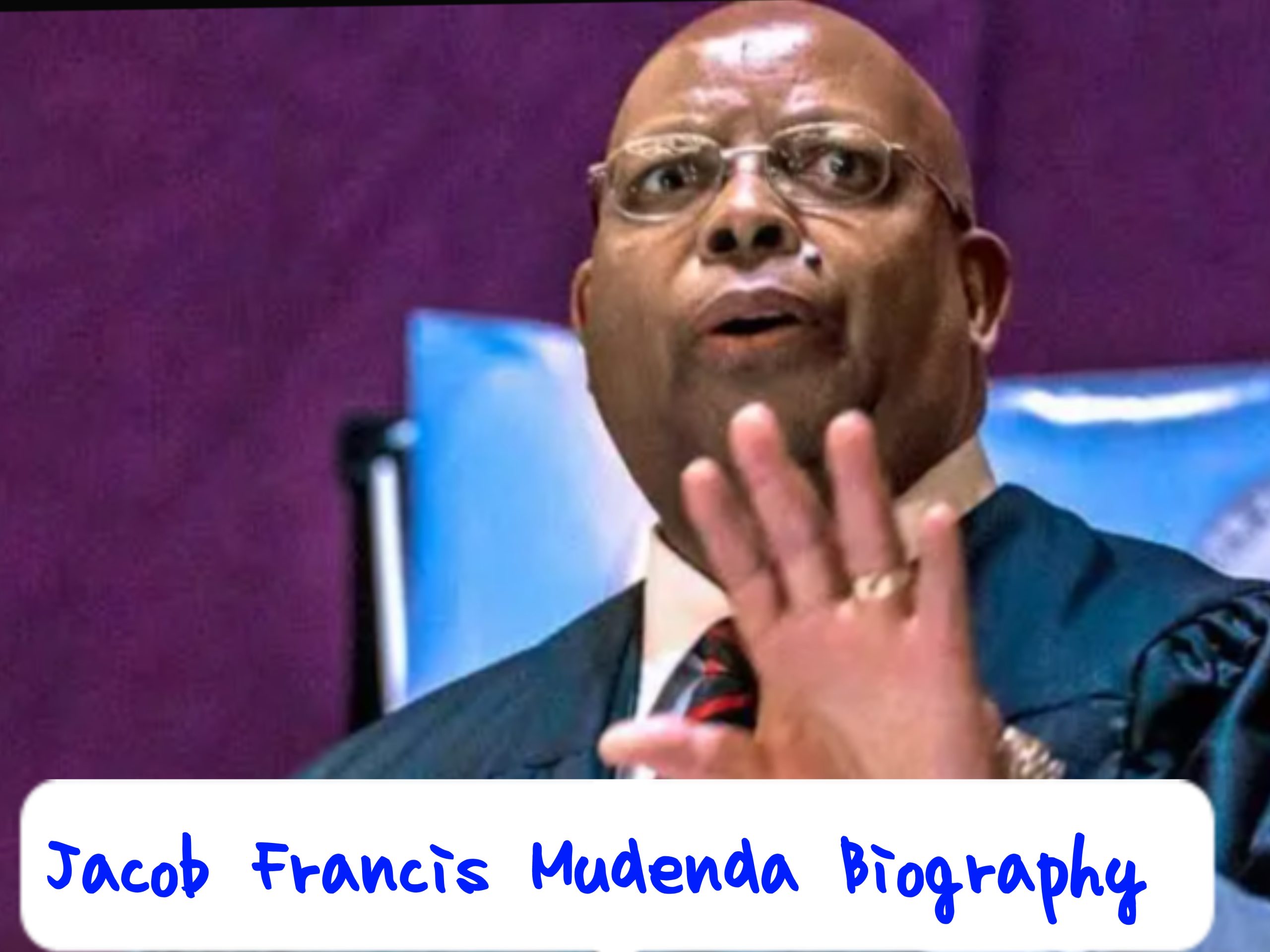
Jacob Francis Nzwidamilimo Mudenda is a prominent Zimbabwean lawyer, politician, and longtime public servant. He serves as Speaker of the National Assembly of Zimbabwe and holds the position of Secretary General of the Zimbabwe African National Union – Patriotic Front (ZANU-PF). Born in Southern Rhodesia (now Zimbabwe), Mudenda has played significant roles in the country’s post-independence governance, education, and legal sectors.
His career spans decades, marked by rapid rises in provincial administration during the early years of independence, periods of political challenges, and a strong return to national leadership. As Speaker, he has overseen parliamentary proceedings during key periods in Zimbabwe’s modern history, including efforts to align laws with the 2013 Constitution. Mudenda remains an influential figure in ZANU-PF and regional parliamentary bodies.
Jacob Francis Mudenda Early Life
Jacob Francis Nzwidamilimo Mudenda was born on 31 May 1946 in Southern Rhodesia, which became independent Zimbabwe in 1980. Specific details about his exact village or immediate family background in early childhood are not widely documented in public sources, but he grew up in a context shaped by colonial rule and the growing liberation movements in the region.
The environment of mid-20th century Rhodesia influenced many young people of his generation toward education as a path to advancement and eventual participation in national affairs. Mudenda pursued learning opportunities that equipped him for roles in teaching and law, laying a foundation for his future contributions. His early experiences in what is now Matabeleland North area connected him deeply to the province that would later define much of his public service.
Zimbabwe’s path to independence involved complex political and social dynamics. As a young man during the lead-up to 1980, Mudenda witnessed the transition from colonial administration to majority rule. These formative years instilled in him a commitment to public service, education, and legal principles, which he carried into his professional life.
Jacob Francis Mudenda Education
Mudenda built a strong academic profile that supported his dual careers in education and law. He earned a Bachelor of Arts degree from the University of South Africa, majoring in English and Education. This qualification prepared him well for teaching roles and reflected an early focus on language and pedagogy.
He continued his studies at the University of Zimbabwe, where he obtained a Bachelor of Laws (LLB) Honours degree. Later, he completed a Postgraduate Diploma in Labour Law (Arbitration) from the same institution. Some profiles also reference advanced legal qualifications, including elements leading toward a Master of Laws.
These achievements demonstrate a dedication to continuous learning. His training in English and education allowed him to serve as a headmaster and lecturer, while his legal education enabled him to practice as an advocate and establish a law firm in Bulawayo. Mudenda’s academic path combined practical skills in teaching with rigorous legal knowledge, which proved valuable in both administrative and parliamentary roles.
Jacob Francis Mudenda Early Career
Before entering full-time politics, Mudenda worked as a schoolteacher and headmaster. He served as Headmaster of Marist Brothers Secondary School in Hwange, Matabeleland North. He also lectured in English at the United College of Education in Bulawayo. These experiences grounded him in community-level service and education.
He practiced law and established Mudenda Attorneys Legal Practitioners, a firm that continues to operate in Bulawayo. His legal work focused on advocacy and professional practice, building a reputation for competence in the field.
Jacob Francis Mudenda Political Career
Mudenda’s political journey began soon after Zimbabwe’s independence in 1980. He was appointed as a district administrator in Matabeleland North, serving initially in areas such as Kariba and Binga districts under the Ministry of Local Government. His performance and connections led to further promotions.
He advanced to Provincial Administrator and then Provincial Governor of Matabeleland North. On 22 July 1985, he succeeded Daniel Ngwenya as governor, a position he held until 1 April 1990. In 1984, he became Resident Minister for the province when that role was created. These positions made him a key figure in regional governance during the early post-independence years.
Jacob Francis Mudenda Role in Matabeleland North and Provincial Administration
As governor and resident minister, Mudenda represented the central government in Matabeleland North, the second most populous province at the time. His responsibilities included administration, development coordination, and acting as a link between local communities and national leadership. The province faced significant challenges related to integration after independence, including security issues and economic development.
Mudenda’s tenure coincided with a sensitive period in Zimbabwe’s history. He has publicly stated that he sought intervention from senior officials, including the late Vice President Joseph Msika, regarding violence in the region, though he noted these requests were not acted upon. His role placed him at the center of provincial affairs during events that remain subjects of national reflection.
Jacob Francis Mudenda Willowgate Scandal and Political Challenges
In the late 1980s, Mudenda became associated with the Willowgate scandal, which involved irregularities in vehicle purchases and resales from Willowvale Mazda Motor Industries. Investigations revealed that several officials, including Mudenda, acquired vehicles at controlled prices and resold them for profit. In Mudenda’s case, this included a Scania truck transaction where he reportedly made a substantial gain.
The scandal led to a temporary withdrawal from active high-level politics for Mudenda. He focused on his legal practice during this period. Unlike some contemporaries whose careers ended, Mudenda managed a return to public life after years in the background. This phase highlighted the complexities of accountability and political survival in Zimbabwe’s early independence era.
Jacob Francis Mudenda Return to Prominent Roles
Mudenda re-emerged in public service in the 2010s. In 2011, he was appointed to ZANU-PF structures. In 2013, President Robert Mugabe appointed him Chairman of the Zimbabwe Human Rights Commission (ZHRC), a short-lived role before his election as Speaker.
His election as Speaker of the National Assembly occurred on 31 July 2013, with swearing-in on 3 September 2013, succeeding Lovemore Moyo. He has been re-elected in subsequent terms, including 2018 and beyond, demonstrating sustained parliamentary support within the ruling party framework.
Jacob Francis Mudenda As Speaker of the National Assembly
Since 2013, Mudenda has presided over the National Assembly, guiding debates, maintaining order, and overseeing legislative processes. He chairs key bodies such as the Committee on Standing Rules and Orders. Under his leadership, Parliament has worked on aligning national laws with the 2013 Constitution.
He emphasizes procedural integrity, rules, and the institution’s oversight functions. As Speaker, he has participated in efforts to strengthen financial accountability, gender representation, and youth inclusion in parliamentary work. His tenure spans the transition from the Mugabe era to the Mnangagwa administration.
Jacob Francis Mudenda Contributions to Regional and International Parliamentary Bodies
Mudenda has represented Zimbabwe actively in the Inter-Parliamentary Union (IPU) and Southern African Development Community Parliamentary Forum (SADC-PF). He served as President of the Africa Geopolitical Group and was elected to the IPU Executive Committee in 2020. He led the Zimbabwe delegation to the IPU for about a decade.
His work includes advocacy for the transformation of the SADC-PF toward a regional parliament, lobbying for treaty amendments, and promoting gender equality and youth participation. He has received recognition from SADC groups for his contributions.
Jacob Francis Mudenda Awards and Recognitions
Mudenda has received several honors for his parliamentary and regional service. The SADC Geopolitical Group awarded him a Certificate of Distinction for his IPU contributions. He also received the Grand Defender of Democracy award from SADC-PF for dedicated service on its Executive Committee.
He was nominated as Africa’s candidate for the Cremer-Passy Prize, recognizing efforts in peace, democracy, human rights, and sustainable development. These accolades reflect appreciation from peers for his long-term engagement in multilateral forums.
Jacob Francis Mudenda Secretary General of ZANU-PF
In September 2025, President Emmerson Mnangagwa appointed Mudenda as Secretary General of ZANU-PF during a Politburo reshuffle. This role adds to his responsibilities within the party’s executive structures, where he previously served in legal affairs capacities.
Jacob Francis Mudenda Personal Life
Information about Mudenda’s family remains relatively private. He has been linked to a son named Donald, who has appeared in some business contexts. Mudenda maintains a legal practice in Bulawayo alongside his public duties. He is known for a measured speaking style and strong command of English.
His life reflects a balance between professional commitments and family, though public details focus more on his career.
Jacob Francis Mudenda Legacy and Impact
Mudenda’s career illustrates resilience in Zimbabwean politics. From teaching and law to provincial governance and national parliamentary leadership, he has influenced education, administration, legislation, and regional cooperation. His tenure as Speaker has coincided with efforts to modernize parliamentary practices and engage internationally.
Supporters highlight his dedication to rules, institutional development, and representation. Critics point to associations with past controversies and perceived partisanship in certain decisions. Overall, his story forms part of Zimbabwe’s post-independence political narrative.
Conclusion
Jacob Francis Nzwidamilimo Mudenda continues to serve in leadership roles that shape Zimbabwe’s legislative and party affairs. His journey from educator and lawyer to Speaker and party secretary general underscores a commitment to public service spanning over five decades. As Zimbabwe navigates its development challenges, figures like Mudenda remain central to institutional continuity and political processes.
FAQs
Who is Jacob Francis Mudenda?
Jacob Francis Nzwidamilimo Mudenda is a Zimbabwean lawyer, politician, Speaker of the National Assembly, and Secretary General of ZANU-PF.
When and where was Jacob Francis Mudenda born?
He was born on 31 May 1946 in what was then Southern Rhodesia, now Zimbabwe.
What is Jacob Francis Mudenda educational background?
He holds a BA from the University of South Africa in English and Education, an LLB Honours from the University of Zimbabwe, and a Postgraduate Diploma in Labour Law.
What major positions has Jacob Francis Mudenda held?
Key roles include Provincial Governor and Resident Minister of Matabeleland North, Chairman of the Zimbabwe Human Rights Commission, and Speaker of the National Assembly since 2013.
What controversies has Jacob Francis Mudenda been associated with?
He was linked to the Willowgate scandal in the late 1980s and served as governor during the Gukurahundi period in Matabeleland North.
What international roles does Jacob Francis Mudenda play?
He has served on the IPU Executive Committee, led SADC-PF initiatives, and contributed to efforts for a stronger regional parliamentary body.
Has Jacob Francis Mudenda received any awards?
Yes, including a SADC Certificate of Distinction and the Grand Defender of Democracy award for his parliamentary and regional contributions.