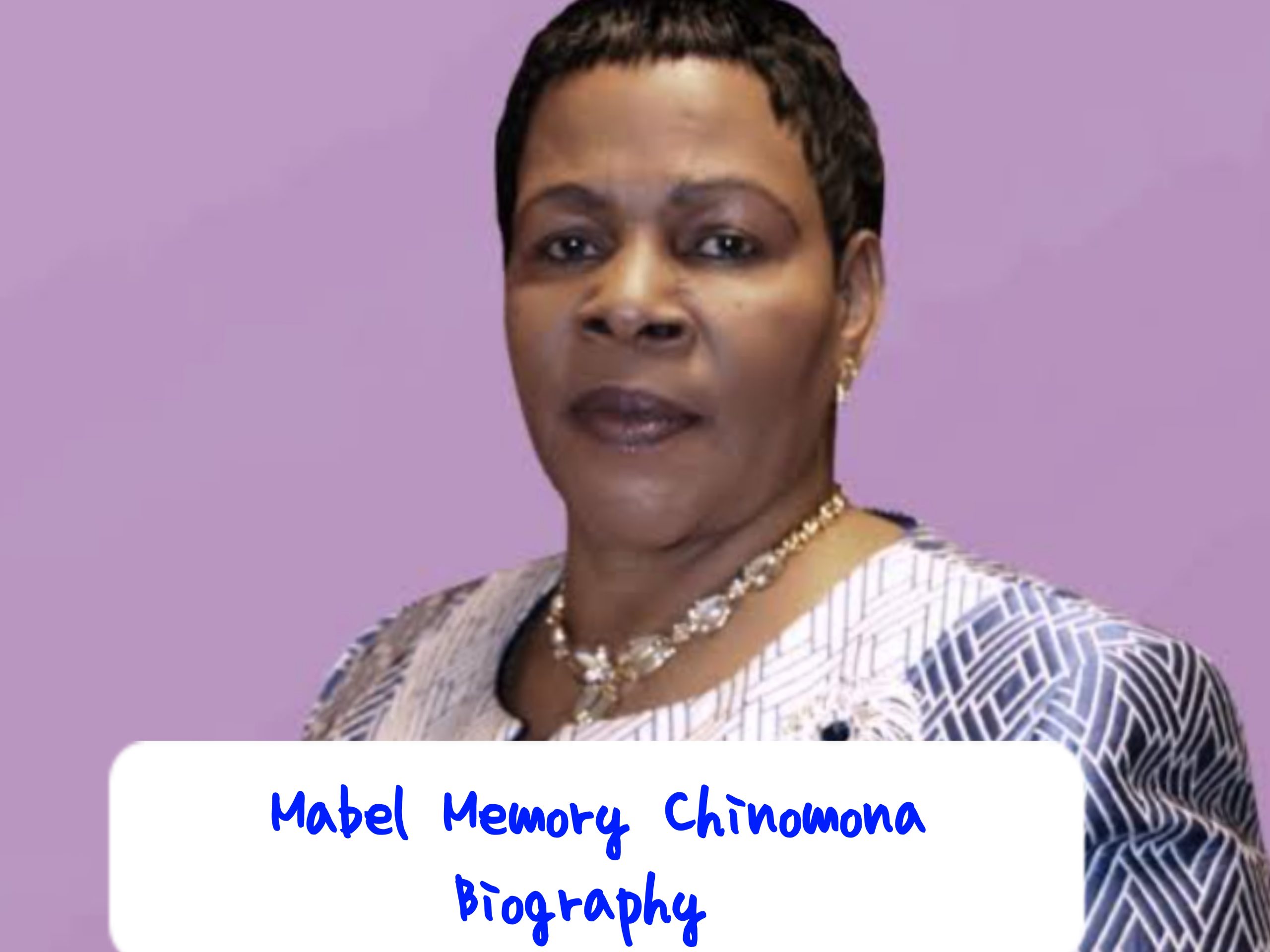
Mabel Memory Chinomona is a prominent Zimbabwean politician and a veteran of the country’s liberation struggle. She currently serves as the President of the Senate of Zimbabwe, a position she has held since September 2018. Born in the late 1950s, Chinomona has dedicated much of her life to public service, first as a freedom fighter and later through various roles within the ZANU-PF party and the Zimbabwean parliament.
Her career reflects deep commitment to the ruling party and the development of her home province. From grassroots mobilization in the Women’s League to high-level parliamentary leadership, Chinomona has navigated the complexities of Zimbabwean politics with resilience. She remains an influential figure in advancing women’s participation in governance and upholding party structures.
Mabel Memory Chinomona Early Life
Mabel Memory Chinomona was born on 21 January 1958 in Mutoko, Mashonaland East Province, Zimbabwe. Mutoko is a rural area known for its granite hills, agricultural activities, and strong cultural traditions among the Shona people. The region played a notable part in the liberation struggle, and Chinomona grew up in this environment during the final decades of colonial rule in Rhodesia.
Her family background reflects the typical experiences of many Zimbabwean households in the mid-20th century. Life in Mutoko involved community farming, adherence to local customs, and exposure to the inequalities of the colonial system. These early surroundings helped shape her sense of justice and determination. As a young girl, she attended primary school at Kaware School, where she laid the foundation for her education.
The political climate of the time influenced her path significantly. By her teenage years, the push for independence had intensified. In late 1975, at around 17 years old, Chinomona joined the liberation movement during the Rhodesian Bush War, also known as the Second Chimurenga. She left her studies temporarily to contribute to the armed struggle for freedom. This decision marked the beginning of her lifelong involvement in politics and demonstrated her willingness to sacrifice personal comfort for the national cause.
After Zimbabwe gained independence in 1980, Chinomona returned to education to complete her formal schooling. She earned her junior certificate at Nyamuzuwe High School and her Ordinary Levels at Murewa High School. These institutions provided her with essential knowledge and skills. She later pursued tertiary education, obtaining certificates from Speciss College in secretarial and local government studies, and a National Certificate in Administration from Kushinga Phikelela Polytechnic. These qualifications equipped her for administrative and leadership roles in the new nation.
Chinomona’s early life combined personal growth with national service. The experiences of rural upbringing, interrupted education, and participation in the liberation war instilled in her values of discipline, loyalty, and community service. These traits have defined her public persona throughout her career.
Mabel Memory Chinomona Education
Mabel Memory Chinomona’s educational journey reflects both determination and adaptation to the demands of her time. She began at Kaware School for primary education in her home area of Mutoko. This rural school offered basic literacy and numeracy skills amid limited resources typical of colonial-era institutions for African children.
At the secondary level, she attended Nyamuzuwe High School, where she obtained her junior certificate. However, the escalating liberation war interrupted her studies. Her decision to join the struggle in 1975 meant pausing formal education to fight for independence. After 1980, she resumed and completed her Ordinary Levels at Murewa High School. This step allowed her to strengthen her academic foundation while the country rebuilt.
Post-independence, Chinomona sought professional qualifications to support her growing political responsibilities. She studied at Speciss College, earning certificates in secretarial studies and local government. These programs provided practical skills in administration, record-keeping, and governance — essential for someone entering public service. She also attended Kushinga Phikelela Polytechnic for a National Certificate in Administration, further enhancing her capabilities in managing public affairs and organizational structures.
Her education was not limited to classrooms. Participation in the liberation movement served as an informal but profound form of learning about leadership, strategy, and resilience. The combination of formal qualifications and real-world experience prepared her for roles in party structures and parliament. Chinomona often emphasizes the importance of continuous learning, encouraging younger generations, especially women, to pursue education alongside community involvement.
Mabel Memory Chinomona State of Origin
Mabel Memory Chinomona hails from Mutoko in Mashonaland East Province, Zimbabwe. This area lies northeast of Harare and is characterized by its hilly terrain, fertile lands suitable for crops like maize and tobacco, and rich cultural heritage. Mutoko has historical significance, including ancient stone ruins that highlight pre-colonial civilizations.
Mashonaland East is one of Zimbabwe’s key provinces, with a large Shona-speaking population. It played an active role in the liberation struggle, with many residents supporting ZANU-PF efforts. Chinomona’s deep roots in this province have shaped her political base. She understands local challenges such as agriculture, infrastructure development, water access, and education in rural settings.
Her connection to Mutoko North constituency remained strong for decades. Voters in the area repeatedly supported her candidacies, reflecting trust built through consistent engagement. She has advocated for improved roads, schools, clinics, and farming support in the region. Mashonaland East’s political landscape, with its mix of rural communities and proximity to the capital, provided Chinomona a platform to influence both local and national policies.
The province continues to benefit from her leadership. Initiatives under her watch often focus on women’s empowerment, youth development, and economic opportunities tailored to rural needs. Her origin story underscores how local identity fuels national service in Zimbabwean politics.
Mabel Memory Chinomona Career
Mabel Memory Chinomona’s career spans from the liberation struggle to senior parliamentary leadership. Her path demonstrates steady progression within ZANU-PF and government institutions.
Mabel Memory Chinomona Early Political Involvement
After Zimbabwe’s independence in 1980, Chinomona took on leadership in the ZANU-PF Women’s League. She served as chairperson for Mashonaland East Province for ten years, focusing on mobilizing women and building party support at the grassroots level. This role involved organizing meetings, addressing community issues, and promoting party ideals across the province.
She later became political commissar and served as director for the commissariat in the Women’s League. These positions required ideological training, discipline enforcement, and coordination of party activities. Her work in the Ministry of Local Government for a decade further developed her administrative expertise, dealing with district-level governance and service delivery.
Mabel Memory Chinomona Parliamentary Journey
Chinomona entered parliament in the 1990s as Member of Parliament for Mutoko North. She won the seat unopposed and held it for about 15 years, demonstrating strong local support. During this period, she contributed to legislative processes and represented constituent interests effectively.
In 2013, she was re-elected with a significant majority — around 88% of the votes — and appointed Deputy Speaker of the National Assembly. She served in this capacity until 2018, presiding over debates, maintaining order, and participating in key committees, including those on mines and energy. She also acted as deputy chief whip and served on the Standing Rules and Orders Committee.
In September 2018, she was elected President of the Senate, the upper house of parliament. She has been re-elected to this position, most recently in 2023. As Senate President, she oversees proceedings, represents the chamber domestically and internationally, and plays a role in legislative review. Her leadership emphasizes stability and adherence to parliamentary procedures.
She briefly served as Deputy Minister of Home Affairs, gaining experience in security and internal affairs. Throughout her career, she has balanced party loyalty with public duties.
Mabel Memory Chinomona Role in ZANU-PF Women’s League
Since December 2017, Chinomona has served as Secretary of the ZANU-PF Women’s League, succeeding Grace Mugabe. This national role made her a member of the party’s Politburo. She has focused on women’s empowerment, mobilization, and addressing gender issues within the party. Her appointment followed the 2017 political changes and highlighted her alignment with the new leadership.
She has faced internal challenges, including a 2016 suspension after a vote of no confidence in the province, linked to factional dynamics. However, she demonstrated resilience by returning to prominence. Her involvement in Operation Restore Legacy during the 2017 transition further solidified her position.
Mabel Memory Chinomona International and Other Contributions
Chinomona has represented Zimbabwe in regional parliamentary forums. Her appointment as Vice Chairperson of the Executive Committee of the African Parliamentary Union reflects recognition of her experience. She advocates for stronger African parliamentary cooperation and women’s leadership.
She promotes the 50-50 gender equity agenda and encourages women to contest for parliamentary seats. Her work as a Women Political Leaders Ambassador underscores commitment to inclusive governance.
Mabel Memory Chinomona Achievements
Mabel Memory Chinomona’s achievements include decades of service in parliament and party structures. Key highlights are her long tenure as MP for Mutoko North, successful leadership as Deputy Speaker, and current role as Senate President. She has contributed to legislation on governance, resource management, and social issues.
Her grassroots mobilization strengthened ZANU-PF in Mashonaland East. Surviving political setbacks, such as the 2004 Tsholotsho-related challenges and 2016 suspension, shows political endurance. She has supported women’s advancement and rural development projects. Her international appointments enhance Zimbabwe’s parliamentary diplomacy profile.
Mabel Memory Chinomona Awards
Information on formal awards for Mabel Memory Chinomona is limited in public records. Her recognitions primarily come through electoral mandates and party appointments rather than named prizes. Re-elections to parliament and the Senate presidency serve as votes of confidence from colleagues and constituents. Her elevation to senior Women’s League and Politburo positions reflect internal party acknowledgment of her contributions.
She has received praise for parliamentary diplomacy efforts through the African Parliamentary Union. Community and women’s groups often commend her advocacy. While specific trophies or medals are not widely documented, her sustained leadership stands as a testament to her impact.
Mabel Memory Chinomona Personal Life
Mabel Memory Chinomona is a widow and mother of four children — two sons and two daughters. She is also a grandmother to three. Family life remains important to her despite demanding public responsibilities. She values privacy regarding personal matters while drawing strength from her loved ones.
Her experiences as a mother and widow have informed her advocacy for women’s issues, including support for families and gender equality. She balances political duties with family commitments, often citing the need for strong family foundations in nation-building.
Mabel Memory Chinomona Challenges and Resilience
Chinomona has encountered significant political hurdles. Alleged links to the 2004 Tsholotsho Declaration led to a period of sidelining. In 2016, a provincial vote of no confidence suspended her temporarily amid factional tensions. These events tested her loyalty and determination.
She rebounded through dedication and strategic alignment, particularly after 2017. Her ability to mobilize support during transitions highlights adaptability and commitment to party unity.
Mabel Memory Chinomona Legacy
As a liberation veteran and senior parliamentarian, Chinomona’s legacy centers on service, women’s empowerment, and institutional stability. She exemplifies how grassroots activism can lead to national leadership. Her story inspires many, especially young women in rural areas, to engage in politics and public service.
Conclusion
Mabel Memory Chinomona has contributed substantially to Zimbabwe’s political landscape. From her early days in the liberation struggle to her current position as Senate President, she has shown unwavering dedication. Her journey highlights the importance of resilience, education, and community roots in leadership. As Zimbabwe continues to develop, figures like Chinomona play vital roles in shaping governance and representation. Her ongoing work in parliament and the Women’s League ensures her influence extends into the future.
FAQs
Who is Mabel Memory Chinomona?
Mabel Memory Chinomona is a Zimbabwean politician serving as President of the Senate. She is a ZANU-PF veteran with a long history in parliament and the Women’s League.
When and where was Mabel Memory Chinomona born?
She was born on 21 January 1958 in Mutoko, Mashonaland East Province, Zimbabwe.
What is Mabel Memory Chinomona’s educational background?
She attended Kaware Primary, Nyamuzuwe and Murewa High Schools, and obtained tertiary certificates from Speciss College and Kushinga Phikelela Polytechnic.
What major positions has Mabel Memory Chinomona held?
Key roles include MP for Mutoko North, Deputy Speaker of the National Assembly, Secretary of the ZANU-PF Women’s League, and President of the Senate.
Is Mabel Memory Chinomona married?
She is a widow with four children.
What is Mabel Memory Chinomona known for?
She is recognized for her participation in the liberation struggle, long parliamentary service, and advocacy for women in politics.
Has Mabel Memory Chinomona faced any controversies?
Yes, she experienced suspensions and factional challenges but has consistently returned to leadership roles.