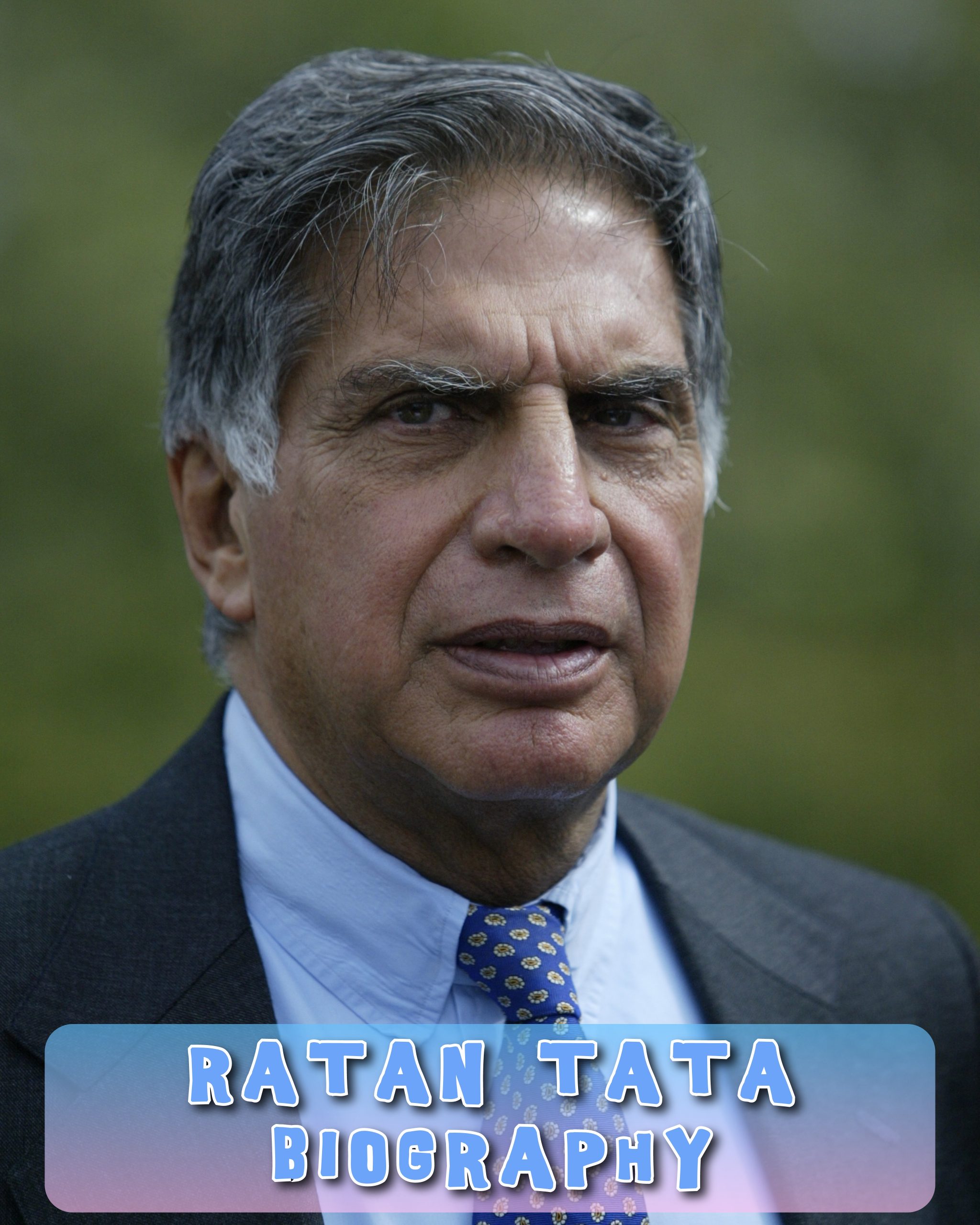
Ratan Naval Tata was born on December 28, 1937, in Bombay (now Mumbai), India, into the prominent Tata family. He was the son of Naval Tata and Soonoo Commissariat and was raised largely by his grandmother, Lady Navajbai Tata, after his parents separated when he was young. Growing up in one of India’s most respected industrial families exposed him to the values of discipline, humility, public service and philanthropy from an early age.
Ratan Tata spent his formative years in Mumbai, where he received his early education at prestigious schools, including the Cathedral and John Connon School and Campion School. He later attended Bishop Cotton School in Shimla and completed his schooling at Riverdale Country School in New York. Despite coming from a wealthy and influential family, his upbringing was shaped by a relatively private and disciplined lifestyle, which helped develop the reserved and understated personality he became known for.
After completing his schooling, Tata enrolled at Cornell University in the United States, where he studied architecture and structural engineering and graduated with a bachelor’s degree in architecture in 1962. He later attended Harvard Business School Advanced Management Program in 1975. His education abroad broadened his outlook and prepared him for a career that would eventually transform the Tata Group while maintaining the family’s long-standing emphasis on ethical business, innovation and social responsibility.
Ratan Tata Education
Ratan Tata began his schooling in Mumbai, where he attended Campion School and later The Cathedral and John Connon School. He subsequently continued his education at Bishop Cotton School in Shimla before moving to the United States, where he completed his schooling at Riverdale Country School in New York. His years of education in India and the United States gave him exposure to different academic environments and cultures.
After completing his school education, Ratan Tata enrolled at Cornell University in Ithaca, New York. Although he initially considered studying mechanical engineering, he ultimately pursued architecture and structural engineering. He graduated in 1962 with a bachelor’s degree in architecture, an academic background that later influenced his appreciation for design, engineering and innovation.
In 1975, Tata further expanded his business knowledge by attending the Advanced Management Program at Harvard Business School. The program strengthened his understanding of management and leadership and complemented his technical and architectural education. His combination of international education and practical business experience later played an important role in his rise within the Tata Group and his transformation of the conglomerate into a more globally recognized business group.
Ratan Tata Career
Ratan Tata began his professional career with the Tata Group in 1962, joining Tata Industries after completing his education at Cornell University. Rather than immediately taking a senior executive position because of his family background, he started by working on the ground at Tata Steel’s Jamshedpur plant, where he gained firsthand experience of industrial operations. He later took on leadership responsibilities at several Tata companies, including National Radio & Electronics (NELCO) and Empress Mills, helping him develop the practical management experience that would shape his later leadership of the group.
In 1991, Ratan Tata succeeded J. R. D. Tata as chairman of Tata Sons, the principal holding company of the Tata Group. Under his leadership, the group underwent significant restructuring and expanded beyond India through a series of major international acquisitions. These included Tetley in 2000, Corus in 2007, and Jaguar Land Rover in 2008. He also oversaw the development of products such as the Tata Indica and Tata Nano, while strengthening the global presence of Tata companies across industries including automobiles, steel, information technology, telecommunications and hospitality.
Ratan Tata stepped down as chairman of Tata Sons in 2012, after more than two decades at the helm, and was succeeded by Cyrus Mistry. He briefly returned as interim chairman in 2016 following Mistry’s removal before N. Chandrasekaran became chairman in 2017. Beyond his corporate achievements, Tata became widely respected for his philanthropy and emphasis on ethical business. Through the Tata Trusts and other initiatives, he supported education, healthcare, scientific research and social development. After his death on October 9, 2024, his career continued to be regarded as one of the defining chapters in the history of modern Indian business.
Ratan Tata Death and Cause of Death
Ratan Naval Tata died on October 9, 2024, in Mumbai, India, at the age of 86. Tata Sons officially confirmed his death and paid tribute to him as a leader whose contributions had a lasting impact on the Tata Group and Indian society. The Tata Group’s official records list his lifespan as December 28, 1937 – October 9, 2024.
Regarding the cause of death, Ratan Tata had been admitted to a Mumbai hospital shortly before his death. However, the Tata Group’s official announcement did not specify a particular medical condition as the cause of death. Therefore, it is more accurate for a biography to state that he died at 86 after a period of declining health rather than attributing his death to an unconfirmed illness. This avoids repeating speculation that has circulated online.
Ratan Tata’s death was widely mourned across India and internationally, with tributes highlighting his leadership, humility, philanthropy and commitment to ethical business. His passing marked the end of an influential era for the Tata Group, but his impact continues through the Tata Trusts, educational and healthcare initiatives, and the businesses he helped transform into global enterprises.
Ratan Tata Personal Life and Family
Ratan Tata was born into the influential Tata family and was the son of Naval Tata and Soonoo Tata (Soonoo Commissariat). His parents separated when he was young, after which Ratan Tata and his younger brother, Jimmy Tata, were raised largely by their grandmother, Lady Navajbai Tata. He was also closely connected to the wider Tata family, including his half-brother Noel Tata, who is the son of Naval Tata and Simone Tata. Despite his prominent family background, Ratan Tata generally maintained a private and low-profile personal life.
Ratan Tata never married and had no children. He spoke publicly on rare occasions about relationships he had during his younger years, including a significant romance while he was working in the United States. He reportedly came close to marriage on several occasions but ultimately remained unmarried. There is no confirmed public record of a fiancée at the time of his death, so claims that he had a particular fiancée should be treated cautiously unless supported by reliable sources.
Outside his professional responsibilities, Tata was known for his love of dogs, cars, aviation and architecture. He was particularly fond of dogs and was frequently seen supporting animal welfare initiatives. He also maintained close relationships with members of his family and trusted associates while avoiding much of the celebrity lifestyle associated with his wealth and position. His decision to remain unmarried and his relatively private lifestyle contributed to the public fascination surrounding his personal life, while his family legacy remains closely connected to the broader history of the Tata Group.
Ratan Tata Age, Religion, Nationality, Height and Physical Appearance
Ratan Tata was born on December 28, 1937, and died on October 9, 2024, at the age of 86. He was an Indian national and was born in Bombay, British India, which is now Mumbai, Maharashtra. As a member of the Tata family, he was born into a Parsi Zoroastrian family, reflecting the religious heritage of the Tata community.
Ratan Tata was widely recognized for his tall and distinguished appearance. His height has been reported at around 5 feet 10 inches (178 cm), although this figure is not consistently documented in authoritative sources. He had a lean build, silver-white hair, a prominent nose and a composed, understated appearance. In public appearances, he was often seen wearing formal business attire, reflecting his professional and reserved personality.
Even in his later years, Tata maintained a dignified and modest public image. His calm demeanor, soft-spoken nature and simple style became strongly associated with his personality. Unlike many prominent business figures, he generally avoided ostentatious displays of wealth, contributing to the image of Ratan Tata as a humble, private and disciplined industrialist.
Ratan Tata Social Media Presence
Ratan Tata maintained a strong social media presence, particularly on Instagram, where he connected with millions of followers and occasionally shared personal reflections, photographs, tributes and messages about causes close to him. His verified Instagram account, @ratantata, became one of the most followed accounts associated with an Indian business leader. He also used social media to highlight entrepreneurship, education, animal welfare and other initiatives he supported.
Tata was particularly known for using social media in a relatively personal and understated manner rather than for aggressive self-promotion. His posts often featured important moments from his life, memories, charitable initiatives, young entrepreneurs and his affection for dogs. His Instagram presence helped audiences see a more personal side of the industrialist beyond his corporate achievements.
Although Ratan Tata passed away in October 2024, his social media profiles remain an important part of his digital legacy. His Instagram account @ratantata continues to attract significant public interest, with old posts and tributes keeping his memory alive among followers in India and around the world.
Ratan Tata Net Worth
Ratan Tata’s estimated net worth at the time of his death in October 2024 was around ₹7,900 crore (approximately US$950 million), according to the 2024 Hurun India Rich List. This figure is considerably lower than the combined value of the Tata Group because Tata personally owned only a relatively small direct stake in Tata Sons. Reports indicate that he held approximately 0.83% of Tata Sons, while charitable Tata Trusts collectively control about 66% of the company.
A significant part of Tata’s personal wealth came from his investments, shareholdings and long career as one of India’s most prominent business leaders. His compensation was not comparable to the enormous executive packages seen at some modern corporations. For example, historical reporting shows that his compensation as Tata Sons chairman was structured around salary and commissions, while in FY2012 he received ₹8 crore in commission from TCS, including a special ₹5 crore payment recognizing his long contribution to the company.
It is important to distinguish Ratan Tata’s personal net worth from the wealth of the Tata Group. The Tata Group was a massive global conglomerate under his leadership, but most of its ownership was held through Tata Trusts and other entities rather than personally by Tata. Much of his wealth was ultimately directed toward philanthropic and charitable purposes, consistent with his longstanding commitment to education, healthcare, research and social development. Consequently, estimates of his net worth can vary substantially depending on which assets and trusts are included.
Legacy
Ratan Tata’s legacy is closely associated with the transformation of the Tata Group into a globally recognized business conglomerate. During his tenure as chairman of Tata Sons from 1991 to 2012, he pursued international expansion and oversaw landmark acquisitions, including Tetley, Corus and Jaguar Land Rover. He also supported the development of products such as the Tata Indica and Tata Nano, helping strengthen the Tata brand in India and overseas. His leadership combined business expansion with an emphasis on innovation, corporate values and long-term growth.
Beyond business, Ratan Tata became widely admired for his philanthropy and commitment to social development. Through the Tata Trusts and other initiatives, the Tata legacy has supported education, healthcare, scientific research, rural development and assistance for disadvantaged communities. His personal approach to philanthropy reflected his belief that business success should contribute to society, making him a particularly influential figure beyond the corporate world.
Perhaps the most enduring part of Ratan Tata’s legacy is the reputation he built for humility, integrity and ethical leadership. Despite leading one of India’s largest business groups, he maintained a relatively private lifestyle and was often praised for his modesty and compassion. After his death on October 9, 2024, tributes from business leaders, politicians and ordinary Indians highlighted the influence he had on generations. His impact continues through the Tata Group, the Tata Trusts and the institutions and causes he supported, ensuring that his contribution to Indian business and society extends well beyond his lifetime.
Conclusion
Ratan Tata’s life remains a remarkable story of leadership, business transformation, philanthropy and humility. From his early years and education to his decades at the helm of the Tata Group, he played a defining role in expanding the Indian conglomerate onto the global stage while maintaining a strong commitment to ethics and social responsibility. Although he died on October 9, 2024, at the age of 86, his influence continues through the Tata Group, Tata Trusts and the many educational, healthcare and social initiatives he supported. More than his wealth or corporate achievements, Ratan Tata is remembered for the values he represented—integrity, compassion, innovation and service to society—making him one of the most respected business leaders in India’s modern history.
Frequently Asked Questions About Ratan Tata
1. Who was Ratan Tata?
Ratan Tata was an Indian industrialist, philanthropist and former chairman of Tata Sons. He led the Tata Group from 1991 to 2012 and briefly served as interim chairman in 2016–2017.
2. When did Ratan Tata die?
Ratan Tata died on October 9, 2024, in Mumbai, India, at the age of 86.
3. What was Ratan Tata’s cause of death?
The Tata Group did not publicly confirm a specific medical cause of death. He was hospitalized shortly before his death, and reports described his health as having declined in his final period.
4. What was Ratan Tata’s net worth?
Ratan Tata’s personal net worth was estimated at around ₹7,900 crore (approximately US$950 million) near the time of his death. His personal wealth should not be confused with the much larger value of the Tata Group.
5. Was Ratan Tata married?
No, Ratan Tata never married and had no children. Although he spoke about relationships he had during his younger years, he ultimately remained unmarried.
6. Who was Ratan Tata’s father?
Ratan Tata’s father was Naval Tata, an Indian businessman and member of the Tata family. Ratan Tata was raised largely by his grandmother, Lady Navajbai Tata, following his parents’ separation.
7. Who is Ratan Tata’s brother?
Ratan Tata’s younger brother was Jimmy Tata. He also had a half-brother, Noel Tata, who is the son of Naval Tata and Simone Tata.
8. What was Ratan Tata’s educational qualification?
Ratan Tata earned a bachelor’s degree in architecture from Cornell University in 1962. He later attended Harvard Business School’s Advanced Management Program in 1975.
9. What was Ratan Tata famous for?
Ratan Tata was famous for transforming the Tata Group into a global business conglomerate, overseeing major acquisitions such as Tetley, Corus and Jaguar Land Rover, and for his philanthropy and ethical leadership.
10. What was Ratan Tata’s religion?
Ratan Tata belonged to the Parsi Zoroastrian community and came from the prominent Parsi Tata family.
11. What was Ratan Tata’s nationality?
Ratan Tata was Indian. He was born in Bombay, British India, on December 28, 1937.
12. What was Ratan Tata’s height?
Ratan Tata’s height has been widely reported as approximately 5 feet 10 inches (178 cm), although this figure is not officially documented by the Tata Group.
13. Did Ratan Tata have children?
No, Ratan Tata did not have any children. He never married and maintained a largely private personal life.
14. What was Ratan Tata’s Instagram handle?
Ratan Tata’s widely recognized Instagram handle was @ratantata. His account became particularly popular for personal posts, philanthropy, entrepreneurship and messages about causes he supported.
15. What is Ratan Tata’s legacy?
Ratan Tata’s legacy includes the global expansion of the Tata Group, major philanthropic contributions and a reputation for integrity, humility, ethical leadership and social responsibility. His influence continues through the Tata Group and Tata Trusts.