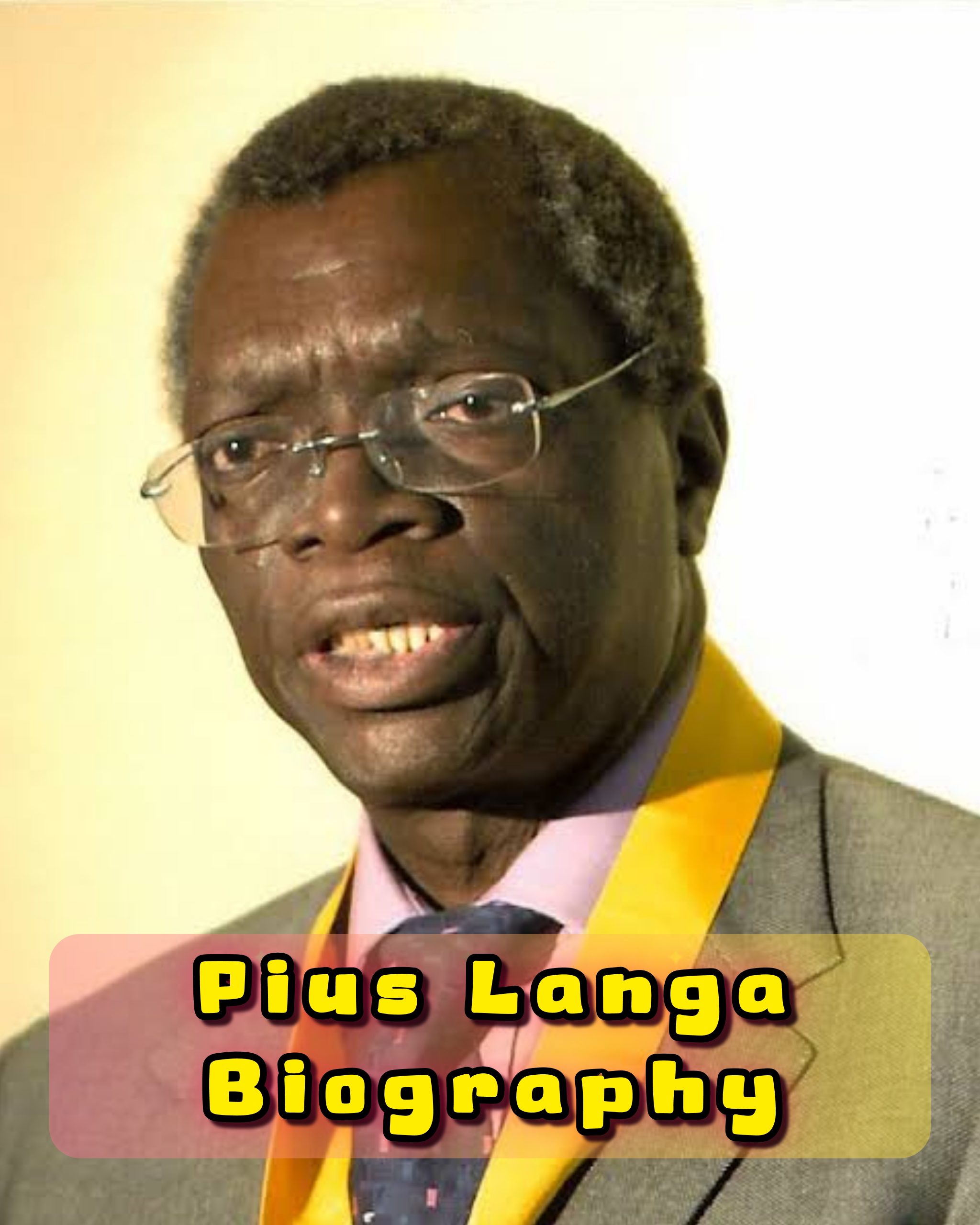
Pius Nkonzo Langa was born on 25 March 1939 in Bushbuckridge, in the former Transvaal, an area that is now part of Mpumalanga, South Africa. He was the second of seven children and grew up in a large family. His early life was shaped by modest circumstances, and rather than following a conventional path into higher education, he had to work while pursuing his studies. His father was a minister in the Pentecostal Holiness Church, giving his childhood a strong religious and community-oriented background.
In 1957, Langa began working at a shirtmaking factory, a job he held while continuing his secondary education through private study. He completed his matriculation in 1960. His early working life demonstrated the combination of employment and self-directed education that would remain an important part of his journey. After completing high school, he joined the Department of Justice, initially working as a messenger and interpreter.
Langa’s early experiences in government service exposed him to the South African legal system during the apartheid era. He eventually progressed through positions within the Department of Justice and later became a magistrate. His experience of the legal system, combined with his personal commitment to justice and equality, helped shape the career that would ultimately take him from a government employee to South Africa’s Chief Justice.
Pius Langa Education
Pius Langa pursued his legal education through the University of South Africa (UNISA), studying by correspondence while working. He earned his B Iuris degree in 1973, followed by his LLB degree in 1976. His educational journey is particularly notable because he financed much of his own education and continued studying while employed.
Rather than beginning his career after university, Langa accumulated professional experience alongside his studies. His years in the Department of Justice gave him practical exposure to courts, legal procedures and the administration of justice before he entered private legal practice. This combination of practical experience and formal legal education became an important foundation for his later judicial career.
Langa later received numerous honorary academic distinctions in recognition of his contribution to law and public service. South African History Online records honorary Doctor of Laws degrees from universities including Zululand, Western Cape, Cape Town, UNISA, Rhodes, Yale University and the National University of Ireland. He also received an honorary Doctor of Public Service degree from Northeastern University in Boston.
Pius Langa Career
Pius Langa was admitted as an advocate of the Supreme Court of South Africa in 1977 and practised at the Natal Bar. In 1994, he attained the rank of Senior Counsel. During his years as an advocate, he represented disadvantaged and marginalised people, civic organisations and trade unions, including people facing political charges under apartheid-era legislation.
Langa was also active in the legal and constitutional transformation of South Africa. He was a founding member of the National Association of Democratic Lawyers and served on the African National Congress Constitutional Committee. He participated in constitutional discussions surrounding the Groote Schuur and Pretoria talks and contributed to the broader transition toward a democratic constitutional order.
In 1994, Nelson Mandela appointed Langa as one of the first judges of South Africa’s newly established Constitutional Court. He became Deputy President of the Court in 1997, Deputy Chief Justice in 2001, and Chief Justice of South Africa and head of the Constitutional Court in June 2005. He served as Chief Justice until his retirement in October 2009.
Beyond South Africa, Langa participated in international constitutional and judicial initiatives. He served as the Commonwealth’s Special Envoy to Fiji and was involved in constitutional review commissions in Rwanda, Zimbabwe, Tanzania and Sri Lanka. He was also associated with the Judicial Integrity Group and played a role in the development of the Bangalore Principles for Judicial Ethics.
After leaving the bench, Langa continued his public service. He chaired the Press Freedom Commission, which examined issues surrounding the regulation of South Africa’s print media. He also served on the Board of Control of the Centre for the AIDS Programme of Research in South Africa (CAPRISA), having previously supported the organisation during his time as Chancellor of the University of Natal.
Pius Langa Personal Life and Family
Pius Langa married Thandekile Mncwabe, also known as Beauty Langa, in 1966. Thandekile was a nursing sister, and the couple remained married for more than four decades. Langa later spoke about the demands that his legal and political activities placed on family life, particularly during his years as an advocate.
The couple had six children: two daughters, Phumzile and Phindile, and four sons, Vusi, Sandile, Phumlani and Ndabo. Phindile and Ndabo were twins. Their eldest son, Vusi Langa, died in a car accident in 2004. Langa later became a grandfather and reflected on the importance of spending time with his grandchildren.
Thandekile Langa died in August 2009, shortly before Pius Langa’s retirement from the Constitutional Court. At his funeral in 2013, daughter Phumzile Langa remembered her father as a private and loving family man who enjoyed dancing and singing. His family life therefore remained an important part of the personal story behind his public career.
Pius Langa Age, Religion, Nationality, Height and Physical Appearance
Pius Langa was South African and was born on 25 March 1939. He died on 24 July 2013 at the age of 74. His father was a minister in the Pentecostal Holiness Church, establishing a Christian religious background in his upbringing, although reliable biographical sources do not provide enough information to make a more specific statement about Langa’s personal denominational affiliation.
There is no reliable authoritative source establishing Pius Langa’s exact height, weight or other standardized physical measurements. Photographs show him as a formally dressed senior jurist who frequently appeared in judicial robes or suits, often wearing glasses. Because no dependable source gives his height, a specific measurement should not be presented as fact.
Pius Langa Social Media Presence
Pius Langa died in 2013, before Instagram and most modern social-media platforms became major channels for public figures. There is no verified official Instagram account reliably attributable to Pius Langa. Readers should therefore be cautious with social-media accounts using his name because they may be memorial, fan, archival or unrelated accounts rather than official profiles.
His continuing public presence is instead maintained through institutional and historical archives, including South African History Online, government records, Constitutional Court materials and publications concerning South Africa’s constitutional history. His biography on South African History Online was updated on 21 July 2026, making it one of the more recently updated reference records about his life.
Pius Langa Net Worth
There is no authoritative public record that establishes Pius Langa’s exact net worth at the time of his death. Unlike contemporary celebrities and business executives, Langa’s publicly documented career was primarily in the public legal and judicial sector, and reliable sources do not provide a verified estate valuation.
His judicial remuneration does provide some context for the type of income he earned. The South African Remuneration Commission recorded the annual salary for the Chief Justice at R769,995 in 2006, while the 2009 remuneration schedule listed total remuneration of approximately R2.03 million for the Chief Justice. These figures describe official remuneration rather than personal wealth or accumulated assets.
Based on his long career as an advocate, senior counsel, Constitutional Court judge, Deputy Chief Justice and Chief Justice, it is reasonable to say that Langa earned a substantial professional income over several decades. However, any specific net-worth figure would be an estimate rather than a documented fact. For SEO purposes, claims of a precise multimillion-rand net worth should therefore be treated cautiously unless supported by estate or financial records.
Pius Langa Death and Cause of Death
Pius Langa died on 24 July 2013 at Milpark Hospital in Johannesburg, aged 74. His family said that he had been hospitalized for approximately a month because of a long illness. Contemporary reports and CAPRISA’s obituary both described his death as following a prolonged illness, but the reliable sources reviewed here do not establish a specific medical diagnosis as the definitive cause of death.
Following his death, President Jacob Zuma declared a special official funeral for the former Chief Justice. The funeral took place in Durban on 3 August 2013, and South Africa’s national flag was flown at half-mast during the official mourning period.
Langa’s death prompted tributes from government, Parliament, the judiciary, legal organisations and members of his family. He was remembered particularly for his contribution to constitutional democracy, human rights and the transformation of South Africa’s legal system.
Legacy
Pius Langa’s legacy is closely connected with the development of South Africa’s post-apartheid constitutional order. As one of the first judges appointed to the Constitutional Court in 1994, he became part of the institution responsible for interpreting the country’s new constitutional framework. His subsequent appointment as Chief Justice placed him at the centre of South Africa’s highest judicial institution during an important period in the country’s democratic development.
His career also reflected the transformation of South Africa from apartheid to constitutional democracy. Before becoming a judge, he represented people affected by apartheid legislation and participated in constitutional negotiations and legal organisations involved in the democratic transition. His work therefore extended beyond courtroom decisions to broader questions of equality, human rights and constitutional governance.
His contribution was formally recognized through numerous honours, including the Order of the Baobab in Gold, awarded in 2008 for his contribution to law, constitutional jurisprudence and human rights. He also received the 2004 Justice Prize from the Peter Gruber Foundation, the 2006 Sydney and Felicia Kentridge Award for Service to Justice, and the eThekwini Living Legends award. His honorary degrees from several universities further reflected the recognition he received within the legal and academic communities.
Conclusion
Pius Langa’s biography is the story of a South African jurist who progressed from working in a shirt factory and the Department of Justice to becoming an advocate, Constitutional Court judge, Deputy Chief Justice and Chief Justice of South Africa. His education through correspondence at UNISA, legal work during apartheid, contribution to constitutional transformation and leadership of the Constitutional Court established an enduring place for him in South African legal history. He died in 2013 at 74 after a long illness, but his influence continues through constitutional scholarship, judicial institutions and historical records documenting South Africa’s transition to democracy.
Frequently Asked Questions About Pius Langa
Who was Pius Langa?
Pius Nkonzo Langa was a South African lawyer, advocate, judge and former Chief Justice. He was one of the first judges appointed to South Africa’s Constitutional Court in 1994 and served as Chief Justice from 2005 until his retirement in 2009.
How old was Pius Langa when he died?
Pius Langa was 74 years old when he died on 24 July 2013. He was born on 25 March 1939.
Who was Pius Langa’s wife?
Pius Langa’s wife was Thandekile Mncwabe, also known as Beauty Langa. They married in 1966 and had six children together.
How many children did Pius Langa have?
Pius Langa and Thandekile Langa had six children: Phumzile, Phindile, Vusi, Sandile, Phumlani and Ndabo.
Where was Pius Langa born?
Pius Langa was born in Bushbuckridge, in the former Transvaal, South Africa, on 25 March 1939. The area is now in Mpumalanga.
Where did Pius Langa study?
Pius Langa studied law through correspondence at the University of South Africa (UNISA). He obtained his B Iuris degree in 1973 and LLB degree in 1976.
When did Pius Langa become Chief Justice?
Pius Langa became Chief Justice of South Africa and head of the Constitutional Court in June 2005. He held the position until his retirement in October 2009.
When did Pius Langa die?
Pius Langa died on 24 July 2013 at Milpark Hospital in Johannesburg, South Africa.
What was Pius Langa’s cause of death?
Pius Langa died after a long illness and had been hospitalized for about a month before his death. The reliable sources reviewed do not establish a specific medical diagnosis as the definitive cause of death.
What was Pius Langa’s net worth?
Pius Langa’s exact net worth has not been reliably documented. His income came primarily from his long legal and judicial career, but there is no authoritative public record establishing the value of his estate or total personal wealth.
What awards did Pius Langa receive?
Among his major honours were the Order of the Baobab in Gold, the 2004 Justice Prize from the Peter Gruber Foundation, the Sydney and Felicia Kentridge Award for Service to Justice, and the eThekwini Living Legends award.
Is Pius Langa on Instagram?
There is no verified official Instagram account reliably attributable to Pius Langa. Since he died in 2013, accounts using his name should be treated as unofficial unless independently verified.