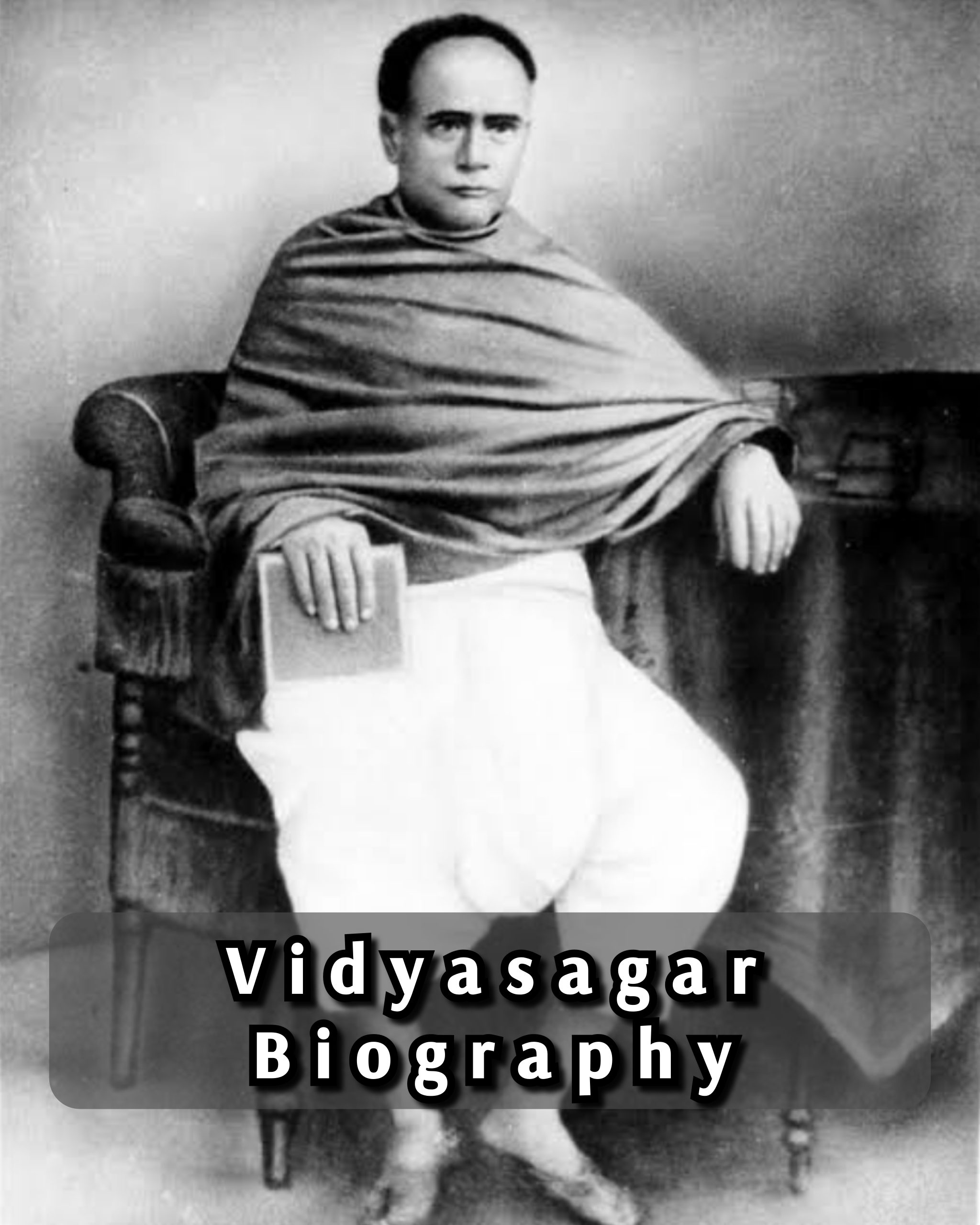
Ishwar Chandra Vidyasagar, born Ishwar Chandra Bandyopadhyay, was born on September 26, 1820, in Birsingha village, in the Midnapore region of Bengal, British India. He was born into a poor Bengali Hindu Brahmin family to Thakurdas Bandyopadhyay and Bhagavati Devi. His difficult childhood and the financial struggles experienced by his family became an important part of the story of his determination and later humanitarian outlook.
As a child, Ishwar Chandra showed an exceptional interest in learning. He received his earliest education at a village pathshala before moving to Calcutta with his father. His family had very limited financial resources, yet he remained determined to continue his studies. Accounts of his childhood describe him studying under street lighting after school because saving household oil was important to his family.
His extraordinary academic ability became evident during his youth. He entered the Sanskrit College in Calcutta in 1829, where he studied Sanskrit grammar, literature, rhetoric, Vedanta, Smriti and ethics. In 1839, after demonstrating exceptional knowledge of Sanskrit and Hindu philosophy, he received the title “Vidyasagar,” meaning “Ocean of Knowledge.” The title eventually became the name by which he was universally known.
Ishwar Chandra Vidyasagar Education
Ishwar Chandra Vidyasagar’s formal education was centered on the Sanskrit College in Calcutta, where he studied from 1829 to 1841. His studies covered several demanding disciplines, including Sanskrit grammar, literature, rhetoric, Vedanta, Smriti and ethics. His academic performance was so remarkable that he earned scholarships during his student years.
His education was not restricted to traditional Sanskrit learning. Vidyasagar also developed considerable knowledge of English and other subjects and successfully passed examinations connected with law. In 1839, his achievements earned him the title “Vidyasagar,” which recognized his extraordinary intellectual accomplishments.
The education he received later influenced his reformist philosophy. He believed that education should be accessible to ordinary people and became one of the strongest advocates for expanding education, particularly education for girls. His understanding of Sanskrit texts also became important when he argued that Hindu scriptures could support reforms such as widow remarriage.
Ishwar Chandra Vidyasagar Career
Ishwar Chandra Vidyasagar began his professional career in education in 1841, when he joined Fort William College as head pandit in the Sanskrit department. He later joined Sanskrit College and became involved in educational administration. His career eventually led him to the position of Inspector of Schools, giving him an opportunity to influence education on a much wider scale.
Vidyasagar became one of the major figures of the Bengal Renaissance. He advocated educational reform, established and supported schools, and promoted women’s education. He was particularly concerned about the limited educational opportunities available to girls and worked to create institutions where girls could receive formal schooling.
His literary career was equally significant. He wrote and translated works in Bengali and Sanskrit and helped make Bengali educational literature more accessible. His famous Barnaparichay, a Bengali primer, became one of the most influential elementary books in the language. Other important works associated with him include Betal Panchabinsati, Jibancharit, Bodhodaya and Sitar Banabas.
His most famous social-reform campaign concerned widow remarriage. Vidyasagar used his knowledge of Hindu scriptures to argue that widow remarriage was religiously permissible. His 1855 publication on the subject created intense debate, and after sustained campaigning, the Hindu Widows’ Remarriage Act of 1856 was passed. He then supported the reform in practice, including helping arrange one of the earliest widow remarriages under the new law.
Ishwar Chandra Vidyasagar Personal Life and Family
Ishwar Chandra Vidyasagar married Dinamayi Devi when he was about 14 years old. The marriage reflected the social customs of nineteenth-century Bengal. The couple had one son, Narayan Chandra Bandyopadhyay, who later became connected with his father’s reformist work.
Vidyasagar’s relationship with his son became particularly notable because Narayan Chandra chose to marry a widow. Vidyasagar strongly supported the decision despite opposition from relatives and sections of society. His support demonstrated that his campaign for widow remarriage was not merely an intellectual argument but a principle he was prepared to uphold within his own family.
His parents, Thakurdas Bandyopadhyay and Bhagavati Devi, also had a profound influence on him. His mother’s values, in particular, have frequently been associated with his strong sense of compassion and responsibility toward disadvantaged people. Throughout his life, Vidyasagar became known for philanthropy and personal generosity, eventually earning another affectionate description among Bengalis: “Dayasagar,” or “Ocean of Compassion.”
Ishwar Chandra Vidyasagar Age, Religion, Nationality, Height and Physical Appearance
Ishwar Chandra Vidyasagar was born on September 26, 1820, and died on July 29, 1891, making him 70 years old at the time of his death. He was a Bengali Hindu Brahmin and was a subject of British India during his lifetime. Reliable historical sources do not establish a precise height measurement for him, so specific figures sometimes published online should be treated cautiously. Historical descriptions and portraits generally portray him as a dignified, traditionally dressed Bengali scholar, usually shown wearing simple clothing, with a shaved or closely cropped head and a distinctive beard or facial hair in later life.
Ishwar Chandra Vidyasagar Death and Cause of Death
Ishwar Chandra Vidyasagar died on July 29, 1891, in Calcutta, now Kolkata, at the age of 70. Historical and biographical sources identify the date and place of his death, although detailed modern medical documentation of the exact underlying cause is limited.
His final years were marked by declining health, and he spent significant time away from the center of Calcutta society. He died at his residence in the Badur Bagan area of Calcutta. His death marked the passing of one of nineteenth-century Bengal’s most influential educators, writers and social reformers.
Legacy
Ishwar Chandra Vidyasagar remains one of the most important figures of the Bengal Renaissance. His contribution to education, Bengali literature and social reform transformed the intellectual and social landscape of nineteenth-century Bengal. His work helped make education more accessible while challenging deeply entrenched social customs.
His campaign for widow remarriage is perhaps his most famous social-reform achievement. The 1856 legislation that legalized Hindu widow remarriage represented a major change in the legal and social treatment of widows. Vidyasagar also advocated women’s education and challenged practices that restricted women’s opportunities.
His influence continues to be commemorated in modern India. Vidyasagar University and numerous educational institutions, roads, statues and cultural programs bear his name. In September 2026, Vidyasagar University held events commemorating the 207th birth anniversary of Pandit Ishwar Chandra Vidyasagar, demonstrating that his intellectual and social legacy remains relevant more than 130 years after his death.
Conclusion
Ishwar Chandra Vidyasagar’s life represents an extraordinary combination of scholarship, education, compassion and social courage. From a poor childhood in Birsingha, he rose to become one of Bengal’s greatest educators, writers and reformers, using his knowledge to challenge social injustice and expand educational opportunities. His work for widow remarriage, women’s education and Bengali literature permanently changed Indian society, while his example of personal integrity and humanitarian service continues to make him one of the most respected figures of the Bengal Renaissance.
Frequently Asked Questions
1. Who was Ishwar Chandra Vidyasagar?
Ishwar Chandra Vidyasagar was a Bengali scholar, educator, writer, social reformer and philanthropist who became one of the leading figures of the Bengal Renaissance.
2. When was Ishwar Chandra Vidyasagar born?
Ishwar Chandra Vidyasagar was born on September 26, 1820, in Birsingha village in the Midnapore region of Bengal.
3. Who was Ishwar Chandra Vidyasagar’s wife?
His wife was Dinamayi Devi, whom he married when he was about 14 years old.
4. Who were Ishwar Chandra Vidyasagar’s parents?
His parents were Thakurdas Bandyopadhyay and Bhagavati Devi.
5. Did Ishwar Chandra Vidyasagar have children?
Yes. He and Dinamayi Devi had a son named Narayan Chandra Bandyopadhyay.
6. Where did Ishwar Chandra Vidyasagar study?
He studied at Sanskrit College in Calcutta, where he received extensive training in Sanskrit grammar, literature, philosophy and other subjects.
7. Why is Ishwar Chandra Vidyasagar famous?
He is famous for promoting education, supporting women’s education, campaigning for widow remarriage, improving Bengali literature and contributing significantly to the Bengal Renaissance.
8. What does the name Vidyasagar mean?
Vidyasagar means “Ocean of Knowledge.” Ishwar Chandra received the title in recognition of his exceptional knowledge and academic achievements.
9. When did Ishwar Chandra Vidyasagar die?
Ishwar Chandra Vidyasagar died on July 29, 1891, in Calcutta, British India, at the age of 70.
10. What is Ishwar Chandra Vidyasagar’s greatest legacy?
His greatest legacy is his contribution to education, women’s rights, widow remarriage, Bengali literature and social reform. His efforts helped reshape nineteenth-century Bengali society and continue to influence Indian education and social-reform discussions today.