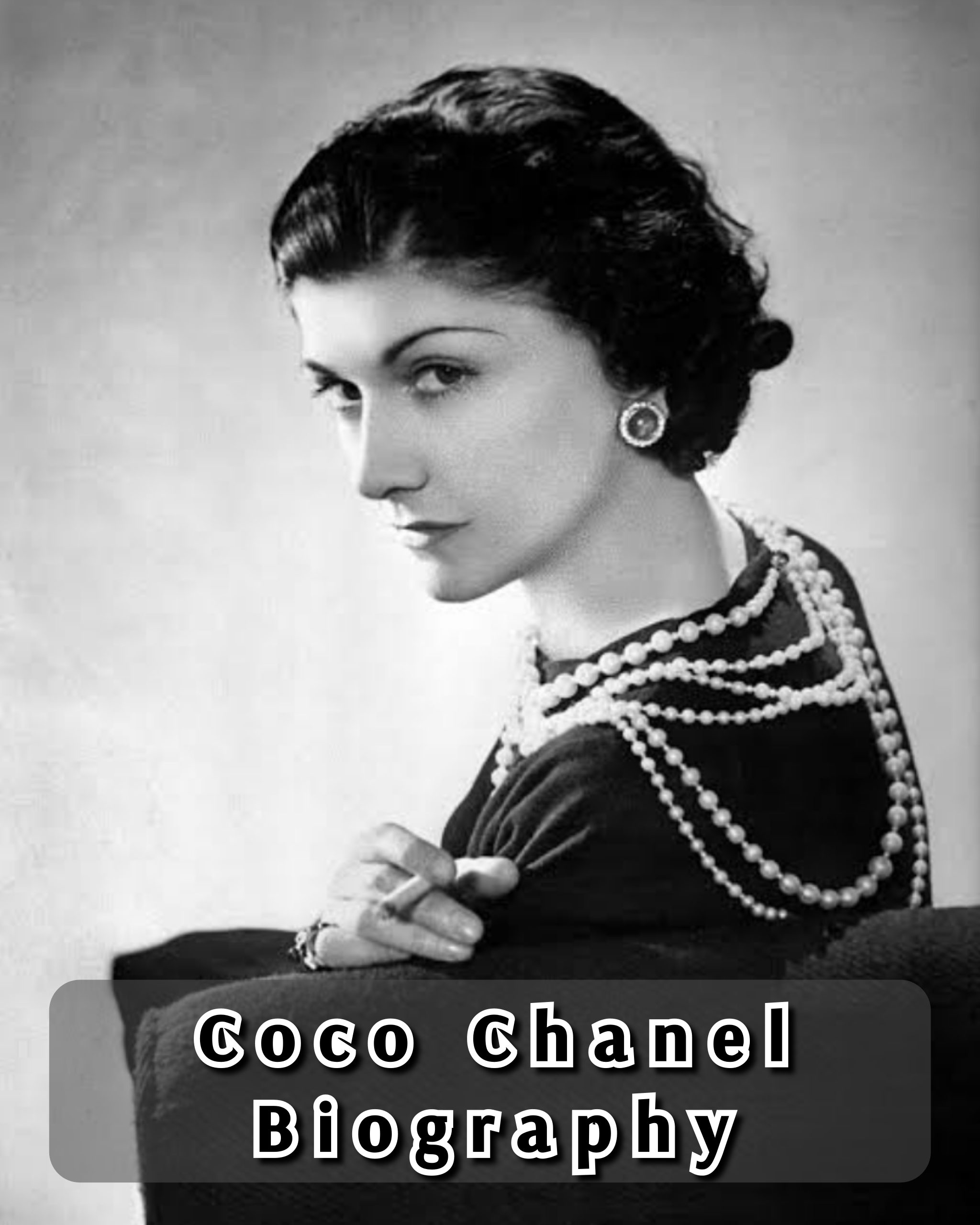
Gabrielle Bonheur Chanel, popularly known as Coco Chanel, was born on August 19, 1883, in Saumur, France. She was the second daughter of Henri-Albert Chanel, a traveling peddler, and Jeanne Eugénie Devolle, who worked as a laundrywoman. Chanel’s childhood was marked by poverty and instability. Her mother died when Gabrielle was about 12 years old, after which her father placed her and her sisters in an orphanage run by nuns at the Aubazine Abbey in central France. The difficult circumstances of her childhood later became an important part of the story behind her determination, independence and disciplined approach to life.
At Aubazine, Chanel learned practical skills that would eventually shape her career. The nuns taught her to sew, giving her a foundation that proved invaluable when she entered the world of fashion. Her years at the convent also influenced her visual taste; the stark architecture, black-and-white clothing and disciplined surroundings are often associated with elements that later appeared in her aesthetic. Chanel eventually moved to Moulins, where she worked as a seamstress and briefly performed as a singer in cafés and concert halls. It was during this period that she became associated with the nickname “Coco.”
Chanel’s early adult life introduced her to wealthy and influential people who helped open doors to a world far removed from her impoverished upbringing. Around the age of 20, she became involved with wealthy French textile heir and racehorse owner Étienne Balsan, who supported her early transition into fashionable society. She later became romantically involved with English polo player and businessman Arthur “Boy” Capel, whose encouragement and financial support helped her establish her first hat business. Chanel, however, worked hard to build an identity that was independent of the men who initially assisted her.
Coco Chanel Education
Coco Chanel did not attend a conventional university or receive a formal fashion-school education. Her most important early education took place at the Aubazine orphanage, where she learned sewing and developed practical skills under the supervision of Catholic nuns. This training gave her the technical foundation necessary to make and alter clothing and eventually become a professional dressmaker.
Her education was therefore largely practical rather than academic. Chanel learned through observation, work, travel and her interactions with people from different social and artistic backgrounds. Her years among wealthy patrons and artists exposed her to theater, music, literature, architecture and decorative arts. CHANEL’s official history describes her as an avid reader who developed strong interests in painting, sculpture, architecture, history, Baroque and Byzantine art, as well as Slavic culture.
Although Chanel did not earn a university degree, she became a lifelong student of style and culture. She absorbed ideas from menswear, sports, travel, theater and the arts and transformed them into a distinctive fashion language. Her education ultimately came through experience: sewing at the convent, working as a milliner, observing fashionable society and continually experimenting with fabrics, silhouettes and accessories. This unconventional education helped her develop the independent creative instincts that became central to her success.
Coco Chanel Career
Coco Chanel began her professional fashion career with hats. In 1910, she opened Chanel Modes, a hat boutique at 21 rue Cambon in Paris. Her designs attracted fashionable women and actresses, helping her establish a reputation as a creative milliner. In 1912, she expanded to Deauville, where she began selling clothing made from jersey, a fabric previously associated largely with men’s underwear. Her relaxed designs challenged the restrictive fashions of the period and helped establish her reputation as a fashion innovator.
In 1915, Chanel opened her first couture house in Biarritz, and in 1918 she established her famous headquarters at 31 rue Cambon in Paris. Her designs emphasized comfort, movement and simplicity rather than the highly structured clothing common among wealthy women at the time. She incorporated elements of menswear into women’s fashion and became associated with jersey clothing, sailor shirts, tweed, simple jackets, trousers and understated silhouettes.
Chanel expanded beyond clothing and became one of the most influential entrepreneurs in luxury fashion. In 1921, she introduced Chanel No. 5, created with perfumer Ernest Beaux. It became one of the world’s most recognizable fragrances. She later introduced jewelry, cosmetics and accessories and created the famous little black dress, Chanel suit, two-tone shoes and quilted handbag. Her 2.55 handbag, introduced in 1955, became another defining symbol of the house.
World War II interrupted Chanel’s fashion business. She closed her couture operations during the German occupation of France and spent several years away from the center of fashion after the war. Her wartime associations, particularly her relationship with German intelligence officer Hans Günther von Dincklage, later became a controversial part of her biography. Newly examined documents have also contributed to continuing historical debate about her wartime activities.
Chanel returned to fashion in 1954, at the age of 70. Although her comeback initially received criticism from some French fashion commentators, her designs eventually regained popularity, particularly in the United States. She continued working until shortly before her death, maintaining a powerful influence over the fashion house and the style associated with her name.
Coco Chanel Personal Life and Family
Coco Chanel never married and had no biological children. Her romantic life nevertheless included several highly influential men. One of the most important was Arthur “Boy” Capel, the English polo player and businessman who supported Chanel during the early stages of her fashion career. Although they were deeply attached, Capel married Diana Wyndham in 1918. His death in a car accident in 1919 deeply affected Chanel, and his influence continued to appear in aspects of her designs and personal style.
Another major relationship was with Hugh Richard Arthur Grosvenor, the 2nd Duke of Westminster. Chanel met the wealthy British aristocrat around 1923, and their relationship lasted for several years. The Duke reportedly proposed marriage, but Chanel declined. She also had relationships or close associations with other prominent figures, including Russian composer Igor Stravinsky and Grand Duke Dmitri Pavlovich. Her friendships with artists and intellectuals such as Pablo Picasso, Jean Cocteau, Sergei Diaghilev and Salvador Dalí also influenced her creative world.
Family remained complicated throughout Chanel’s life. She had several siblings, and her childhood was profoundly affected by the death of her mother and her father’s absence. Chanel eventually became particularly connected to her nephew André Palasse, whom she helped financially. She built a life centered more on work, friendships, art and independence than conventional marriage and motherhood. Her decision not to marry became part of the image of independence that surrounded her public persona.
Coco Chanel Age, Religion, Nationality, Height and Physical Appearance
Coco Chanel was 87 years old when she died on January 10, 1971. She was French by nationality, having been born in Saumur, France. Chanel was raised within a Roman Catholic environment, spending her formative years at a Catholic convent orphanage, although her personal religious beliefs and spiritual practices were more complex than a simple public religious identity. Her exact height is not reliably established by authoritative historical sources, so widely circulated measurements should be treated cautiously rather than presented as certain. Photographs of Chanel show her as a slender, elegant woman with distinctive short dark hair, refined facial features and an understated personal style. Her preference for simple clothing, pearls, tailored jackets and a restrained color palette became inseparable from her public image.
Coco Chanel Net Worth
Coco Chanel’s personal net worth is difficult to establish with complete certainty because detailed financial records from her lifetime are not publicly available in the way modern celebrity finances are. Contemporary reporting shortly before her death placed her personal fortune at around $15 million, while later estimates have commonly placed her wealth at approximately $5 million to $10 million at the time of her death. For a biography, an estimate of about $10 million in 1971 is a reasonable commonly cited figure, rather than attributing today’s enormous Chanel brand value directly to her personal fortune.
Much of Chanel’s wealth came from her decades-long career as a fashion designer, businesswoman and creator of fragrances and luxury products. Chanel No. 5 became an enormous commercial success, while her couture business, accessories, jewelry and other ventures provided additional sources of income. Her financial arrangements with the Wertheimer family over Chanel’s perfume business were particularly important to her long-term income and demonstrate the complicated distinction between her personal wealth and ownership of the modern Chanel company.
It is important not to confuse Coco Chanel’s personal net worth with the modern value of Chanel. The fashion house continued to grow long after her death and is now controlled by the Wertheimer family. Forbes currently lists brothers Alain Wertheimer and Gérard Wertheimer, whose grandfather Pierre Wertheimer had partnered with Chanel, among the world’s wealthiest individuals, illustrating how dramatically the commercial value associated with the Chanel name has expanded since Coco Chanel’s lifetime.
Legacy
Coco Chanel fundamentally changed women’s fashion by challenging restrictive clothing and introducing a more practical, modern approach to elegance. She helped normalize garments and fabrics previously associated with men’s clothing and everyday wear, including jersey, trousers, sailor-inspired clothing and relaxed jackets. Her designs emphasized movement and comfort while retaining a sophisticated appearance, helping establish many principles of modern women’s fashion.
Her influence extended far beyond individual garments. The Chanel suit, little black dress, quilted handbag, two-tone shoes, pearls and Chanel No. 5 became enduring symbols of the house. Her decision to combine fashion with perfume, jewelry, beauty products and accessories helped create a luxury-business model that remains influential today. Chanel was also an important example of a woman building an international business at a time when opportunities for female entrepreneurs were considerably more limited.
More than five decades after her death, Chanel’s creative language continues to influence contemporary fashion. The house continues to revisit Gabrielle Chanel’s archives, designs and ideas, demonstrating the longevity of her vision. Her legacy is therefore not limited to the clothing she created during her lifetime; it lives through a global luxury house whose identity remains closely connected to her name and original aesthetic.
Conclusion
Coco Chanel’s biography is the story of Gabrielle Chanel, a girl who experienced poverty and orphanhood before becoming one of the most influential fashion designers and entrepreneurs of the 20th century. From learning to sew at a convent to establishing an international fashion house, she transformed women’s clothing through simplicity, comfort and independence while creating enduring icons such as Chanel No. 5, the little black dress and the 2.55 handbag. Although her personal life and wartime activities remain subjects of historical debate, her influence on fashion and luxury remains undeniable, and the Chanel name continues to represent the modern elegance she helped create.
Frequently Asked Questions
1. Who was Coco Chanel?
Coco Chanel was a French fashion designer and entrepreneur best known for founding the Chanel fashion house and revolutionizing women’s fashion with designs such as the Chanel suit, little black dress and 2.55 handbag.
2. What was Coco Chanel’s real name?
Coco Chanel’s real name was Gabrielle Bonheur Chanel. She was born in Saumur, France, on August 19, 1883.
3. How old was Coco Chanel when she died?
Coco Chanel was 87 years old when she died on January 10, 1971, in Paris.
4. Was Coco Chanel married?
No. Coco Chanel never married. She had several well-known romantic relationships, including relationships with Arthur “Boy” Capel and the Duke of Westminster.
5. Did Coco Chanel have children?
No. Coco Chanel did not have biological children and never had a husband.
6. Where did Coco Chanel receive her education?
Coco Chanel received much of her early practical education at the Aubazine convent orphanage, where she learned sewing from the nuns. She did not attend a university or formal fashion school.
7. What was Coco Chanel’s net worth?
Coco Chanel’s personal fortune at the time of her death is commonly estimated at around $10 million, although historical estimates vary. Her personal wealth should not be confused with the much greater modern value of the Chanel brand.
8. What religion was Coco Chanel?
Coco Chanel was raised in a Catholic environment and spent part of her childhood in a Catholic convent orphanage. Her personal spiritual beliefs were more complicated than a simple religious label.
9. What is Coco Chanel famous for?
Coco Chanel is famous for transforming women’s fashion and creating or popularizing iconic designs and products including the Chanel suit, little black dress, Chanel No. 5 perfume and 2.55 handbag.
10. When and where did Coco Chanel die?
Coco Chanel died on January 10, 1971, at the Ritz in Paris, France, at the age of 87.