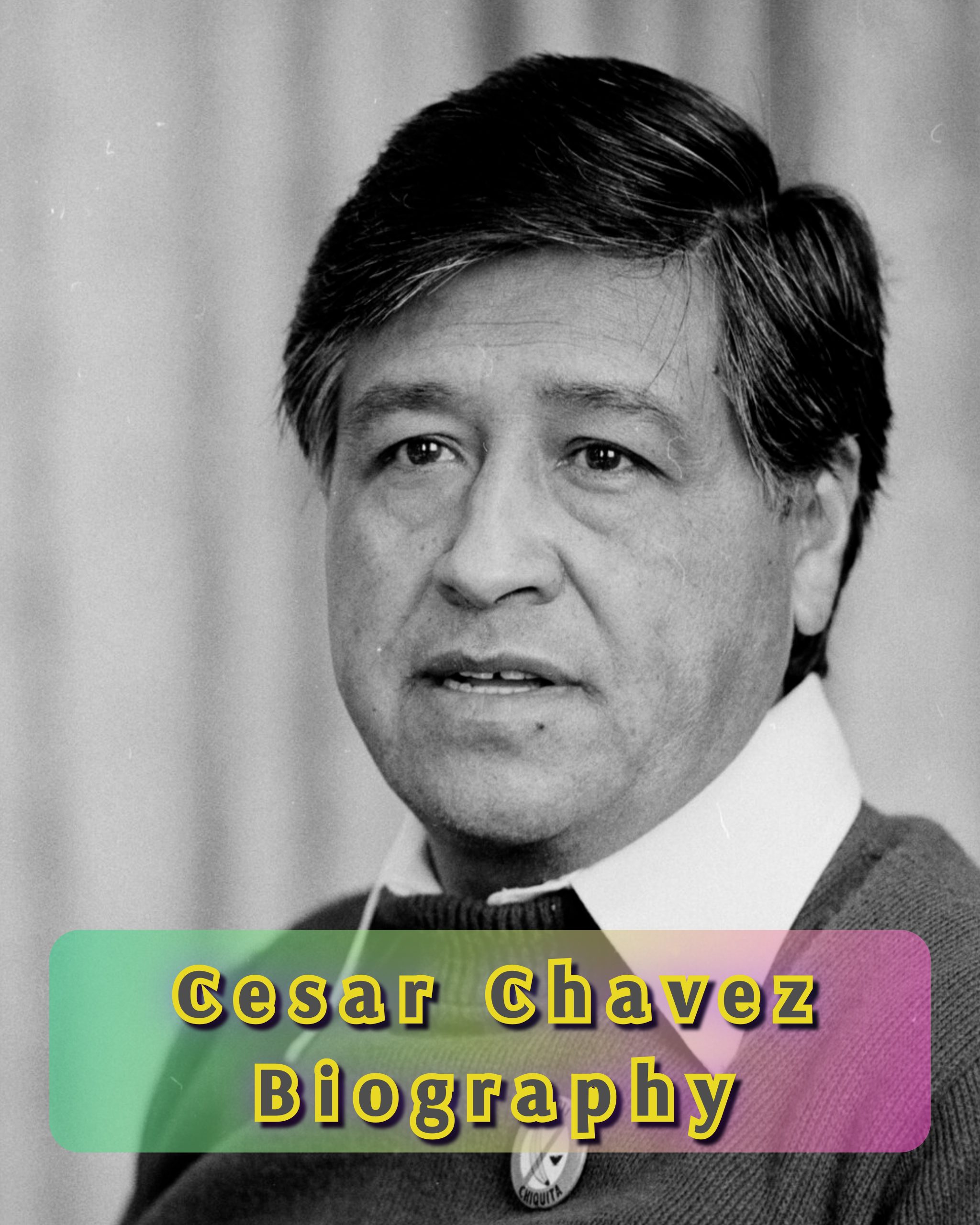
César Estrada Chávez was born on March 31, 1927, near Yuma, Arizona, to Librado Chávez and Juana Estrada Chávez. He grew up in a Mexican American family whose early life was closely connected to farming and small businesses. His family owned a grocery store, an automobile repair shop and a pool hall on their homestead before the economic devastation of the Great Depression changed their circumstances. The family eventually lost its property, forcing them into migrant farm work. Chávez’s childhood experiences with poverty, discrimination and difficult agricultural working conditions later became central to his commitment to farmworker rights.
When Chávez was about 11 years old, his family moved from Arizona to California after losing their homestead. The family joined thousands of migrant workers who traveled from farm to farm looking for employment. Chávez worked alongside his family in California’s agricultural fields and witnessed firsthand the low wages, poor housing and lack of legal protections faced by farm laborers. The experience gave him a direct understanding of the problems he would later try to address through organized labor.
His upbringing was also strongly influenced by his family and Catholic faith. His mother, Juana, taught him principles of compassion and nonviolence, while his grandmother helped establish his connection to Catholic traditions. His father, Librado, was involved in labor activism, and the family was familiar with workers organizing and striking. These early influences, combined with his experience as a migrant farmworker, helped shape Chávez’s later philosophy of service, sacrifice and nonviolent social change.
César Chávez Education
César Chávez’s formal education was limited. He attended schools in Arizona and California but left school after completing the eighth grade. His family needed him to work, and he entered agricultural labor rather than continuing into high school. Although he did not receive a traditional secondary or university education, his later career demonstrated extensive self-education through reading, community organizing and practical experience.
Chávez’s education continued outside the classroom. He developed an interest in history, social justice, labor organization and nonviolent resistance. His exposure to the ideas of figures such as Mahatma Gandhi and St. Francis of Assisi influenced his understanding of peaceful protest and personal sacrifice. His experiences working in the fields also became an important form of education, giving him firsthand knowledge of the conditions affecting agricultural workers.
In 1944, Chávez enlisted in the United States Navy and served for about two years before returning to civilian life. After his military service, he went back to agricultural work and eventually became involved in community organizing. His work with the Community Service Organization gave him practical training in voter registration, civil-rights campaigns and grassroots organizing, skills that later became fundamental to his leadership of the farmworker movement.
César Chávez Career
César Chávez began his professional organizing career with the Community Service Organization, a Latino civil-rights group. Working with organizer Fred Ross, Chávez helped register voters and organize Mexican American communities. He became increasingly convinced that agricultural workers needed a union of their own because existing organizations were not adequately addressing the problems faced by farmworkers.
In 1962, Chávez left the Community Service Organization and moved to Delano, California, where he joined Dolores Huerta and Gilbert Padilla in establishing the National Farm Workers Association. The organization later became part of the United Farm Workers. Chávez helped turn farmworker grievances into a national labor movement centered on strikes, marches, boycotts and other forms of nonviolent protest.
One of the movement’s defining moments came during the Delano grape strike, which began in 1965 with Filipino farmworkers and later gained support from Chávez and the National Farm Workers Association. The resulting grape boycott brought national and international attention to farmworkers’ conditions. Chávez also became known for undertaking hunger strikes, including a 36-day fast in 1988 to emphasize his commitment to nonviolence.
As president of the United Farm Workers, Chávez helped campaign for better wages, safer working conditions and collective bargaining rights. The UFW played a major role in the passage of California’s Agricultural Labor Relations Act of 1975, which gave agricultural labor unions organizing and collective-bargaining rights. Chávez later continued campaigns involving farmworker conditions and pesticide concerns.
César Chávez Personal Life and Family
César Chávez married Helen Fabela in 1948. The couple had eight children: Fernando, Sylvia, Linda, Eloise, Paul, Anthony, Elizabeth and Vincent Chávez. Helen was an important part of Chávez’s personal life and lived with him and their children at La Paz, the UFW headquarters in California. The Chávez family became closely associated with the farmworker movement because their home was located within the community created around the union headquarters.
The family’s life at La Paz reflected Chávez’s decision to combine his personal life with the farmworker movement. César and Helen lived there with seven of their eight children in a small two-bedroom house. La Paz became both the headquarters of the UFW and a community where organizers, supporters and families lived, worked and attended meetings. Helen’s role was particularly significant because she supported the family while César devoted much of his life to organizing.
Chávez’s personal legacy has become more complicated in 2026 because several women have publicly accused him of sexual misconduct and sexual assault. Among those making allegations is longtime labor leader Dolores Huerta, who has described alleged sexual assaults by Chávez decades ago. Other women have also made allegations involving Chávez. In September 2026, an 86-year-old former UFW worker filed a lawsuit against the UFW Foundation and César Chávez Foundation, alleging that organizations connected with Chávez failed to protect her from abuse and covered up complaints. These are allegations and legal claims, not findings of criminal guilt against Chávez, who died in 1993.
César Chávez Age, Religion, Nationality, Height and Physical Appearance
César Chávez was born on March 31, 1927, and died on April 23, 1993, at the age of 66. He was an American of Mexican heritage and was born in Arizona, making his nationality American. Chávez was a practicing Roman Catholic, and his faith influenced his views on service, sacrifice and nonviolence. He was generally described as relatively short, with biographical sources commonly giving his height as approximately 5 feet 6 inches. He had dark hair and a modest, understated appearance that contrasted with the enormous public influence he eventually gained as a labor leader.
César Chávez Net Worth
There is no reliable, authoritative public record establishing César Chávez’s exact net worth at the time of his death. Unlike many modern celebrities and business executives, Chávez did not build his career around commercial wealth. His work was primarily focused on labor organizing, civil rights and the farmworker movement, and he became known for accepting a comparatively modest lifestyle.
The National Park Service notes that Chávez and other UFW leaders lived at La Paz and that his lifestyle was closely associated with the movement’s emphasis on sacrifice. His income therefore should not be compared with the salaries or fortunes of contemporary corporate executives. His financial circumstances were tied primarily to his work as a labor organizer and union leader rather than ownership of a large commercial business.
Because there is no verified estate figure, a precise dollar amount would be speculative. A reasonable description of Chávez’s net worth is therefore that he left a modest personal estate rather than a celebrity-scale fortune. His greatest legacy was the institutional and social impact of the United Farm Workers movement, not accumulated personal wealth. Any online figure presented as his exact net worth should be treated cautiously unless supported by documented estate records.
Legacy
César Chávez became one of the best-known American labor and civil-rights leaders of the 20th century. His organizing helped bring national attention to the experiences of farmworkers and demonstrated how strikes, boycotts, marches, fasting and grassroots organizing could be used to pursue social and economic change. His partnership with figures such as Dolores Huerta and the participation of Filipino farmworker organizers were important parts of the broader movement that produced the United Farm Workers.
His former headquarters at La Paz in California is now part of the César E. Chávez National Monument. Established by President Barack Obama in 2012, the national monument preserves important places associated with Chávez and the UFW, including his former home, memorial garden and burial site. In 1994, President Bill Clinton posthumously awarded Chávez the Presidential Medal of Freedom.
However, Chávez’s legacy entered a major period of reassessment in 2026 after allegations of sexual abuse and assault became widely public. The UFW and César Chávez Foundation canceled or withdrew from some César Chávez Day commemorations after the allegations emerged, while organizations connected with his legacy began considering how his history should be represented. The new allegations have created a more complicated historical picture in which Chávez’s documented contributions to farmworker organizing are considered alongside serious allegations about his personal conduct.
Conclusion
César Chávez remains an important and increasingly complex figure in the history of American labor and civil-rights activism. From his childhood as a migrant farmworker to his leadership of the United Farm Workers, he helped place agricultural workers’ rights on the national agenda and contributed to major changes in farm labor organizing. His wife Helen, their eight children and fellow organizers were important parts of his personal and professional story. At the same time, the serious allegations that emerged publicly in 2026 have led to renewed scrutiny of his conduct and the institutions surrounding his legacy. As a result, the modern biography of César Chávez must recognize both the documented historical importance of his farmworker organizing and the unresolved allegations that have significantly changed how his life is discussed today.
Frequently Asked Questions
1. Who was César Chávez?
César Chávez was an American labor leader and civil-rights activist who co-founded the National Farm Workers Association, which later became associated with the United Farm Workers. He became internationally known for organizing farmworkers through strikes, boycotts and nonviolent activism.
2. When was César Chávez born?
César Chávez was born on March 31, 1927, near Yuma, Arizona.
3. How old was César Chávez when he died?
César Chávez was 66 years old when he died on April 23, 1993.
4. Who was César Chávez’s wife?
César Chávez’s wife was Helen Fabela Chávez. They married in 1948 and had eight children together.
5. How many children did César Chávez have?
César Chávez and Helen Chávez had eight children: Fernando, Sylvia, Linda, Eloise, Paul, Anthony, Elizabeth and Vincent.
6. What was César Chávez’s religion?
César Chávez was a Roman Catholic. His Catholic faith influenced his commitment to service, sacrifice and nonviolent activism.
7. What was César Chávez’s education?
César Chávez completed the eighth grade before leaving school to work in agriculture. He later continued his education through reading, organizing and practical experience.
8. What was César Chávez’s net worth?
There is no reliably documented public figure for César Chávez’s exact net worth. He lived a relatively modest lifestyle and devoted his career to labor organizing rather than accumulating personal wealth.
9. How did César Chávez die?
César Chávez died in his sleep on April 23, 1993, in San Luis, Arizona, while he was supporting farmworkers involved in a legal dispute. He was 66. He was later buried at La Paz in California.
10. What is César Chávez’s legacy?
César Chávez is remembered for helping organize American farmworkers, co-founding the organization that became the United Farm Workers, promoting nonviolent labor activism and helping advance collective-bargaining rights for agricultural workers. His legacy is being reassessed in 2026 following public allegations of sexual abuse and related legal action against organizations associated with his movement.