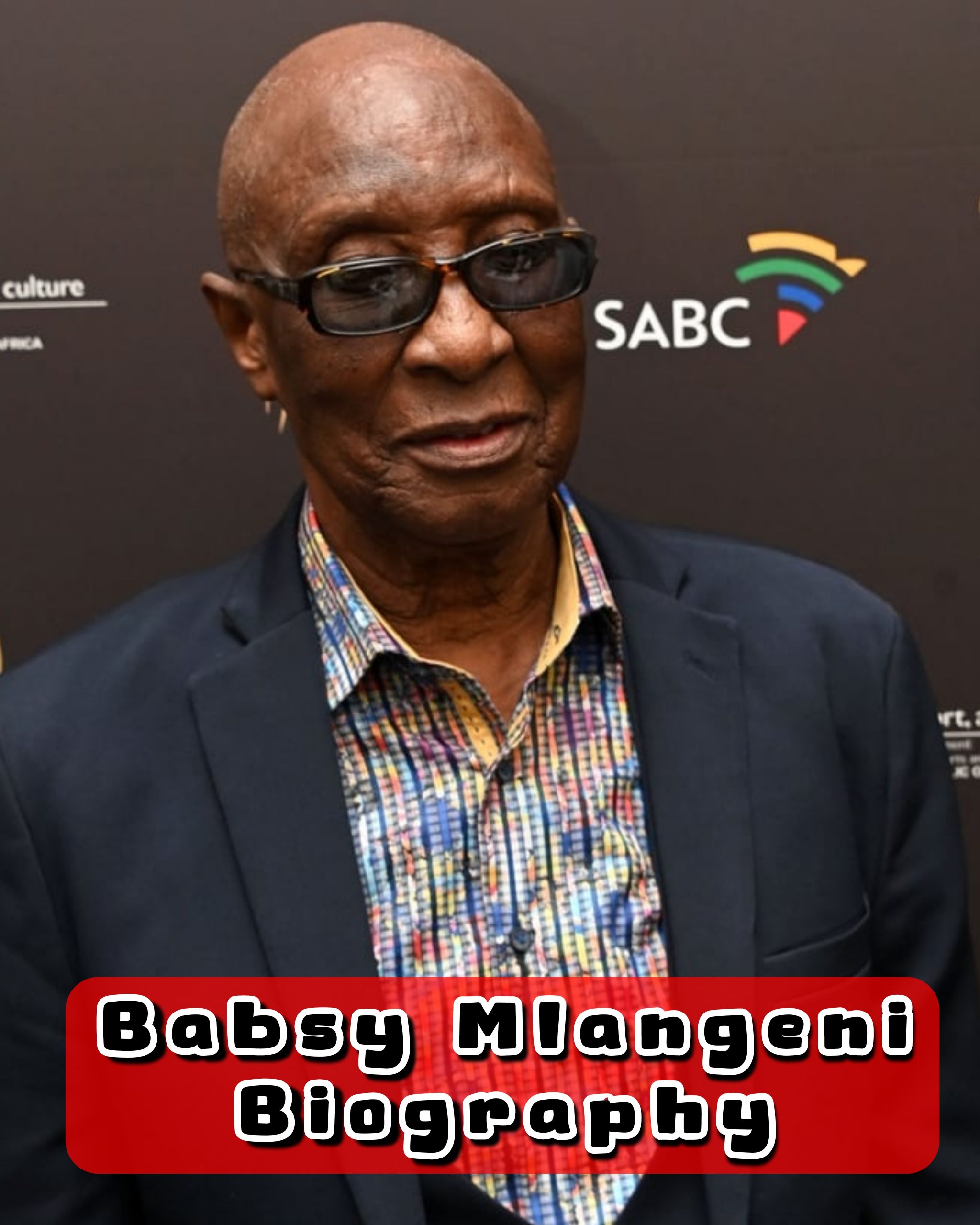
Bernard Babsy Mlangeni was a legendary South African singer, guitarist, composer and songwriter celebrated for his contribution to township soul and South African popular music. Born on 24 February 1943 in Orlando East, Soweto, he built a remarkable career that lasted nearly six decades, becoming widely recognised for his distinctive voice and timeless songs, including Sala Emma, Bua Nnete, Botsotso, Lonely Man and Umadlembathini. Despite losing his eyesight during childhood, he overcame significant barriers to establish himself as one of South Africa’s respected musical figures. Babsy Mlangeni died on 1 October 2026 at the age of 83, leaving behind a musical legacy that continues to resonate with fans across generations.
Babsy Mlangeni Biography: Early Life
Babsy Mlangeni was born Bernard Mlangeni on 24 February 1943 in Orlando East, Soweto, South Africa. He grew up in a community that would later become central to his musical identity. His childhood coincided with a period of significant social and political challenges in South Africa, particularly for Black communities living under apartheid. Despite the difficult circumstances surrounding his upbringing, Mlangeni developed an interest in music that eventually became the foundation of his professional life.
One of the most significant challenges Mlangeni faced was losing his eyesight at approximately three years old. Growing up blind presented obstacles, including difficulties associated with social prejudice and limited opportunities for people with disabilities. However, he refused to allow his visual impairment to define his ambitions. His determination to learn, perform and develop his musical abilities helped him build the confidence and skills necessary to pursue a career in entertainment.
Music became an important part of Mlangeni’s early life, offering him a way to express himself and connect with others. He developed an interest in playing instruments and singing, eventually becoming known for his distinctive voice and musical versatility. His experiences in Soweto and his determination to overcome adversity influenced the artist he became, helping him create music that connected with ordinary people and reflected themes of love, relationships and everyday life.
Babsy Mlangeni Biography: Education
Babsy Mlangeni attended Athlone School for the Blind in Bellville, near Cape Town, Western Cape, South Africa. The institution played an important role in his development, providing an educational environment in which he could pursue his interests while receiving support suited to his visual impairment. His experience at the school helped him develop practical skills and confidence that would become valuable throughout his musical career.
During his time at Athlone School for the Blind, Mlangeni learned to play the guitar and began developing his abilities as a musician. He also participated in musical activities with other students, creating opportunities to perform and collaborate. His enthusiasm for music became increasingly apparent, and he explored different ways of producing sounds and accompanying his singing. Reports about his early life also describe his resourcefulness, including his experimentation with homemade musical instruments.
Mlangeni’s education extended beyond formal classroom learning. Through musical collaboration, practice and live performance, he gained experience that helped prepare him for the entertainment industry. His involvement with fellow musicians laid the groundwork for The All-Rounders, a group associated with his early career. Although his formal educational qualifications have not been widely documented, his training at Athlone School for the Blind was a significant influence on his development as a singer, guitarist and composer.
Babsy Mlangeni Biography: Career and Songs
Babsy Mlangeni’s professional music career began in the late 1960s, and he gradually established himself as a prominent voice in South African popular music. He became associated with The All-Rounders, a group of musicians whose work contributed to the development of township soul. As the group’s lead singer, he developed a distinctive performance style that combined expressive vocals with accessible melodies and emotionally engaging storytelling. His career developed during an era when blind musicians faced considerable barriers in the entertainment industry.
Mlangeni rose to wider prominence with songs such as Bua Nnete, which helped establish his reputation in the early 1970s. He subsequently became known for Sala Emma, a song dedicated to his wife, Emma Mlangeni, which developed into one of his signature recordings. Other popular songs associated with his catalogue include Botsotso, Lonely Man and Umadlembathini. His music reached audiences across language communities, with recordings and performances in isiZulu, Sesotho and isiXhosa.
Over the decades, Mlangeni continued to perform and contribute to South African music, earning respect for his consistency, talent and resilience. His achievements included the Black Music Award for Best Male Vocalist in 1975 and 1976, the South African Music Awards Lifetime Achievement Award in 2017, and recognition at the National Arts and Culture Awards in 2025. He also helped inspire younger musicians, including fellow visually impaired performer Steve Kekana. His career demonstrated how musical talent, perseverance and cultural expression could overcome barriers and bring people together.
Babsy Mlangeni Biography: Personal Life and Family
Babsy Mlangeni maintained a family life alongside his long music career. He was married to Emma Mlangeni, who became an important part of his personal story and musical legacy. Their relationship inspired Sala Emma, one of his best-known songs and a memorable expression of love and devotion. The song remained closely associated with their relationship throughout his career and continued to attract attention from fans long after its release.
Mlangeni was a father and grandfather who valued his family. His daughter Zenzi Mlangeni, also referred to in media coverage as Zenzi Ngcobo, spoke publicly about the family’s grief following his death in October 2026. His daughter Busisiwe was also mentioned in reports surrounding his funeral. His family played an important role in celebrating his life, preserving his memories and acknowledging the support he received from music lovers throughout South Africa.
His wife, Emma, died in 2020, according to reports about the family’s recollections. Mlangeni subsequently continued his musical journey while carrying the memories of their relationship. Details about all his children, extended relatives and private family matters have not been comprehensively documented in reliable public sources. Nevertheless, the tributes shared by his family following his death highlighted his importance not only as a musician but also as a husband, father and grandfather.
Babsy Mlangeni Age, Religion, Nationality, Height and Physical Appearance
Babsy Mlangeni was born on 24 February 1943 and died on 1 October 2026 at the age of 83. He was South African by nationality and was born in Orlando East, Soweto. He was widely recognised for his musical talent and for overcoming the challenges associated with losing his eyesight during early childhood. His life became an example of perseverance for aspiring musicians and people living with disabilities.
Mlangeni’s religion has not been reliably established in publicly available biographical sources. Similarly, his exact height has not been confirmed by an authoritative source. These details should not be presented as established facts without reliable documentation. His public identity was primarily associated with his music, family life and contribution to South African cultural heritage rather than personal measurements or religious affiliation.
In terms of physical appearance, Mlangeni was known publicly as a blind musician whose performances centred on his expressive singing voice, musical interpretation and stage presence. He played instruments including the guitar and was recognised for his distinctive vocal delivery. His visual impairment was an important part of his life story, but it did not prevent him from recording music, performing for audiences or achieving recognition in the South African entertainment industry.
Babsy Mlangeni Biography: Social Media Presence
Babsy Mlangeni built his reputation primarily through music, radio, live performances and television appearances rather than through social media. His popularity developed over several decades, long before Instagram and other digital platforms became central to promoting musicians. His recordings and memorable performances helped him maintain a connection with audiences across generations.
A verified personal Instagram handle for Babsy Mlangeni could not be established from the available reliable sources. Readers should therefore be cautious about accounts using his name that have not been confirmed by his family or official representatives. Fans can look for tributes, archival performances and updates through established South African broadcasters, music organisations and verified entertainment publications.
Following his death in October 2026, social media also provided a space for fans to express condolences and celebrate his musical achievements. His famous songs, particularly Sala Emma and Bua Nnete, continued to attract attention as listeners remembered his contribution to South African music. His recordings remain an important part of his digital legacy.
Babsy Mlangeni Net Worth: Earnings, Salary and Financial Status
Babsy Mlangeni’s exact net worth was not publicly verified through reliable financial disclosures before his death in October 2026. Although various entertainment websites may publish estimated figures, there is insufficient independently verified information to establish a dependable total for his assets, savings, property and other financial interests. Any specific net worth attributed to him should therefore be treated cautiously.
During his nearly six-decade career, Mlangeni could have earned income from music recordings, live performances, royalties, songwriting and other professional engagements. As a recognised South African recording artist, he also benefited from the commercial and cultural value of songs such as Sala Emma, Bua Nnete and Botsotso. However, his actual earnings would have varied according to recording contracts, performance fees, royalty arrangements and the commercial success of individual releases.
A responsible net worth estimate would require information about his recorded music royalties, performance income, publishing rights, property and other assets, as well as any liabilities. Since those details have not been publicly established, assigning a numerical figure would be speculative. His lasting contribution to South African music can be documented more confidently than his personal wealth, and his cultural influence remains an important part of his legacy.
Babsy Mlangeni Biography: Legacy and Achievements
Babsy Mlangeni left a lasting mark on South African music through his distinctive voice, memorable songs and contribution to township soul. His recordings reflected themes of love, relationships and everyday experiences, allowing his music to connect with audiences from different backgrounds. Songs such as Sala Emma, Bua Nnete, Botsotso, Lonely Man and Umadlembathini remain central to discussions of his musical career.
Another important aspect of Mlangeni’s legacy was his ability to overcome barriers associated with blindness. He pursued a demanding career in an industry where musicians with disabilities faced significant obstacles, demonstrating that visual impairment did not prevent artistic achievement. His recognition through the South African Music Awards Lifetime Achievement Award in 2017 and the Artist Living With Disability Award at the 2025 National Arts and Culture Awards reflected the importance of his contribution to the cultural sector.
Mlangeni also influenced younger musicians, including Steve Kekana, and helped demonstrate the importance of supporting artists with disabilities. Following his death, tributes from government representatives, music organisations, colleagues and fans celebrated his achievements. His memorial service was held at Soweto Theatre on 8 October 2026, followed by his funeral on 11 October 2026 at Alberton Civic Centre in Ekurhuleni. His music, recordings and influence remain part of South Africa’s cultural heritage.
Conclusion
Babsy Mlangeni’s biography is a story of talent, perseverance, love and lasting musical achievement. Born Bernard Mlangeni in Soweto in 1943, he overcame childhood blindness to become a respected singer, guitarist, composer and songwriter whose career spanned nearly six decades. His marriage to Emma Mlangeni inspired the beloved song Sala Emma, while recordings such as Bua Nnete and Botsotso secured his place in South African music history. His death at the age of 83 on 1 October 2026 marked the end of an extraordinary life, but his songs and influence continue to inspire music lovers and future generations of performers.
Frequently Asked Questions About Babsy Mlangeni
1. Who was Babsy Mlangeni?
Babsy Mlangeni was a South African singer, guitarist, composer and songwriter famous for songs such as Sala Emma and Bua Nnete. He built a musical career lasting nearly six decades and became an influential figure in South African soul music.
2. What was Babsy Mlangeni’s real name?
Babsy Mlangeni’s real name was Bernard Mlangeni. He was popularly known as Babsy throughout his music career.
3. How old was Babsy Mlangeni when he died?
Babsy Mlangeni was 83 years old when he died on 1 October 2026. He was born on 24 February 1943 in Orlando East, Soweto, South Africa.
4. Is Babsy Mlangeni dead?
Yes. Babsy Mlangeni died on 1 October 2026 at the age of 83 following an illness. His memorial service took place on 8 October 2026, and his funeral was held on 11 October 2026.
5. Who was Babsy Mlangeni’s wife?
Babsy Mlangeni’s wife was Emma Mlangeni. She inspired his famous song Sala Emma and died in 2020, according to published accounts of the family’s recollections.
6. Did Babsy Mlangeni have children?
Yes. Babsy Mlangeni had children, including daughters Zenzi Mlangeni and Busisiwe. His family paid tribute to him following his death in October 2026.
7. What was Babsy Mlangeni’s most famous song?
One of Babsy Mlangeni’s most famous songs was Sala Emma, a love song dedicated to his wife. Other well-known recordings include Bua Nnete, Botsotso, Lonely Man and Umadlembathini.
8. Where did Babsy Mlangeni study?
Babsy Mlangeni attended Athlone School for the Blind in Bellville, near Cape Town, South Africa. He learned to play the guitar and developed his musical abilities while studying there.
9. Was Babsy Mlangeni blind?
Yes. Babsy Mlangeni lost his eyesight at approximately three years old. Despite his visual impairment, he developed a successful career as a singer, guitarist and composer.
10. What was Babsy Mlangeni’s nationality?
Babsy Mlangeni was South African. He was born in Orlando East, Soweto, and became an important figure in South African music.
11. What was Babsy Mlangeni’s religion?
His religious affiliation has not been reliably confirmed in publicly available biographical sources. It is therefore not possible to state his religion as a verified fact.
12. How tall was Babsy Mlangeni?
Babsy Mlangeni’s exact height has not been reliably documented in publicly available sources.
13. What was Babsy Mlangeni’s net worth?
Babsy Mlangeni’s net worth has not been reliably established. His career included recordings, songwriting and performances, but there is insufficient verified financial information to calculate his total wealth.
14. Was Babsy Mlangeni on Instagram?
A verified personal Instagram account for Babsy Mlangeni could not be confirmed. Fans can search established South African music and entertainment platforms for tributes, archival performances and information about his career.
15. Which awards did Babsy Mlangeni win?
Babsy Mlangeni received the Black Music Award for Best Male Vocalist in 1975 and 1976. He also received the South African Music Awards Lifetime Achievement Award in 2017 and the Artist Living With Disability Award at the 2025 National Arts and Culture Awards.
16. What is Babsy Mlangeni’s legacy?
Babsy Mlangeni’s legacy is his contribution to South African soul music, his memorable recordings and his example of overcoming barriers associated with blindness. His music continues to connect generations of listeners, and his career remains an important part of South Africa’s cultural history.