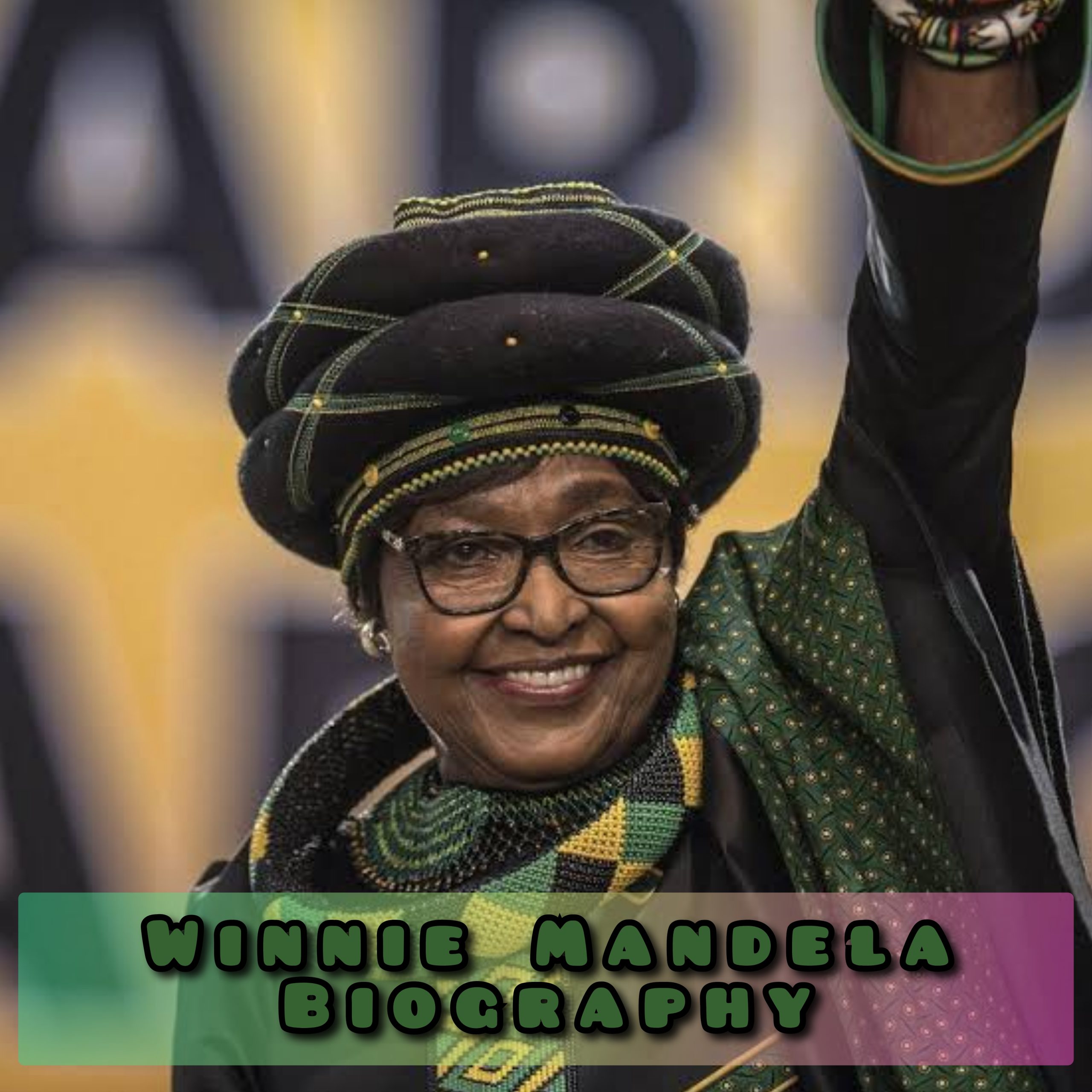
Winnie Madikizela-Mandela was born Nomzamo Winifred Zanyiwe Madikizela on September 26, 1936, in Bizana, Pondoland, in what was then the Transkei, South Africa. She was born into a Xhosa family and grew up during a period when racial segregation and inequality were deeply embedded in South African society. Her parents, Columbus and Gertrude Madikizela, were teachers, and their influence helped shape her strong interest in education, social issues and the welfare of Black South Africans.
As a young girl, Winnie experienced the realities of apartheid and the social inequalities affecting Black communities. She attended local schools before continuing her education at the Mfundisweni Secondary School and later the Shawbury High School. She went on to study at Jan Hofmeyr School of Social Work in Johannesburg, where she trained as a social worker. Her education prepared her for a career focused on helping disadvantaged communities and gave her greater exposure to the political and social conditions affecting Black South Africans.
After completing her studies, Winnie became one of the first Black medical social workers at Baragwanath Hospital in Johannesburg. Her work brought her into direct contact with poverty, racial discrimination and the hardships faced by Black families under apartheid. During this period, she became increasingly interested in political activism and the struggle against apartheid. Her life changed significantly in the 1950s when she met Nelson Mandela, whose involvement in the anti-apartheid movement would profoundly influence both her personal life and her eventual political career.
Winnie Mandela Education
Winnie Madikizela-Mandela began her education in the Eastern Cape, where she attended local schools in the Transkei region. She later studied at Mfundisweni Secondary School and continued her secondary education at Shawbury High School. Growing up in a family of teachers, education was strongly valued in her household, and her academic journey helped develop her interest in social issues affecting Black South Africans.
After completing her secondary education, Winnie moved to Johannesburg to pursue professional training. She enrolled at the Jan Hofmeyr School of Social Work, where she studied social work and became one of the first Black South African women to receive formal training in the profession. Her studies exposed her to the social and economic difficulties experienced by Black communities under apartheid and strengthened her commitment to improving their living conditions.
Following her training, Winnie began working as a social worker at Baragwanath Hospital in Johannesburg. Her position gave her firsthand experience of poverty, racial inequality and inadequate social services affecting Black families. Although she did not pursue a traditional university degree, her professional education and early work experience played an important role in shaping her later career as an anti-apartheid activist and political figure.
Winnie Mandela Career
Winnie Madikizela-Mandela began her professional career as a social worker at Baragwanath Hospital in Johannesburg, where she worked with Black patients and families facing poverty, discrimination and limited access to social services under apartheid. Her experiences at the hospital brought her closer to the realities of racial inequality and gradually pushed her toward political activism. In the 1950s, she became increasingly involved in the anti-apartheid struggle and joined the African National Congress (ANC), becoming an important voice in the movement while her husband, Nelson Mandela, was imprisoned.
During the following decades, Winnie became one of the most recognizable women in South Africa’s liberation struggle. She faced repeated arrests, detention, banning orders, interrogation and harassment by the apartheid authorities. Despite these restrictions, she continued speaking against apartheid and mobilizing communities. She became particularly prominent in the 1980s, when her defiant speeches and public appearances earned her admiration among many anti-apartheid supporters. Her political influence also led to controversy, particularly because of her association with the Mandela United Football Club and allegations of violence involving members of the group.
Following the end of apartheid and South Africa’s transition to democracy, Winnie entered formal politics. She served as Deputy Minister of Arts, Culture, Science and Technology from 1994 to 1996 and later became a Member of Parliament. She also held a senior position in the ANC Women’s League, serving as its president. Although her political career was marked by both support and controversy, she remained an influential figure in South African public life. In her later years, Winnie continued to participate in political and social discussions, maintaining her position as one of the most complex and enduring figures of the anti-apartheid era.
Winnie Mandela Personal Life and Family
Winnie Madikizela-Mandela was born into the Madikizela family in Bizana, in the former Transkei. Her parents were Columbus Madikizela, a teacher, and Gertrude Madikizela, a domestic science teacher. She grew up with several siblings, including her elder sister Mabel Madikizela. Her upbringing in a family that valued education and community service played an important role in shaping her character and later commitment to social and political activism.
Winnie met Nelson Mandela in Johannesburg in the 1950s, and the two married on June 14, 1958. Their marriage became one of the most famous relationships in South African history, but Nelson’s imprisonment and the pressures of the anti-apartheid struggle meant that they spent many years apart. They had two daughters, Zenani Mandela-Dlamini and Zindziswa (Zindzi) Mandela, who were born during the years of apartheid. Winnie and Nelson Mandela eventually separated and divorced in 1996, after 38 years of marriage.
Winnie remained closely connected to her children and grandchildren throughout her later life. Zenani Mandela-Dlamini went on to become a diplomat, while Zindzi Mandela became a diplomat, writer and public figure before her death in 2020. Through her daughters, Winnie became a grandmother and continued to have a significant place within the Mandela family. She never remarried after her divorce from Nelson Mandela, and her later years were largely devoted to her family, political interests and the continuing debate surrounding her legacy in South Africa.
Winnie Mandela Age, Religion, Nationality, Height and Physical Appearance
Winnie Madikizela-Mandela was born on September 26, 1936, and died on April 2, 2018, at the age of 81. She was South African by nationality and was born in Bizana in the former Transkei. She was raised in a Christian family and was associated with Methodist Christianity during her life, although her public identity was primarily defined by her political activism and role in the anti-apartheid struggle.
Winnie’s exact height was not officially documented in reliable public records, so figures sometimes published online should be treated as estimates rather than confirmed facts. Photographs and historical footage show her as a medium-to-tall woman with a dignified and commanding presence. She was widely recognized for her distinctive fashion, traditional African clothing and headwear, which became an important part of her public image.
Throughout her public life, Winnie was known for her strong, confident appearance and expressive personality. She frequently appeared in colorful traditional attire and became associated with the bold visual style of South African political activism. Her appearance, public speeches and unwavering demeanor contributed to her image as one of the most recognizable women of the anti-apartheid movement.
Winnie Mandela Social Media Presence
Winnie Madikizela-Mandela did not have the social-media presence that public figures commonly maintain today, as she died in 2018, before Instagram became central to celebrity and political branding. Her legacy is instead represented online through archival photographs, interviews, historical material and accounts connected to the Nelson Mandela Foundation and her family.
On Instagram, one account associated with her legacy is @winniedemandela, which shares photographs, memories, historical moments and content related to her life and contribution to South Africa’s anti-apartheid struggle. However, because accounts can change ownership or activity over time, readers should distinguish between an official personal account and a tribute or legacy account.
Today, Winnie’s name continues to attract significant attention on social media, particularly around anniversaries of her birth and death, South African history and discussions about her political legacy. Her family members, including members of the wider Mandela family, have also helped keep aspects of her story visible to newer generations through interviews, documentaries and social-media content.
Winnie Mandela Net Worth
Winnie Madikizela-Mandela’s exact net worth at the time of her death in 2018 is not publicly established by reliable financial records. Online estimates vary considerably, so presenting a specific multimillion-rand figure as fact would be misleading. Her personal income came primarily from her work as a social worker, her political career and parliamentary service rather than from a large private business empire.
One useful indication of her earnings comes from reports during the 1990s and 2000s. According to Sunday Times, Winnie was earning about R16,000 per month as a Member of Parliament at one point. She also served as Deputy Minister of Arts, Culture, Science and Technology from 1994 to 1996, although a reliable public record of her exact ministerial salary has not been located.
It is also important not to confuse Winnie Mandela’s wealth with Nelson Mandela’s estate. The couple divorced in 1996, and Nelson Mandela’s 2014 will did not leave her a direct inheritance; his estate was provisionally valued at about R46 million, excluding certain royalties and trusts. Winnie had her own income and assets, but there is insufficient evidence to calculate a trustworthy final net-worth figure. Therefore, the safest biography estimate is “not publicly disclosed/unknown”, rather than an unsupported dollar amount.
Legacy
Winnie Madikizela-Mandela remains one of the most influential and controversial women in South Africa’s history. She became a powerful symbol of resistance to apartheid, particularly during the years when Nelson Mandela was imprisoned. Her determination, public activism and willingness to confront the apartheid government earned her admiration among many supporters of the liberation movement. She was often referred to as the “Mother of the Nation”, reflecting her importance to many South Africans during the struggle for freedom.
At the same time, Winnie’s legacy is complex because her political career was accompanied by serious controversies. Her association with the Mandela United Football Club, allegations of violence and the death of teenager Stompie Seipei remain important parts of historical discussions about her life. Her appearance before the Truth and Reconciliation Commission also contributed to the continuing debate over her actions and responsibilities. As a result, Winnie is remembered neither simply as a hero nor solely through the controversies surrounding her, but as a complicated political figure shaped by the extraordinary violence and pressures of apartheid-era South Africa.
Years after her death in 2018, interest in Winnie’s life and legacy continues. Her story has been revisited through books, documentaries, archival material and public discussions about the anti-apartheid struggle. The 2026 documentary series The Trials of Winnie Mandela has further renewed interest in her life, family, activism and controversies, encouraging a new generation to examine her role in South African history. Her enduring legacy lies in the debate she continues to inspire about resistance, political leadership, gender, sacrifice, violence and the complicated human stories behind the fight against apartheid.
Conclusion
Winnie Madikizela-Mandela remains a defining and complex figure in South African history. From her early life and career as a social worker to her decades of anti-apartheid activism, political career, family life and later controversies, her story reflects many of the struggles surrounding South Africa’s journey to democracy. Although her legacy continues to be debated, her courage, influence and role in the liberation struggle have ensured that her name remains an important part of the country’s history. Years after her death, renewed interest in her life continues through documentaries, historical research and public discussion, ensuring that Winnie Mandela’s story remains relevant to future generations.
Frequently Asked Questions About Winnie Mandela
Who was Winnie Mandela?
Winnie Madikizela-Mandela was a South African anti-apartheid activist, politician and social worker. She was the second wife of Nelson Mandela and became one of the most prominent women in the struggle against apartheid.
When was Winnie Mandela born?
Winnie Mandela was born on September 26, 1936, in Bizana, in the former Transkei, South Africa.
How old was Winnie Mandela when she died?
Winnie Mandela was 81 years old when she died on April 2, 2018, in Johannesburg, South Africa.
Who was Winnie Mandela’s husband?
Winnie Mandela’s husband was Nelson Mandela, South Africa’s first democratically elected president. They married in 1958 and divorced in 1996.
Did Winnie Mandela have children?
Yes. Winnie Mandela had two daughters, Zenani Mandela-Dlamini and Zindziswa (Zindzi) Mandela, with Nelson Mandela.
What did Winnie Mandela do for a living?
Winnie Mandela was a social worker, anti-apartheid activist and politician. She also served as South Africa’s Deputy Minister of Arts, Culture, Science and Technology and later as a Member of Parliament.
What was Winnie Mandela’s role in the anti-apartheid struggle?
Winnie Mandela became a prominent anti-apartheid activist who opposed racial segregation and supported resistance to apartheid. She endured arrests, detention, banning orders and state harassment because of her political activities.
What was Winnie Mandela’s net worth?
Winnie Mandela’s exact net worth was not publicly established. Her income came mainly from her professional work and political career, and reliable sources do not provide a definitive figure for her personal wealth.
What was Winnie Mandela’s religion?
Winnie Mandela was Christian and was associated with the Methodist tradition.
How tall was Winnie Mandela?
Winnie Mandela’s exact height is not reliably documented in authoritative public records. Height figures published online should therefore be treated as estimates.
What happened to Winnie Mandela?
Winnie Mandela died on April 2, 2018, at the age of 81. She had been receiving medical treatment in Johannesburg and died after a period of illness.
Why was Winnie Mandela controversial?
Winnie Mandela’s legacy was controversial because of allegations of violence connected to the Mandela United Football Club and the 1989 kidnapping and assault of Stompie Seipei. She was convicted of kidnapping and later appeared before the Truth and Reconciliation Commission.
What is Winnie Mandela’s legacy?
Winnie Mandela is remembered as an important anti-apartheid activist and political figure whose life combined resistance, sacrifice, political influence and controversy. Her legacy remains the subject of historical debate and renewed public interest.