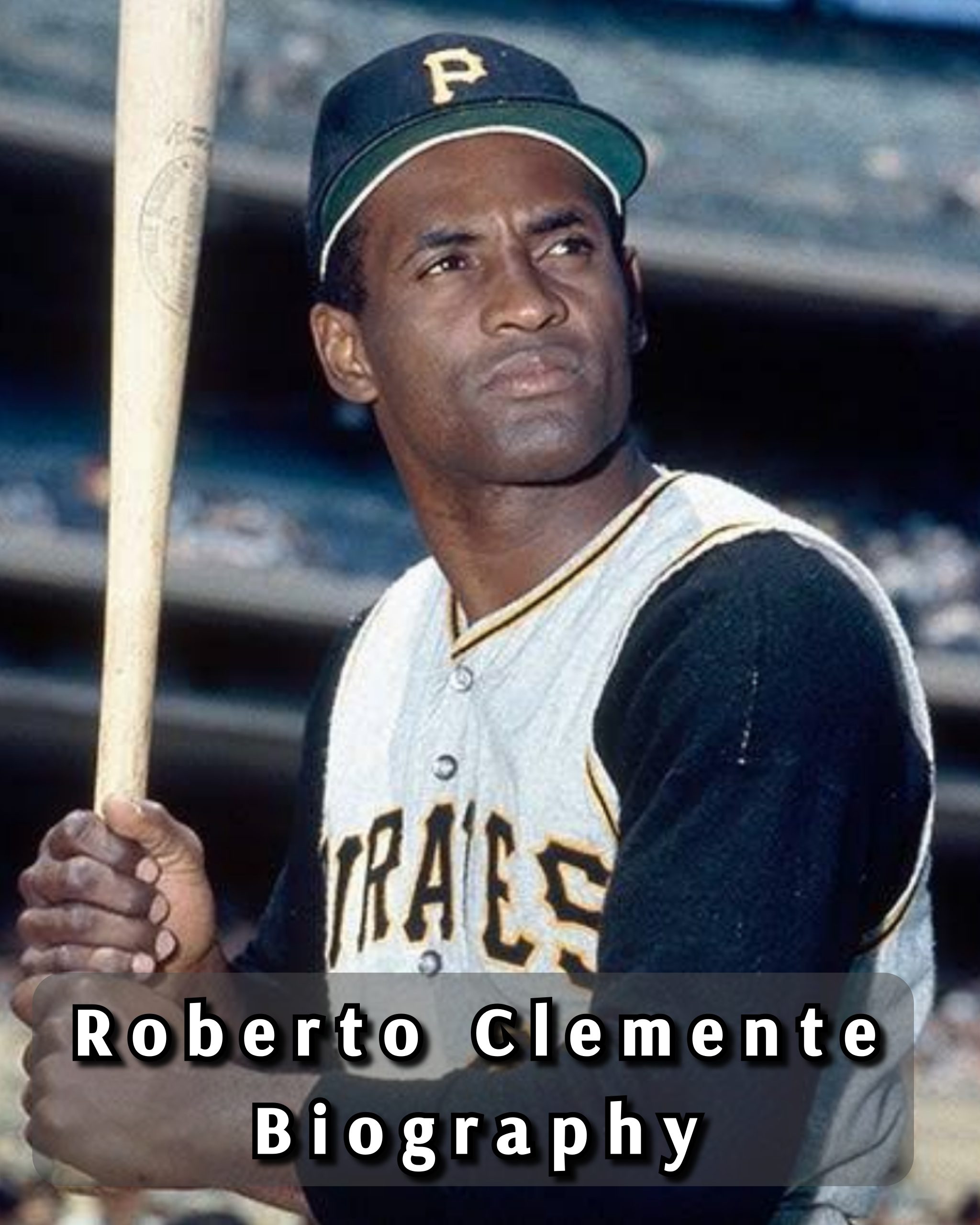
Roberto Enrique Clemente Walker was born on August 18, 1934, in Barrio San Antón, Carolina, Puerto Rico. He was the son of Melchor Clemente and Luisa Walker and grew up in a humble Puerto Rican family. His father worked in the sugarcane industry, and Roberto and his siblings sometimes helped with physically demanding work. As a young boy, Clemente also earned money by delivering milk around his neighborhood. His childhood experiences in Carolina helped shape the discipline, determination and strong sense of community that later became important parts of his life.
Clemente developed a passion for baseball while growing up in Carolina. He played sports with other children in his neighborhood and eventually attracted the attention of Roberto Marín, who recruited him to play softball for the Sello Rojo company team. Clemente initially played shortstop before moving to the outfield, where his exceptional athletic ability and powerful throwing arm became increasingly evident. He also excelled in track and field, competing in events including the high jump and javelin throw.
By his teenage years, Clemente was already being recognized as a promising athlete. At about 16, he joined Puerto Rico’s amateur baseball league and played for the Ferdinand Juncos team. His performances eventually attracted professional attention, and at 18 he began his professional baseball career with the Cangrejeros de Santurce of Puerto Rico’s professional winter league. His rapid development ultimately led him toward American professional baseball and the Major League career that made him an international sporting figure.
Roberto Clemente Education
Roberto Clemente received his primary education at Dr. Clemente Fernández Elementary School in Carolina, Puerto Rico. He later attended Julio Vizcarrondo Coronado High School, also in Carolina. His school years coincided with the development of his athletic talents, and he became known not only for baseball but also for his abilities in track and field.
While attending Julio Vizcarrondo Coronado High School, Clemente participated in high jump and javelin throwing and was regarded as a gifted athlete. His throwing ability was particularly notable, and his javelin experience later became part of the explanation for the strength and mechanics of his famous baseball throwing arm. Although he had the athletic ability to pursue several sporting opportunities, baseball eventually became his primary ambition.
Clemente also studied commerce during his education, but he did not build a career in that field. His growing opportunities in professional baseball changed the direction of his life. By the time he was 18, he had chosen baseball as his profession and was already beginning a professional career that would eventually take him from Puerto Rico to Major League Baseball.
Roberto Clemente Career
Roberto Clemente’s professional career began in Puerto Rico before he moved into American organized baseball. He played for the Cangrejeros de Santurce and subsequently signed with the Brooklyn Dodgers organization in 1954. The Dodgers assigned him to their Triple-A team in Montreal, where his talent continued to attract attention. After the 1954 season, the Pittsburgh Pirates selected Clemente in the Rule 5 Draft, giving him the opportunity to begin his Major League Baseball career.
Clemente made his Pittsburgh Pirates debut on April 17, 1955, and remained with the organization throughout his entire 18-season Major League career. He established himself as an outstanding right fielder, combining a powerful throwing arm with excellent hitting and defensive ability. He finished his career with 2,433 games, exactly 3,000 hits, 240 home runs, 1,305 runs batted in and a .317 batting average.
During his career, Clemente won four National League batting titles, the 1966 National League Most Valuable Player Award and 12 Gold Glove Awards. He was selected to 15 All-Star Games and helped the Pirates win World Series championships in 1960 and 1971. In the 1971 World Series, he batted .414 and was named World Series Most Valuable Player. On September 30, 1972, he recorded his 3,000th and final regular-season hit, becoming the 11th player in MLB history at the time to reach the milestone. He was elected to the Baseball Hall of Fame in 1973 through a special election that waived the normal five-year waiting period.
Roberto Clemente Personal Life and Family
Roberto Clemente married Vera Zabala on November 14, 1964, at San Fernando Church in Carolina, Puerto Rico. Vera became an important part of Clemente’s personal and humanitarian life, supporting him during his baseball career and sharing his commitment to helping others. Their marriage lasted until Clemente’s death in 1972.
Roberto and Vera Clemente had three sons: Roberto Clemente Jr., born in 1965; Luis Roberto Clemente, born in 1966; and Roberto Enrique Clemente, born in 1969. Clemente was known to place great importance on his family and remained closely connected to his wife and children despite the demands of his professional baseball career.
Clemente’s parents, Melchor Clemente and Luisa Walker, were also important influences on his life. His upbringing in a hardworking family contributed to his strong connection with ordinary people and his concern for those facing poverty and hardship. His humanitarian interests continued throughout his adult life, eventually becoming inseparable from the public image he left behind. Vera Clemente continued to preserve his humanitarian legacy after his death until her own death in 2019.
Roberto Clemente Age, Religion, Nationality, Height and Physical Appearance
Roberto Clemente was 38 years old when he died on December 31, 1972. He was born in Carolina, Puerto Rico, and is widely identified as a Puerto Rican baseball legend and Latino sports pioneer. Clemente was a Catholic and was known for his strong Christian faith and humanitarian convictions. MLB lists him at 5 feet 11 inches (180 cm) and 175 pounds (79 kg). He batted and threw right-handed and had an athletic physique, strong build and exceptionally powerful throwing arm. His distinctive physical presence, speed, coordination and arm strength contributed significantly to his reputation as one of baseball’s outstanding right fielders.
Roberto Clemente Social Media Presence
Roberto Clemente did not have a personal Instagram account because he died in 1972, decades before social media existed. His name and legacy, however, remain active across modern social-media platforms through organizations, museums, foundations and baseball communities that continue to share his story. The Roberto Clemente Foundation maintains an online presence dedicated to carrying forward his humanitarian mission.
For Instagram users looking for Clemente-related content, the Roberto Clemente Foundation can be found at @theclementefoundation21, where content connected with his legacy, humanitarian work and community initiatives is shared. The Clemente Museum and other baseball organizations also regularly publish photographs, memorabilia and historical material connected with his career.
Roberto Clemente Net Worth
Roberto Clemente’s exact net worth at the time of his death is not documented through the kind of comprehensive financial records available for modern professional athletes. A commonly cited historical estimate places his wealth at approximately $300,000 in 1972, although this figure should be regarded as an estimate rather than a verified estate valuation. Adjusted for inflation, that amount would represent a substantially larger sum in today’s money.
Clemente’s primary source of income was his professional baseball career with the Pittsburgh Pirates. His salary increased substantially as his career developed, and contemporary accounts reported that his baseball salary was around $120,000 in 1971, while Clemente said his total annual income including endorsements and other outside interests was approximately $150,000. By the 1972 season, his salary had reached approximately $150,000.
Although Clemente earned considerably less than today’s elite baseball stars, his earnings reflected the economics of professional baseball during the 1960s and early 1970s. His financial legacy is also closely connected with his humanitarian activities, as he devoted considerable attention to helping disadvantaged people and supporting youth and community causes rather than making personal wealth the central focus of his public life.
Legacy
Roberto Clemente’s legacy extends far beyond his baseball statistics. His 18-year career with the Pittsburgh Pirates established him as one of the most accomplished Puerto Rican and Latino players in Major League Baseball history. His 3,000 hits, four batting titles, 12 Gold Glove Awards, 15 All-Star selections, two World Series championships and 1966 National League MVP Award remain central to his baseball legacy.
Clemente was also recognized for his humanitarian work and his commitment to disadvantaged communities. His final journey was connected to his desire to deliver relief supplies to people affected by the 1972 Nicaragua earthquake. Major League Baseball later established the Roberto Clemente Award, honoring players who demonstrate outstanding character, sportsmanship and community involvement. His family and organizations associated with his name have continued humanitarian and youth programs inspired by his example.
In 1973, Clemente became the first Latin American player elected to the Baseball Hall of Fame, with the usual waiting period waived following his death. His No. 21 became permanently associated with his identity, Puerto Rican pride and humanitarian ideals. His name continues to appear in baseball history, educational programs, charitable initiatives, museums and community projects, ensuring that his influence remains relevant long after his playing career ended.
Conclusion
Roberto Clemente’s biography is the story of a Puerto Rican athlete who rose from a humble childhood in Carolina to become a Pittsburgh Pirates superstar, Major League Baseball Hall of Famer and internationally recognized humanitarian. His 3,000 career hits, four batting titles, 12 Gold Gloves, 15 All-Star selections and two World Series championships established his extraordinary baseball career, while his commitment to humanitarian service gave his life a significance that reached far beyond the baseball field. His death in a plane crash while traveling to deliver earthquake relief supplies to Nicaragua ended his life at 38, but his influence continues through his family, the Roberto Clemente Award, the Baseball Hall of Fame and organizations carrying forward his humanitarian mission.
Frequently Asked Questions
1. Who was Roberto Clemente?
Roberto Clemente was a Puerto Rican professional baseball player who spent his entire 18-season Major League Baseball career with the Pittsburgh Pirates.
2. When was Roberto Clemente born?
Roberto Clemente was born on August 18, 1934, in Carolina, Puerto Rico.
3. How old was Roberto Clemente when he died?
Roberto Clemente was 38 years old when he died on December 31, 1972.
4. Who was Roberto Clemente’s wife?
Roberto Clemente’s wife was Vera Zabala. They married on November 14, 1964, in Carolina, Puerto Rico.
5. How many children did Roberto Clemente have?
Roberto Clemente and Vera Zabala had three sons: Roberto Clemente Jr., Luis Roberto Clemente and Roberto Enrique Clemente.
6. How did Roberto Clemente die?
Roberto Clemente died in a plane crash on December 31, 1972, while traveling from Puerto Rico to Nicaragua with earthquake relief supplies.
7. How many hits did Roberto Clemente have?
Roberto Clemente finished his Major League Baseball career with exactly 3,000 hits.
8. What was Roberto Clemente’s height?
Roberto Clemente was listed at 5 feet 11 inches, or approximately 180 centimeters, tall.
9. What was Roberto Clemente’s net worth?
A commonly cited estimate places Roberto Clemente’s net worth at approximately $300,000 at the time of his death in 1972, although the exact value of his estate is not publicly established.
10. What was Roberto Clemente famous for?
Roberto Clemente was famous for his outstanding baseball career with the Pittsburgh Pirates, his 3,000 career hits, four batting titles, 12 Gold Glove Awards, two World Series championships, Hall of Fame induction and humanitarian work.