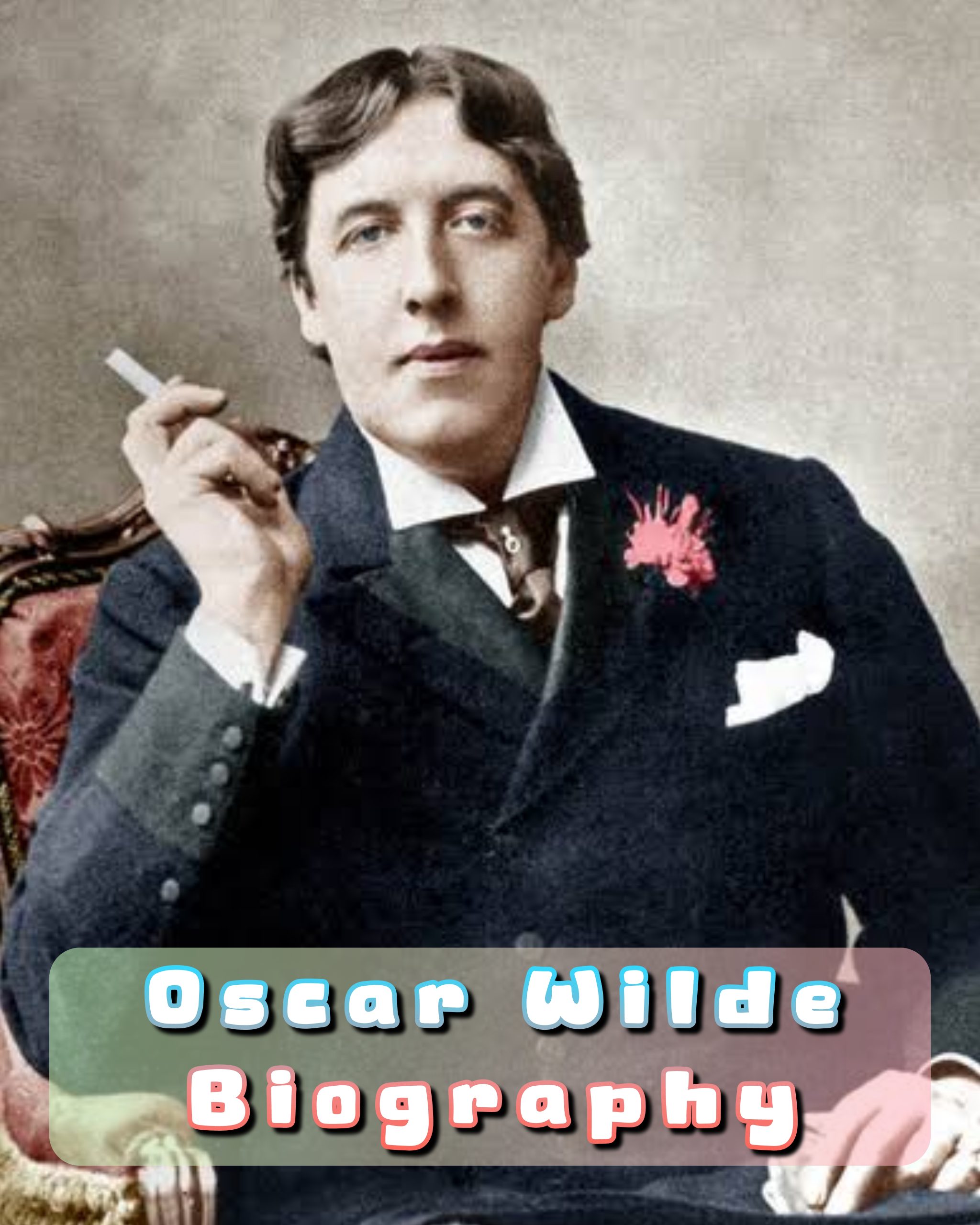
Oscar Fingal O’Flahertie Wills Wilde was born on 16 October 1854 in Dublin, Ireland. He was the second son of Sir William Wilde, a respected surgeon, antiquarian and writer, and Jane Francesca Wilde, a poet and nationalist who published under the pen name Speranza. Wilde was raised in an intellectually stimulating household where medicine, literature, politics, art and Irish culture were frequently discussed. His parents’ interests had a significant influence on his intellectual development and later literary career.
Wilde’s childhood was shaped by the cultural and educational environment of nineteenth-century Dublin. His father had an extensive interest in archaeology, folklore and medicine, while his mother was known for her poetry and political writing. Jane Wilde encouraged her children’s appreciation of literature and the arts. Wilde also had an older brother, Willie Wilde, and a younger sister, Isola Wilde, whose death at the age of nine affected him deeply.
From 1864 to 1871, Wilde attended Portora Royal School in Enniskillen, where he developed a reputation for academic ability and an interest in classical literature. His early exposure to Greek and Roman literature became particularly important to his later education. After Portora, he entered Trinity College Dublin, where he continued studying Classics and distinguished himself academically. His early life laid the foundation for the literary wit, classical knowledge and aesthetic interests that would become central to his identity as a writer.
Oscar Wilde Education
Oscar Wilde attended Portora Royal School from 1864 to 1871. The school provided him with a strong classical education and helped develop his interest in ancient literature and languages. His academic achievements at Portora prepared him for higher education at Trinity College Dublin, one of Ireland’s leading institutions at the time. The Oscar Wilde Society records his progression from Portora to Trinity and subsequently to Oxford.
In 1871, Wilde entered Trinity College Dublin, where he studied Classics until 1874. He performed strongly in his studies and won the Berkley Gold Medal for Greek. His time at Trinity deepened his interest in classical culture, mythology and literature, interests that later appeared in his poetry and prose. His academic performance also helped him secure a scholarship to continue his studies at Oxford.
In 1874, Wilde entered Magdalen College, Oxford, where he studied Classics until 1878. Oxford was particularly important to his intellectual and artistic development because he became closely associated with the aesthetic movement and encountered the ideas of influential figures including Walter Pater and John Ruskin. In 1878, he won the Newdigate Prize for poetry for Ravenna and graduated with a Bachelor of Arts degree.
Oscar Wilde Career
Oscar Wilde began his professional literary career as a poet, lecturer, critic, editor, essayist, novelist and playwright. After leaving Oxford, he moved to London and became increasingly prominent within artistic and literary circles. His first major poetry collection, Poems, was published in 1881. In 1882, he undertook a highly publicized lecture tour of the United States and Canada, speaking about aestheticism, art and culture.
Wilde later worked as an editor of The Woman’s World, where he expanded the magazine’s focus beyond fashion to include literature, education, politics, careers and women’s interests. In 1888, he published The Happy Prince and Other Tales, establishing himself as a successful prose writer. His only novel, The Picture of Dorian Gray, first appeared in 1890 and was subsequently expanded and published in book form in 1891.
The 1890s became the most successful period of Wilde’s theatrical career. His plays included Lady Windermere’s Fan, A Woman of No Importance, An Ideal Husband and The Importance of Being Earnest. However, his career collapsed after the legal proceedings surrounding his relationship with Lord Alfred Douglas. In 1895, Wilde was convicted of gross indecency and sentenced to two years’ hard labour. After his release in 1897, he lived mainly in France and produced works including De Profundis and The Ballad of Reading Gaol.
Oscar Wilde Personal Life and Family
Oscar Wilde married Constance Lloyd in 1884 after a six-month engagement. The couple had two sons, Cyril Wilde, born in 1885, and Vyvyan Wilde, born in 1886. Constance was herself an educated and socially engaged woman, and her involvement in publishing and women’s causes has received increasing attention from modern Wilde scholarship. The Oscar Wilde Society’s research also highlights Constance’s contribution to The Woman’s World.
Wilde’s personal life became increasingly complicated during the 1890s, particularly because of his relationships with men. His relationship with Lord Alfred Douglas, commonly known as “Bosie,” became especially significant. In 1895, Wilde initiated a criminal libel case against Douglas’s father, the Marquess of Queensberry, after Queensberry left a card accusing Wilde of immoral conduct. The libel case collapsed, and Wilde was subsequently prosecuted and convicted for gross indecency.
Wilde’s imprisonment from 1895 to 1897 profoundly affected his personal and professional life. His mother, Jane Francesca Wilde, died in 1896 while he was imprisoned, and his wife Constance died in 1898. After his release, Wilde adopted the name Sebastian Melmoth and lived largely in France. He died in Paris in 1900, leaving behind two sons and a literary reputation that would grow substantially after his death.
Oscar Wilde Age, Religion, Nationality, Height and Physical Appearance
Oscar Wilde was born on 16 October 1854 and died on 30 November 1900, making him 46 years old at the time of his death. He was Irish by nationality, having been born in Dublin, Ireland. Wilde was raised in a Protestant family and was received into the Roman Catholic Church shortly before his death, according to the Oscar Wilde Society’s chronology. A universally reliable historical record of his exact height is not available, so commonly circulated online measurements should be treated cautiously. He was known for his distinctive Victorian appearance, carefully styled hair, fashionable clothing and highly recognizable personal style, which became part of his public image.
Oscar Wilde Social Media Presence
Oscar Wilde did not have social media accounts because he died in 1900, decades before the invention of the internet and modern social platforms. Consequently, there is no authentic personal Instagram handle belonging to Oscar Wilde. Modern Instagram accounts using his name are generally literary, archival, fan or commemorative accounts rather than accounts operated by Wilde himself.
One established modern organization associated with Wilde is the Oscar Wilde Society, which promotes the study and appreciation of his life and writings. Its known social-media presence includes @OscarWildeUK on X/Twitter, while the Society also maintains a wider digital presence. It is important not to confuse these modern accounts with an official Instagram account belonging to Wilde.
Oscar Wilde Net Worth
There is no reliable modern net-worth figure for Oscar Wilde. Unlike contemporary celebrities, Wilde’s finances were not recorded in the form of a modern personal net-worth statement. During his successful years, he earned money through poetry, journalism, editing, lectures, books and especially his commercially successful plays.
His financial position changed considerably after his legal troubles in 1895. The Oscar Wilde Society records that Wilde was declared bankrupt in November 1895, following the collapse of his career and mounting legal and personal expenses. His estate was eventually discharged from bankruptcy in 1906, several years after his death.
Any website claiming a precise figure such as a specific dollar amount for Wilde’s present-day net worth should therefore be treated cautiously. A reasonable historical assessment is that Wilde had significant earning power during the peak of his literary and theatrical career, but his imprisonment, bankruptcy and subsequent exile severely reduced his personal finances. His continuing literary estate and cultural value are separate from the personal wealth he possessed during his lifetime.
Legacy
Oscar Wilde’s legacy is strongly associated with his wit, satire, aesthetic philosophy and mastery of language. The Importance of Being Earnest remains one of his most celebrated plays, while The Picture of Dorian Gray has become a major work of English-language literature. His fairy tales, essays, poetry and other plays have also remained part of literary and theatrical study.
Wilde’s life has also become important to discussions of Victorian society, censorship, sexuality, criminal law and artistic freedom. His conviction and imprisonment profoundly altered the final years of his life, while later generations reassessed his work and reputation. Today, scholars continue to examine the relationship between his writing, his public persona and the social circumstances of nineteenth-century Britain.
His influence remains active in 2026. The Oscar Wilde Society continues to organize lectures, publications, readings and events dedicated to his life and works. The Society’s 2026 activities include new research on Wilde and James Whistler, continued publication of The Wildean, and an annual Oscar Wilde Birthday Dinner scheduled for 16 October 2026 in London.
Conclusion
Oscar Wilde remains one of the most recognizable literary figures of the nineteenth century, remembered for his extraordinary wit, influential plays, The Picture of Dorian Gray, poetry, essays and distinctive aesthetic philosophy. His life moved from an intellectually rich childhood in Dublin and an exceptional education at Trinity College and Oxford to international literary fame, marriage and family life, devastating legal proceedings, imprisonment, exile and death in Paris. More than 125 years after his death, his writing continues to be studied and performed, while current 2026 scholarship and Oscar Wilde Society activities demonstrate the continuing cultural and academic interest in his life and legacy.
Frequently Asked Questions
Who was Oscar Wilde?
Oscar Wilde was an Irish poet, novelist, playwright, essayist, critic and lecturer best known for The Picture of Dorian Gray and The Importance of Being Earnest.
When was Oscar Wilde born?
Oscar Wilde was born on 16 October 1854 in Dublin, Ireland. His parents were Sir William Wilde and Jane Francesca Wilde, also known as Speranza.
How old was Oscar Wilde when he died?
Oscar Wilde was 46 years old when he died on 30 November 1900.
Who was Oscar Wilde’s wife?
Oscar Wilde’s wife was Constance Lloyd. They married in 1884 and had two sons, Cyril and Vyvyan Wilde.
How many children did Oscar Wilde have?
Oscar Wilde had two children, both sons: Cyril Wilde and Vyvyan Wilde.
What did Oscar Wilde study?
Oscar Wilde studied Classics at Trinity College Dublin and later at Magdalen College, Oxford. He graduated from Oxford in 1878 after winning the Newdigate Prize for his poem Ravenna.
What was Oscar Wilde’s most famous book?
Oscar Wilde’s most famous novel is The Picture of Dorian Gray, first published in 1890 and expanded into book form in 1891.
What plays did Oscar Wilde write?
Oscar Wilde wrote several celebrated plays, including Lady Windermere’s Fan, A Woman of No Importance, An Ideal Husband and The Importance of Being Earnest.
Who was Lord Alfred Douglas to Oscar Wilde?
Lord Alfred Douglas, known as Bosie, was a poet and a significant figure in Wilde’s personal life. Their relationship became closely connected with the legal events that resulted in Wilde’s imprisonment in 1895.
What happened to Oscar Wilde?
Oscar Wilde was prosecuted and convicted of gross indecency in 1895 and sentenced to two years’ hard labour. After his release in 1897, he lived mainly in France and died in Paris in 1900.
What was Oscar Wilde’s cause of death?
Oscar Wilde died in Paris on 30 November 1900 from acute cerebral meningitis, according to biographical records.
Where is Oscar Wilde buried?
Oscar Wilde’s remains were eventually moved to Père Lachaise Cemetery in Paris, where his tomb is marked by a monument designed by sculptor Jacob Epstein.
Did Oscar Wilde have an Instagram account?
No. Oscar Wilde died in 1900 and therefore could not have had a personal Instagram account. Modern Instagram pages using his name are literary, fan, archival or commemorative accounts.
What was Oscar Wilde’s net worth?
There is no reliable modern estimate of Oscar Wilde’s net worth. He earned significant income during his successful literary and theatrical career but was declared bankrupt in 1895 following his legal troubles.
What is Oscar Wilde’s legacy?
Oscar Wilde’s legacy includes his celebrated plays, novel, poetry, essays and fairy tales, as well as his continuing influence on literature, theatre and scholarship concerning Victorian culture, identity and artistic expression.