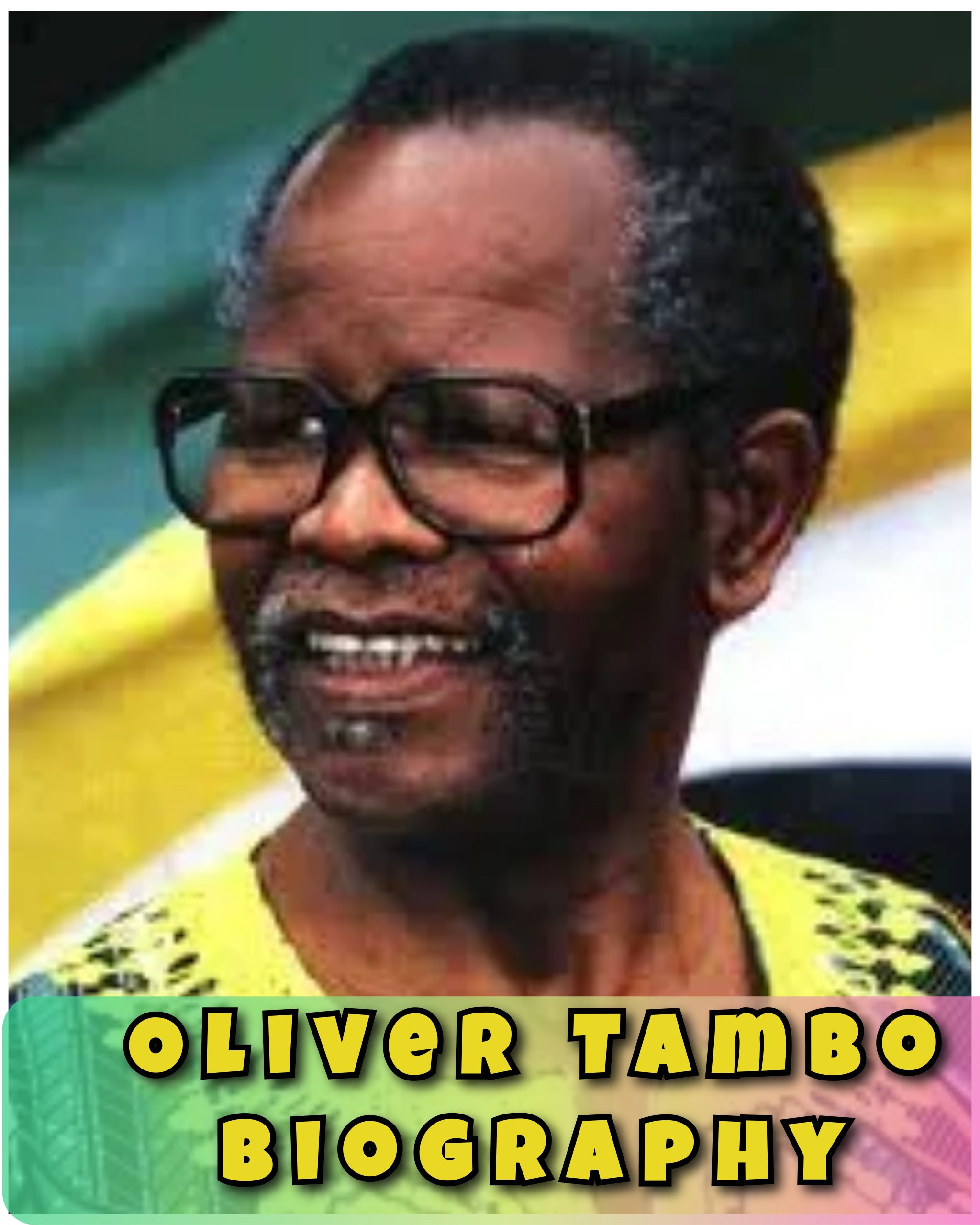
Oliver Reginald Kaizana Tambo was born on 27 October 1917 in Mbizana, in the Eastern Cape region of South Africa, then part of the Transkei. He was born into a rural African family and grew up during a period when racial discrimination and unequal access to opportunities were deeply embedded in South African society. His early experiences in a racially divided country later influenced his commitment to justice, equality and the struggle against apartheid.
Tambo was a bright and disciplined student who showed strong academic ability from an early age. He attended local schools before completing his secondary education at St Peter’s Secondary School in Johannesburg, where he developed an interest in education and public affairs. He later attended the University of Fort Hare, one of the most important institutions for Black African students at the time, where he studied science and graduated with a Bachelor of Science degree in 1941.
After completing his university education, Tambo began working as a teacher, but his growing involvement in politics soon became a defining part of his life. In 1943, he joined the African National Congress (ANC) and became involved in the organisation’s efforts to challenge racial discrimination. He was also a founding member of the ANC Youth League, alongside figures including Nelson Mandela and Walter Sisulu. These early political activities laid the foundation for his later career as one of the leading figures in South Africa’s anti-apartheid struggle.
Oliver Tambo’s Education
Oliver Tambo received his early education in the Eastern Cape before continuing his studies at St Peter’s Secondary School in Johannesburg. He was known as a dedicated and academically strong student, and his education helped develop the discipline and intellectual abilities that would later shape his career in politics and law. His experiences as a Black student in South Africa also exposed him to the inequalities of the country’s education system.
Tambo later attended the University of Fort Hare, one of the leading institutions for Black African students during the period. He studied science and graduated in 1941 with a Bachelor of Science degree. At Fort Hare, he encountered other young Africans who would later become prominent figures in the struggle against apartheid, including Nelson Mandela. His university years also strengthened his interest in African political and social issues.
After graduating, Tambo trained and worked as a teacher, teaching science and mathematics before eventually pursuing a career in law. He later studied law and became a qualified attorney, establishing a law partnership with Nelson Mandela in Johannesburg in 1952. Their firm, Mandela and Tambo, became an important legal practice that provided assistance to Black South Africans facing discrimination and injustice under apartheid.
Oliver Tambo’s Career
Oliver Tambo began his professional career as a teacher, working in South African schools after graduating from the University of Fort Hare. However, his growing involvement in the struggle against racial discrimination soon drew him deeper into politics. In 1943, he joined the African National Congress (ANC) and became one of the founding members of the ANC Youth League, working alongside Nelson Mandela, Walter Sisulu and other young activists who advocated a more active approach to challenging apartheid policies.
Tambo later pursued a career in law and, in 1952, established the Mandela and Tambo law firm with Nelson Mandela in Johannesburg. The practice became one of the country’s first Black-owned law firms and provided legal assistance to many Black South Africans affected by discriminatory laws. At the same time, Tambo rose through the ANC’s leadership structure, eventually becoming Deputy President of the ANC in 1958.
Following the banning of the ANC in 1960, Tambo was sent abroad to build international support for the anti-apartheid movement. He subsequently became Acting President of the ANC in 1967 and was formally recognised as the organisation’s president that same year. For more than two decades, he led the ANC largely from exile, establishing diplomatic relationships, mobilising international opposition to apartheid and advocating for sanctions against the South African government. He returned to South Africa in 1990 after the ANC was unbanned and remained a central figure in the transition toward democracy until his death in 1993.
Oliver Tambo’s Personal Life and Family
Oliver Tambo was married to Adelaide Frances Tshukudu Tambo, a nurse and political activist, whom he married in 1956. Adelaide was also involved in the anti-apartheid struggle and spent many years supporting the ANC’s work while her husband lived in exile. Their marriage lasted until Oliver Tambo’s death in 1993, and Adelaide remained an important figure in South Africa’s political history and in preserving her husband’s legacy.
Oliver and Adelaide Tambo had three children: Thembi Tambo, Dali Tambo and Tselane Tambo. Their children grew up largely during the years of apartheid and their father’s long period in exile. Dali Tambo later became a well-known South African television presenter and businessman, while Thembi Tambo became involved in public service and diplomacy. The family experienced long periods of separation because of Oliver Tambo’s political responsibilities outside South Africa.
Tambo’s family life was closely connected to his commitment to the anti-apartheid struggle. Although his political activities kept him away from his wife and children for many years, Adelaide remained a strong supporter of his work. The couple’s partnership became an important part of Tambo’s personal story, while their children continued to contribute to South African public life in different ways. Oliver Tambo died on 24 April 1993, but his family and descendants have continued to preserve and promote his legacy.
Oliver Tambo’s Age, Religion, Nationality, Height and Physical Appearance
Oliver Reginald Kaizana Tambo was 75 years old when he died on 24 April 1993. He was born on 27 October 1917 in Nkantolo, near Bizana in the Eastern Cape, South Africa, making him South African by nationality. Tambo was a devout Christian and Anglican who was baptised at the Holy Cross Missionary School and remained deeply committed to his Christian faith throughout his life. South African government records also describe him as a devoted Christian who served as an altar boy in the Anglican Church.
There is no reliable authoritative record of Oliver Tambo’s exact height, so a specific height should not be included in a factual biography unless supported by a credible source. Photographs and historical descriptions portray him as a slender, dignified Black South African man, usually seen wearing formal suits, traditional or diplomatic attire, and later in life often wearing glasses. He was known for his calm, reserved and composed manner, characteristics that became closely associated with his public image as an ANC leader.
Oliver Tambo’s Social Media Presence
Oliver Tambo lived long before the rise of social media and therefore did not have personal accounts on platforms such as Instagram, Facebook or X. However, his life, speeches, photographs and political legacy continue to be shared widely online by historical organisations, museums, political institutions and supporters of the anti-apartheid movement. His name remains active on social media, particularly around commemorations, memorial lectures and events celebrating his contribution to South Africa’s liberation.
There are several social-media accounts using the name Oliver Tambo, but they should not automatically be presented as belonging to the former ANC leader. For example, an Instagram account using the handle @olivertambo1 exists, but available information does not establish that it is an official account of the late South African statesman.
Today, Tambo’s digital legacy is largely maintained through organisations and institutions that document his life and work rather than through a personal social-media profile. The Oliver & Adelaide Tambo Foundation, for example, continues to promote his values, history and contribution to the anti-apartheid struggle, ensuring that his legacy remains accessible to younger generations.
Oliver Tambo Net Worth
There is no reliable public record of Oliver Tambo’s exact net worth at the time of his death in 1993. Unlike many modern politicians and public figures, Tambo did not publicly disclose a personal fortune, and reputable historical sources do not provide a verified figure for his estate. His principal professional income came from his work as a teacher and later as an attorney, including his partnership with Nelson Mandela in the Mandela and Tambo law firm, established in 1952.
Because historical salary records and details of his personal assets are limited, any specific modern estimate would be speculative. Tambo’s legal career could have provided him with a respectable professional income, particularly while practising in Johannesburg, but his subsequent decades of political work in exile make it difficult to calculate his accumulated wealth. His public career was primarily focused on the anti-apartheid struggle rather than personal wealth creation.
For an SEO biography, it is therefore more accurate to state that Oliver Tambo’s net worth at the time of his death is unknown and cannot be reliably estimated from available historical records. Claims placing his wealth at a specific amount should be treated cautiously unless supported by documented estate records. His enduring significance lies in his political leadership, legal career and contribution to South Africa’s liberation rather than his personal wealth.
Legacy
Oliver Tambo is remembered as one of the most influential leaders of South Africa’s anti-apartheid struggle and a central figure in the history of the African National Congress (ANC). For decades, he helped lead the movement during its years in exile, building international support for the fight against apartheid and maintaining the ANC’s political organisation when it was banned inside South Africa. His leadership, diplomacy and commitment to a non-racial democratic South Africa made him an important architect of the country’s eventual transition to democracy.
Tambo’s legacy also extends beyond politics. His partnership with Nelson Mandela, his legal career and his commitment to education, equality and justice have made him an enduring symbol of service and sacrifice. After his death on 24 April 1993, numerous institutions, streets, airports, schools and public spaces were named in his honour. O. R. Tambo International Airport in Johannesburg is among the most prominent memorials to his contribution to South Africa’s history.
Today, Oliver Tambo’s life continues to be commemorated through historical programmes, memorial events and the work of organisations such as the Oliver & Adelaide Tambo Foundation. His legacy is often associated with values including unity, humility, discipline, integrity and dedication to public service. More than three decades after his death, Tambo remains an important figure in South African history and a symbol of the long struggle that ultimately contributed to the end of apartheid and the birth of democratic South Africa.
Conclusion
Oliver Tambo remains one of the most respected figures in South Africa’s history, remembered for his decades of leadership in the struggle against apartheid, his legal career, his commitment to equality and his role in guiding the ANC through years of exile. From his early education and work as a teacher to his partnership with Nelson Mandela and leadership of the ANC, Tambo dedicated much of his life to the pursuit of a democratic and non-racial South Africa. Although he died in 1993, his influence continues through his family, institutions, memorials and the values of unity, justice, sacrifice and public service associated with his life and legacy.
Frequently Asked Questions About Oliver Tambo
Who was Oliver Tambo?
Oliver Reginald Kaizana Tambo was a South African lawyer, teacher and anti-apartheid activist who served as President of the African National Congress (ANC) from 1967 to 1991. He played a major role in the international struggle against apartheid.
When was Oliver Tambo born?
Oliver Tambo was born on 27 October 1917 in the Bizana area of the Eastern Cape, South Africa.
How old was Oliver Tambo when he died?
Oliver Tambo was 75 years old when he died on 24 April 1993.
When did Oliver Tambo die?
Oliver Tambo died on 24 April 1993 in Johannesburg, South Africa, after suffering a stroke and experiencing health complications.
Who was Oliver Tambo’s wife?
Oliver Tambo’s wife was Adelaide Frances Tshukudu Tambo, a nurse and anti-apartheid activist. They married in 1956.
How many children did Oliver Tambo have?
Oliver and Adelaide Tambo had three children: Thembi Tambo, Dali Tambo and Tselane Tambo.
What did Oliver Tambo do for a living?
Oliver Tambo was a teacher, lawyer and politician. He later became one of the most prominent leaders of the ANC and the anti-apartheid movement.
Did Oliver Tambo work with Nelson Mandela?
Yes. Oliver Tambo and Nelson Mandela worked closely within the ANC and established the Mandela and Tambo law firm in Johannesburg in 1952. Tambo later became one of the ANC’s most important leaders during its years in exile.
What was Oliver Tambo’s role in the ANC?
Oliver Tambo served as President of the ANC from 1967 to 1991. During much of his presidency, he operated from outside South Africa, helping organise international opposition to apartheid and maintaining the ANC’s political movement.
Where did Oliver Tambo study?
Oliver Tambo studied at the University of Fort Hare, where he earned a Bachelor of Science degree in 1941.
What was Oliver Tambo’s religion?
Oliver Tambo was a Christian and an Anglican. His Christian upbringing and faith were important parts of his early life.
What was Oliver Tambo’s nationality?
Oliver Tambo was South African. He was born in the Eastern Cape and became one of the country’s most prominent anti-apartheid leaders.
What was Oliver Tambo’s height?
Oliver Tambo’s exact height is not reliably documented in authoritative historical sources, so claims giving a specific measurement should be treated with caution.
What was Oliver Tambo’s net worth?
Oliver Tambo’s exact net worth is unknown. There is no reliable historical record establishing the value of his personal wealth or estate at the time of his death.
What is Oliver Tambo best known for?
Oliver Tambo is best known for leading the ANC during the anti-apartheid struggle, particularly during its years in exile, and for helping build international opposition to apartheid.
What is Oliver Tambo’s legacy?
Oliver Tambo’s legacy is that of a key architect of South Africa’s liberation movement. He is remembered for his leadership, diplomacy, commitment to equality and role in the struggle that contributed to the end of apartheid and the establishment of democratic South Africa.