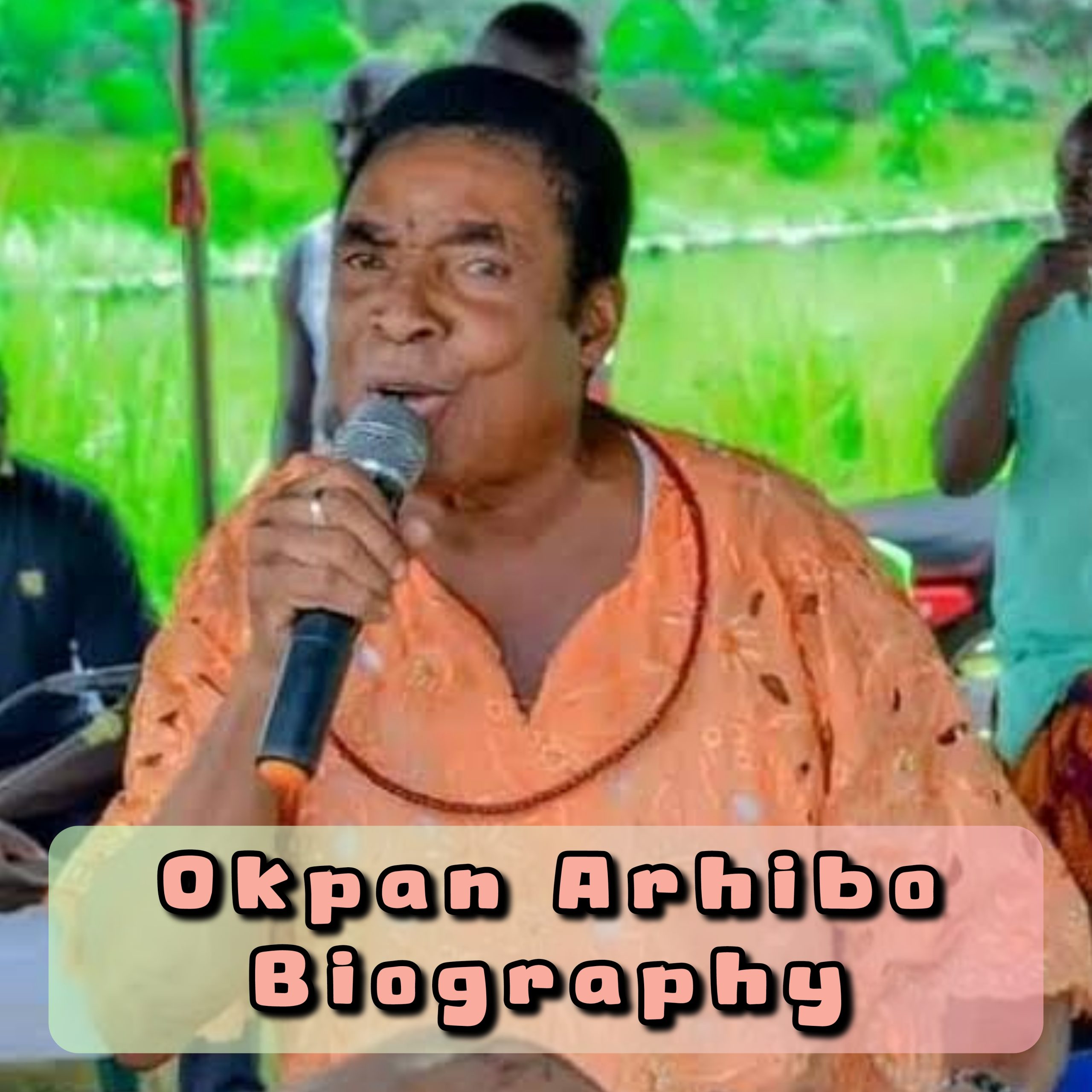
Okpan Arhibo was born Joseph Odjewhedje in 1947 in Delta State, Nigeria. He was closely associated with Agbarho Kingdom in Ughelli North Local Government Area of Delta State and belonged to the Urhobo ethnic group. Some biographical sources give his exact date of birth as July 22, 1947, although academic publications generally identify his birth year simply as 1947. He later became widely known by the stage name Okpan Arhibo and became an important figure in Urhobo traditional music.
He grew up within the cultural environment of the Urhobo people, where oral traditions, indigenous songs, storytelling and communal performances played important roles in preserving history and social values. His later music reflected this cultural background, with songs addressing everyday life, morality, social responsibility, relationships and the preservation of Urhobo identity. Recent academic research continues to examine his songs as part of the cultural heritage of the Urhobo people.
Before becoming a full-time musician, Okpan Arhibo worked as a driver with Delta Steel Company (DSC), Ovwian-Aladja. His passion for music eventually led him to resign from his paid employment and devote himself to traditional music and show business. That decision marked the beginning of a long career that made him one of the recognizable names in Urhobo music.
Okpan Arhibo Education
There is limited reliable public information about the schools Okpan Arhibo attended during his childhood and youth. Unlike his music career, his formal educational history was not extensively documented in newspaper profiles or the academic studies that examine his cultural contribution. For that reason, specific claims about primary or secondary schools should be treated cautiously.
Available research instead places considerable emphasis on the cultural knowledge he demonstrated through his music. His understanding of Urhobo oral traditions, language, folklore and social customs became an important part of his artistic identity. His education in the broader sense was therefore strongly connected to the cultural environment in which he was raised and the traditional performance practices he later developed.
His professional development also came through practical experience. His employment at Delta Steel Company preceded his decision to become a full-time entertainer, while his years performing and recording gave him extensive experience in traditional music. There is no reliable evidence currently available that establishes a university degree or a specific higher-education qualification for Okpan Arhibo, so such claims should not be presented as confirmed facts.
Okpan Arhibo Career
Okpan Arhibo became a major exponent of Urhobo traditional music, with his career becoming particularly prominent from the 1970s onward. He developed a recognizable musical style that combined traditional Urhobo sounds, storytelling and performance with elements of contemporary music. His work helped introduce Urhobo cultural themes to audiences within and beyond the region.
He was popularly associated with the “Catch Fire” style and became known as a prolific recording artist. A 2022 report on his funeral arrangements stated that he had more than 200 albums to his credit and had served as president of the Urhobo Performing Musicians Association of Nigeria.
Among songs associated with Okpan Arhibo are “Konojuvwe,” “Urhobo Me Jevwe” and “Zabu Zabu.” His recordings were also studied by researchers examining Urhobo music on radio and television. A recent study specifically identified tracks including “Konojuvwe,” “No Basket for Rotten Mangoes,” “Oghene Mudia Kevwe,” “Erhovwo Me Guonoree” and “Inoge Gbe.”
Okpan Arhibo Personal Life and Family
Okpan Arhibo was married and had several children. Publicly available biographical sources identify his wife as Mrs. Odjewhedje, although detailed information about their marriage and private family life is limited. He was also described by his family as a father, grandfather and community figure who maintained strong connections with his Urhobo roots.
One of his best-known children was Chief Kessiena Okpan Arhibo Odjevwedje, popularly known as Shuun Bebe. Kessiena followed his father’s path into music and became a musician in his own right. In a 2014 interview, Shuun Bebe said that his father and mother encouraged his musical ambitions and that he had always wanted to become a musician like his father.
Other reports about the family have mentioned Mrs. Elohor Okpan, who was described as a Ghana-based businesswoman. The family became particularly visible during Okpan Arhibo’s final illness, when Shuun Bebe appealed for financial assistance for his father’s treatment. Following his death, the family organized funeral and commemorative activities celebrating his contribution to Urhobo music.
Okpan Arhibo Age, Religion, Nationality, Height and Physical Appearance
Okpan Arhibo was born in 1947 and died on March 22, 2022, at the age of 75. He was Nigerian, from Delta State, and was identified with the Urhobo people and Agbarho Kingdom. Academic research indicates that he later converted to Christianity, although detailed information about his denomination is not consistently documented. His exact height and weight have not been reliably established in authoritative sources, so specific measurements should not be presented as fact. Available photographs portray him at different stages of his life, including during his younger years and in his later years as a celebrated traditional musician.
Okpan Arhibo Social Media Presence
Okpan Arhibo belonged to a generation of Nigerian musicians whose careers developed long before Instagram and other modern social-media platforms became widespread. I could not verify a reliable official Instagram handle belonging to him. His name and music, however, continue to appear across online cultural publications, videos and social-media posts shared by fans, relatives and Urhobo music enthusiasts.
Following his death, members of his family and younger musicians continued promoting his music and cultural legacy online. His son Shuun Bebe and other members of the wider musical community have remained connected to activities celebrating his work, while recordings of his performances continue to circulate on digital platforms.
Okpan Arhibo Net Worth
Online sources have estimated Okpan Arhibo’s net worth at around $400,000. However, this figure is not supported by audited financial statements, an official estate valuation or a documented financial disclosure from his family. It is therefore more appropriate to describe $400,000 as an unverified online estimate, rather than a confirmed figure.
His principal professional income would have been connected to his long career in traditional music, including live performances, recordings, albums and entertainment engagements. His career reportedly produced more than 200 albums, illustrating the scale of his musical output, although album counts do not by themselves establish how much money he earned.
Because reliable information about his royalties, properties, savings, investments and other assets is unavailable, it is impossible to calculate his exact wealth retrospectively. For an SEO biography, the $400,000 figure should therefore be clearly identified as an online estimate rather than verified net worth.
Okpan Arhibo Death and Cause of Death
Okpan Arhibo died on March 22, 2022, at the age of 75. Contemporary Nigerian news reports confirmed his death and identified him as a major Urhobo music maestro from Agbarho Kingdom in Delta State.
Reports stated that he had been diagnosed with a kidney ailment in October 2021 and required a kidney transplant. His son, Shuun Bebe, appealed publicly for assistance, with reports stating that approximately ₦20 million was needed for the proposed transplant. Funds were reportedly raised toward his treatment, but he died while undergoing medical care.
His burial took place in Agbarho, Delta State, on July 30, 2022, following a series of activities celebrating his life and music. The funeral arrangements described him as a father, grandfather and Urhobo musical legend.
Legacy
Okpan Arhibo’s most enduring legacy is his contribution to Urhobo music and cultural preservation. His songs did more than provide entertainment; academic research has examined them as vehicles for moral instruction, social commentary, cultural identity and the transmission of indigenous knowledge.
His extensive musical output also helped ensure that Urhobo language, stories and cultural themes reached successive generations. Studies of indigenous music broadcasting have specifically used his recordings to examine how traditional music can help preserve cultural heritage in an era when younger audiences increasingly consume international and Western music styles.
His influence also continued through younger musicians, particularly his son Shuun Bebe, while his recordings remain part of discussions about the history of Urhobo traditional music. His career is now documented in academic research alongside other major Urhobo musicians, demonstrating the continuing cultural significance of his work decades after he first became prominent.
Conclusion
Okpan Arhibo, born Joseph Odjewhedje, was a pioneering Nigerian Urhobo musician whose decades-long career helped preserve and popularize the cultural traditions of Delta State. From working as a Delta Steel Company driver to becoming a prolific traditional musician with a reported catalogue of more than 200 albums, he established a lasting place in Urhobo cultural history. His death at 75 in March 2022 followed a kidney ailment, but his music, family influence and contribution to Urhobo identity continue to receive attention from researchers, musicians and cultural communities.
Frequently Asked Questions
Who was Okpan Arhibo?
Okpan Arhibo was the stage name of Joseph Odjewhedje, a Nigerian Urhobo traditional musician from Delta State who became one of the prominent figures in Urhobo music.
What was Okpan Arhibo’s real name?
His real name was Joseph Odjewhedje. Some sources also give the longer name Joseph Obererhiri Odjewhedje.
How old was Okpan Arhibo when he died?
Okpan Arhibo was 75 years old when he died in 2022.
When did Okpan Arhibo die?
Okpan Arhibo died on March 22, 2022.
What was the cause of Okpan Arhibo’s death?
He died after battling a kidney ailment. Reports said he had been diagnosed in October 2021 and required a kidney transplant.
Who was Okpan Arhibo’s wife?
Publicly available biographical sources identify his wife as Mrs. Odjewhedje, but detailed information about her life is limited.
Who are Okpan Arhibo’s children?
One of his best-known children is Kessiena Okpan Arhibo, popularly known as Shuun Bebe, who also became a musician. Reports also identify Mrs. Elohor Okpan among his children.
What was Okpan Arhibo known for?
He was known for Urhobo traditional music, cultural storytelling and promoting Urhobo language, identity and traditions through music.
What are Okpan Arhibo’s famous songs?
Songs associated with him include “Konojuvwe,” “Urhobo Me Jevwe,” “Zabu Zabu,” “No Basket for Rotten Mangoes,” “Oghene Mudia Kevwe” and other Urhobo recordings.
How many albums did Okpan Arhibo record?
A report issued around his funeral stated that Okpan Arhibo had more than 200 albums to his credit.
What was Okpan Arhibo’s net worth?
An online biography estimated his net worth at about $400,000, but there is no publicly available audited evidence confirming that amount.
Where was Okpan Arhibo from?
Okpan Arhibo was associated with Agbarho Kingdom in Delta State, Nigeria, and was an Urhobo musician.
Did Okpan Arhibo have an Instagram account?
There is no reliably verified official Instagram handle for Okpan Arhibo that can be confidently attributed to him. His music and legacy are instead represented through family, fans, videos and cultural publications online.
What is Okpan Arhibo’s legacy?
His legacy lies in his contribution to Urhobo traditional music, cultural preservation, indigenous-language music and social commentary, as well as the influence he had on younger musicians including his son Shuun Bebe.