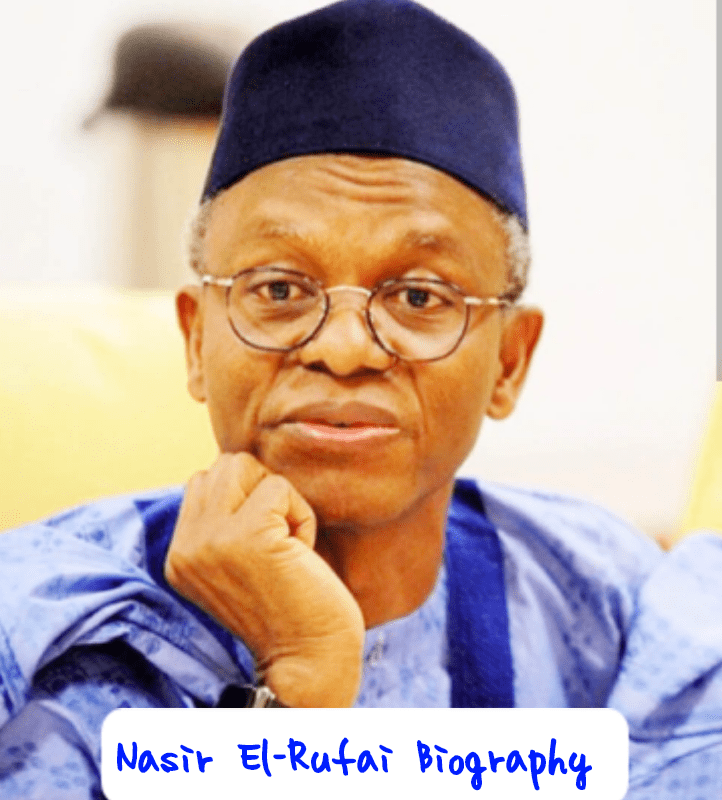
Nasir Ahmad El-Rufai is a prominent Nigerian politician, former governor, and public servant known for his roles in economic reforms, urban development, and state governance. Born in 1960, he rose from a modest background to hold influential positions, including Director-General of the Bureau of Public Enterprises and Minister of the Federal Capital Territory. As Governor of Kaduna State from 2015 to 2023, he pursued ambitious reforms in education, infrastructure, and public finance while facing significant challenges related to security and political controversies.
El-Rufai’s career reflects a commitment to technocratic governance and efficiency. Supporters praise his bold decisions and focus on long-term development, while critics point to controversies over demolitions, security management, and later legal issues. His journey offers insights into Nigeria’s political and administrative landscape.
Nasir El-Rufai Early Life
Nasir Ahmad El-Rufai was born on 16 February 1960 in Daudawa, a rural area in what is now Katsina State, Nigeria. He comes from a Fulani family. His father, Malam Ahmad Rufai Muhammad, worked as a junior agriculture officer and passed away when Nasir was only eight years old. This loss left a deep impact on the young boy.
An uncle in Kaduna stepped in to sponsor his education. This support allowed El-Rufai to move to Kaduna and pursue schooling there. He grew up primarily in Kaduna, which became central to his identity. Although born in Daudawa, his family roots trace strongly to Zaria in Kaduna State. Family members, including his brothers, are recognized as indigenes of Zaria and Kaduna. El-Rufai has publicly affirmed his deep connection to Kaduna, stating that he is from there and that his family is well-known in the Zazzau Emirate.
His early years involved overcoming financial hardship. With his uncle’s help, he attended primary school in Kaduna before proceeding to secondary education. These experiences shaped his resilience and determination. The loss of his father at a tender age taught him self-reliance, while the support from extended family highlighted the importance of community in Northern Nigerian culture.
El-Rufai’s state of origin is Kaduna, specifically linked to Zaria. This connection influenced his later political career, as he often emphasized his ties to the state despite his birthplace in the neighboring area that became Katsina State. His upbringing blended rural roots with urban educational opportunities in Kaduna, fostering a broad perspective on development needs across different parts of Nigeria.
Nasir El-Rufai Education
Nasir El-Rufai received his early formal education in Kaduna. He attended the prestigious Barewa College in Zaria for secondary school. There, he excelled academically. Future Nigerian President Umaru Musa Yar’Adua served as the house captain of his dormitory when El-Rufai was a junior. In 1976, he graduated at the top of his class and won the Barewa Old Boys’ Association Academic Achievement Trophy.
He went on to study at Ahmadu Bello University in Zaria. There, he earned a Bachelor of Science degree in quantity surveying with first-class honours. This achievement stood out in a competitive field. In 1984, he obtained a Master of Business Administration from the same university. He also gained a postgraduate diploma in computer science around that period.
El-Rufai pursued further studies later in his career. In 2008, he received a law degree from the University of London. The following year, in 2009, he earned a master’s degree in public administration from the John F. Kennedy School of Government at Harvard University. He participated in various professional programs, including those at Georgetown University and Harvard Business School, focusing on leadership, privatization, and public policy.
In 2017, he enrolled in a doctorate program in governance and policy analysis at the United Nations University – Maastricht Economic and Social Research Institute on Innovation and Technology in the Netherlands. His educational path combined technical expertise with skills in administration and policy, preparing him for high-level public service roles.
Nasir El-Rufai Business Career
Nasir El-Rufai entered the private sector after completing his national youth service. In 1982, he founded El-Rufai & Partners, a quantity surveying and project management consulting firm, alongside three partners. He managed the firm until 1998. During Nigeria’s military era in the 1980s and 1990s, the company secured contracts related to building and civil engineering projects, including work connected to Abuja’s development. This period brought financial success.
He also held management positions with international telecommunications companies such as AT&T Network Systems and Motorola. These roles exposed him to modern business practices and technology. His experience in the private sector emphasized efficiency, cost management, and professional standards, values he later applied in government.
El-Rufai’s business achievements established him as a competent professional. The success of his firm during a challenging economic time demonstrated his entrepreneurial skills and ability to navigate complex environments. This background proved valuable when he transitioned to public service.
Nasir El-Rufai Political Career
Nasir El-Rufai’s entry into politics came after the death of military leader Sani Abacha. In 1998, General Abdulsalami Abubakar appointed him to an advisory policy committee focused on the transition to civilian rule. He worked on issues involving the World Bank, IMF, and privatization.
In 1999, President Olusegun Obasanjo appointed him Director-General of the Bureau of Public Enterprises and Secretary of the National Council on Privatisation. In this role, he led major privatization efforts, overseeing the sale or restructuring of several state-owned enterprises. His approach focused on transparency and efficiency, though it attracted both praise and criticism.
Nasir El-Rufai Minister of the Federal Capital Territory
In 2003, El-Rufai became Minister of the Federal Capital Territory, serving until 2007. He earned the nickname “Mr. Demolition” for enforcing the Abuja Master Plan through the removal of illegal structures and squatter settlements. His administration established the Abuja Geographic Information System, creating Nigeria’s first computerized land registry in the capital.
He implemented reforms to address corruption and unplanned development. Thousands of buildings were demolished in areas like Kubwa and various squatter settlements to restore order. Supporters viewed these actions as necessary for planned urban growth. Critics argued that the demolitions displaced many residents without adequate resettlement.
During his tenure, he also contributed to broader public service reforms. He chaired committees on mortgage systems, national identity cards, and power supply improvements. His close working relationship with President Obasanjo positioned him as a key figure in economic management.
Nasir El-Rufai Exile and Return to Politics
After leaving office in 2007, El-Rufai faced political challenges under the Yar’Adua administration. He went into self-imposed exile and became a vocal critic. He used this time to complete further studies and engage in public commentary.
He returned to Nigeria around 2010. He played a role in forming the All Progressives Congress and became active in opposition politics. In 2015, he ran for and won the governorship of Kaduna State.
Nasir El-Rufai Governorship of Kaduna State
Nasir El-Rufai served as Governor of Kaduna State from 29 May 2015 to 29 May 2023. He won election in 2015 and re-election in 2019. His administration emphasized governance reforms, cost-cutting, and investment attraction.
One early step involved implementing the Treasury Single Account to reduce leakages. The government closed hundreds of accounts and recovered significant funds. He reduced the size of the cabinet and civil service to lower running costs.
Nasir El-Rufai Education Reforms
El-Rufai prioritized education. His government sacked over 20,000 teachers who failed competency tests and hired new qualified ones. He introduced a school feeding program that boosted enrollment. Free education up to secondary level and school renovations formed key parts of the agenda.
Nasir El-Rufai Infrastructure and Urban Renewal
The administration invested heavily in roads, building hundreds of kilometers of township, intercity, and rural roads. The Kaduna Urban Renewal Programme transformed cities like Kaduna, Zaria, and Kafanchan with new infrastructure, street lights, and markets.
Nasir El-Rufai Investment and Economic Initiatives
El-Rufai launched the Kaduna Economic and Investment Summit to attract businesses. His government improved the state’s ease of doing business ranking. Investments in agro-allied sectors and other industries created jobs and brought in billions of dollars.
Nasir El-Rufai Health and Social Programs
Efforts included upgrading primary health centers and improving maternal and child health services. Social intervention programs targeted women and youth empowerment.
Nasir El-Rufai Achievements
Nasir El-Rufai recorded several notable accomplishments. As FCT Minister, he modernized land administration in Abuja. As governor, he increased internally generated revenue significantly and attracted substantial investments. Education enrollment rose, and infrastructure expanded.
He pioneered electronic voting for local elections in Kaduna and implemented fiscal reforms that influenced other states. His focus on human capital development through education and health left a visible legacy in many communities.
Nasir El-Rufai Awards
In October 2022, President Muhammadu Buhari conferred on him the national honour of Commander of the Order of the Niger (CON) for his governance contributions in Kaduna State. He also received an honorary Doctor of Science in Engineering from the University of Abuja.
Nasir El-Rufai Challenges and Controversies
El-Rufai’s tenures faced criticisms. During his time as FCT Minister, demolitions displaced many and sparked debates about human rights and resettlement. As governor, insecurity in Southern Kaduna, including ethno-religious violence, drew significant attention. Critics accused his administration of bias or inadequate response.
Other issues included allegations of abuse of office, contract irregularities, and heavy borrowing. Post-tenure, he faced investigations by anti-corruption agencies over financial matters and other claims. He has denied wrongdoing in many cases and emphasized his commitment to reforms.
Nasir El-Rufai Personal Life
Nasir El-Rufai is married to three wives. His first wife, Hadiza Isma El-Rufai, is a writer and novelist. She runs the Yasmin El-Rufai Foundation, established in memory of their daughter who passed away in 2011. His other wives include Asia Ahmad and Aisha Ummi Garba.
He has 11 children, including Mohammed Bello El-Rufai, a member of the House of Representatives. Family remains important to him despite public demands. He is a Muslim and maintains a relatively private personal life outside politics.
Conclusion
Nasir Ahmad El-Rufai’s life demonstrates dedication to public service through technical expertise and reformist zeal. From his early challenges to leadership roles, he influenced key areas of Nigerian governance. While his methods sometimes divided opinions, his impact on privatization, urban planning, and state development remains evident. His story continues to unfold as he engages in Nigeria’s evolving political scene.
FAQs
Who is Nasir El-Rufai?
Nasir Ahmad El-Rufai is a Nigerian politician who served as Governor of Kaduna State from 2015 to 2023 and previously as Minister of the Federal Capital Territory.
When and where was Nasir El-Rufai born?
He was born on 16 February 1960 in Daudawa, Katsina State, with strong family ties to Zaria in Kaduna State.
What is Nasir El-Rufai’s educational background?
He holds degrees in quantity surveying from Ahmadu Bello University, an MBA from the same institution, a law degree from the University of London, and a master’s in public administration from Harvard.
What major positions has Nasir El-Rufai held?
Key roles include Director-General of the Bureau of Public Enterprises, FCT Minister, and Governor of Kaduna State.
What are some key achievements of Nasir El-Rufai as governor?
Notable achievements include education reforms, infrastructure development, revenue growth, and attracting investments to Kaduna State.
What controversies surround Nasir El-Rufai?
Issues include demolitions in Abuja, security challenges in Kaduna, and post-tenure investigations into governance and finances.
How many wives and children does Nasir El-Rufai have?
He has three wives and 11 children.