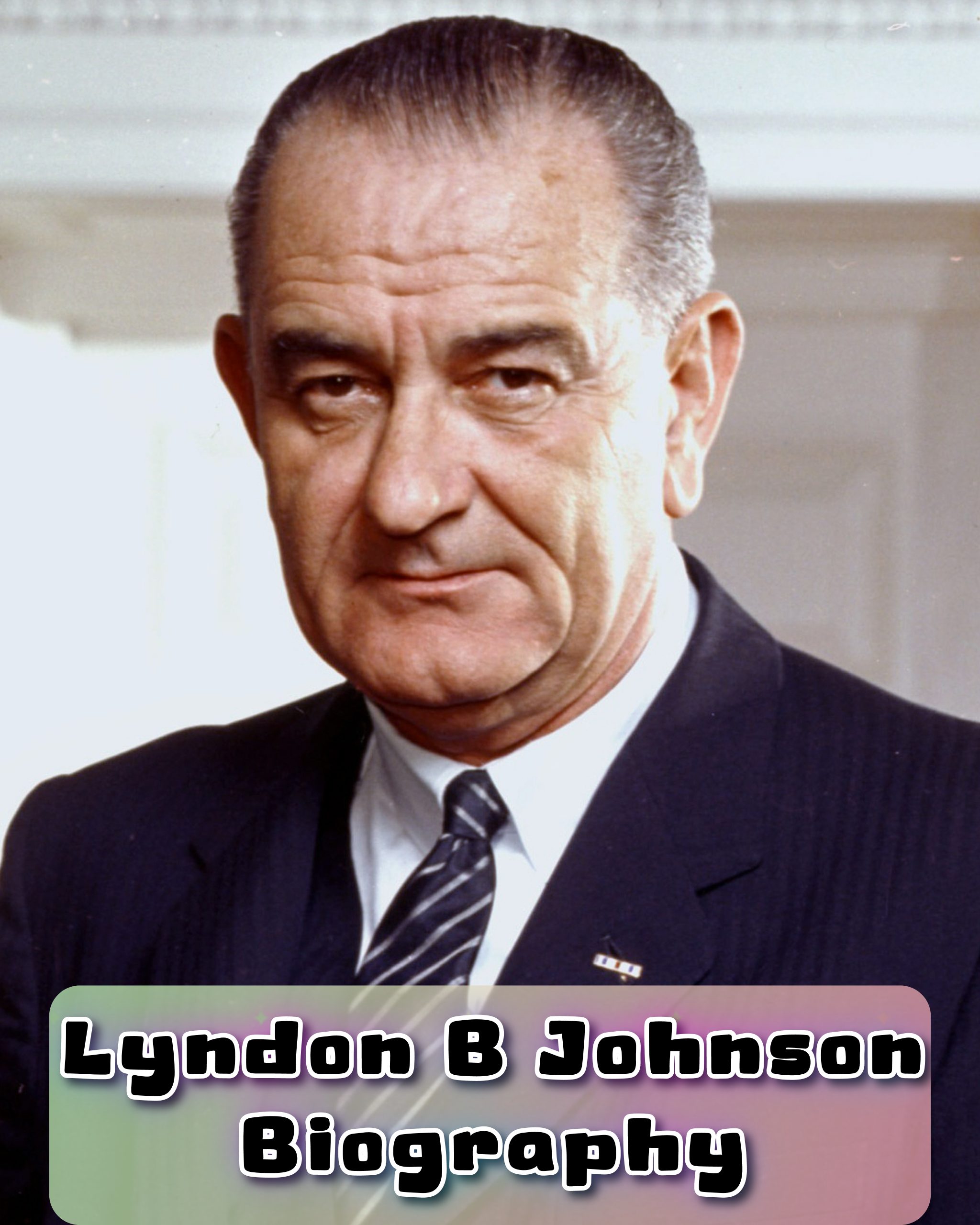
Lyndon Baines Johnson was born on August 27, 1908, near Stonewall, Texas, into a family with deep roots in the Texas Hill Country. He was the eldest son of Samuel Ealy Johnson Jr., a farmer and politician who served in the Texas Legislature, and Rebekah Baines Johnson. Growing up in a rural community, Johnson experienced the financial difficulties and challenges faced by many families in the region. His early exposure to poverty and rural life would later influence his political views and his determination to expand opportunities for disadvantaged Americans.
Johnson attended local schools before enrolling at Southwest Texas State Teachers College in San Marcos, Texas, now known as Texas State University. He graduated in 1930 with a degree in history and began his career as a teacher. One of his early teaching assignments was at a Mexican American school in Cotulla, Texas, where he witnessed firsthand the effects of poverty and limited educational opportunities. The experience had a lasting impact on him and strengthened his belief that education could provide a path toward a better life.
After leaving teaching, Johnson entered politics and moved to Washington, D.C., where he worked as a congressional secretary. He quickly developed a reputation as an ambitious and highly effective political organizer. In 1937, at the age of 28, he won a special election to represent Texas’s 10th congressional district in the U.S. House of Representatives. His victory marked the beginning of a remarkable political career that would eventually take him from Congress to the White House and make him one of the most influential presidents in American history.
Lyndon B. Johnson Education
Lyndon Baines Johnson received his early education in the Texas Hill Country, where he attended public schools in and around Johnson City. Growing up in a rural environment, he developed an early interest in history, politics, and public service. His family placed considerable importance on education, and Johnson eventually pursued higher education despite the financial challenges of his upbringing.
In 1927, Johnson enrolled at Southwest Texas State Teachers College in San Marcos, Texas, now known as Texas State University. He studied history and political science and became actively involved in campus life. During his college years, he also developed his interest in teaching and public affairs. He graduated in 1930 with a Bachelor of Science in History and began his professional career as a teacher shortly afterward.
Johnson’s experience as an educator became an important part of his development as a future political leader. He taught at the Welhausen School in Cotulla, Texas, where many of his students were Mexican American children from poor families. Seeing the educational and economic difficulties they faced deeply influenced his views on poverty and opportunity. His early teaching experience later shaped his support for federal education programs and anti-poverty initiatives during his presidency.
Lyndon B. Johnson Career
Lyndon B. Johnson began his professional career as a teacher after graduating from Southwest Texas State Teachers College in 1930. He taught in Texas and later moved into government service, working as a congressional secretary to U.S. Representative Richard Kleberg. His experience in Washington helped him develop valuable political connections and a strong understanding of federal politics. In 1937, at the age of 28, Johnson won a special election to the U.S. House of Representatives, beginning his long career in national politics.
Johnson served in the House from 1937 to 1949 before being elected to the U.S. Senate from Texas. During his Senate career, he quickly became known for his political influence, determination, and ability to build support for legislation. He became Senate Democratic leader in 1953 and Senate majority leader in 1955, making him one of the most powerful figures in Congress. His leadership helped advance major legislation on civil rights, public works, and other domestic issues, while his political skills earned him a reputation as a highly effective negotiator.
In 1960, Johnson was selected as the Democratic vice-presidential nominee alongside John F. Kennedy. After Kennedy was assassinated on November 22, 1963, Johnson was sworn in as the 36th president of the United States. As president, he pursued an ambitious domestic agenda known as the Great Society, which included the Civil Rights Act of 1964, the Voting Rights Act of 1965, Medicare, Medicaid, education programs, and anti-poverty initiatives. He won a landslide victory in the 1964 presidential election but faced increasing opposition over the Vietnam War. In 1968, Johnson announced that he would not seek another presidential term, ending a political career that had profoundly shaped modern American history.
Lyndon B. Johnson Personal Life and Family
Lyndon Baines Johnson married Claudia Alta Taylor, better known as Lady Bird Johnson, on November 17, 1934. Their relationship became one of the most enduring political partnerships in American history. Lady Bird was an important source of support throughout Johnson’s political career and later served as First Lady of the United States from 1963 to 1969. The couple remained married for nearly four decades, until Johnson’s death in 1973.
Johnson and Lady Bird had two daughters, Lynda Bird Johnson Robb and Luci Baines Johnson. Lynda Bird married U.S. Marine Corps Captain Charles S. Robb, who later became governor of Virginia and a U.S. senator. Luci Baines Johnson married Pat Nugent in 1966, although the marriage later ended in divorce. The Johnson family attracted considerable public attention during Johnson’s presidency, with his daughters frequently appearing at official events and becoming familiar figures in Washington society.
Johnson was also closely connected to his extended family, including his parents, Samuel Ealy Johnson Jr. and Rebekah Baines Johnson, who helped shape his early life in Texas. His political career was influenced by the traditions of public service in his family, particularly his father’s involvement in Texas politics. Although Johnson was known for his intense political ambition and demanding personality, his family remained an important part of his private life. After leaving the White House in 1969, he returned to his Texas ranch, where he spent much of his remaining years with family and continued working on his presidential library and memoirs.
Lyndon B. Johnson Death and Cause of Death
Lyndon Baines Johnson died on January 22, 1973, at his ranch near Johnson City, Texas. He was 64 years old. Johnson had retired from the presidency four years earlier and had largely withdrawn from active political life, although he continued to follow national affairs and work on his memoirs and presidential library.
The cause of death was a heart attack. Johnson had a long history of serious heart problems and had suffered major cardiac episodes before his death. On the day he died, he reportedly experienced severe chest pain and attempted to contact the Secret Service for assistance, but he was found unresponsive at his ranch. Emergency medical personnel were unable to revive him.
Johnson was buried at the Johnson Family Cemetery on his ranch in Stonewall, Texas, alongside members of his family. His death came just weeks before the first anniversary of President Harry S. Truman’s death and less than a year before Johnson’s former vice president, Hubert Humphrey, died of cancer. Johnson’s legacy remains deeply debated, but his presidency continues to be remembered for landmark civil-rights legislation, the Great Society, and the escalation of the Vietnam War.
Lyndon B. Johnson Age, Religion, Nationality, Height and Physical Appearance
Lyndon Baines Johnson was born on August 27, 1908, and died on January 22, 1973, at the age of 64. He was American by nationality and was born in Texas, United States. Johnson was raised in a Christian, specifically Disciples of Christ, family and was associated with the Christian faith throughout his life. His religious background was part of the cultural and social environment in which he was raised.
Johnson was a notably tall man, with his height commonly reported at approximately 6 feet 4 inches (193 cm). His broad, imposing frame contributed to his memorable physical presence, particularly during his political career. He had a broad build, long face, prominent nose, dark hair that became gray with age, and distinctive eyebrows. Photographs and television appearances often emphasized his commanding presence and expressive manner.
As he grew older, Johnson’s appearance changed noticeably, with his hair turning gray and his face becoming more lined. He was often seen wearing formal suits and ties during his years in Washington and the White House, while at his Texas ranch he was frequently photographed in more relaxed clothing. His exceptionally tall stature, energetic gestures, and forceful personality made him one of the most recognizable American political figures of his generation.
Lyndon B. Johnson Net Worth
Lyndon B. Johnson’s exact net worth at the time of his death in 1973 is not known, and there is no reliable official figure that establishes a precise amount. However, he was considerably wealthier than the average American because of his long political career, investments, media-related business interests, and substantial Texas ranch holdings. A reasonable historical estimate places his estate at around $20 million to $30 million in 1973 dollars, although estimates vary depending on how his assets and business interests are valued.
A significant part of Johnson’s income came from his political career. As a member of the U.S. House and later the Senate, he received federal salaries, eventually earning the Senate majority leader’s salary before becoming vice president and then president. The U.S. presidential salary was $100,000 per year during Johnson’s presidency, in addition to expense and travel allowances. His wealth, however, was not built primarily from his presidential salary. Johnson and his family also had interests in broadcasting and other investments, while his wife, Lady Bird Johnson, played an important role in the family’s business affairs.
Johnson’s Texas properties were another important component of his wealth. The family owned the LBJ Ranch, along with other land and assets accumulated over the years. After adjusting a 1973 estimate of roughly $20 million–$30 million for inflation, that would represent approximately $140 million–$210 million in 2026 dollars. Because historical estate valuations can differ substantially depending on the assets included, these figures should be regarded as estimates rather than a confirmed net worth. Johnson’s financial legacy was ultimately passed to his family and was also connected to the preservation of his presidential papers, ranch, and presidential library.
Legacy
Lyndon B. Johnson left a lasting mark on American history through his ambitious domestic agenda, particularly the Great Society. His administration helped establish or expand major programs including Medicare and Medicaid, while the Civil Rights Act of 1964 and Voting Rights Act of 1965 became landmark achievements in the struggle for racial equality and voting rights. His efforts to reduce poverty, improve education, expand healthcare access, and strengthen civil rights transformed the role of the federal government in American society.
At the same time, Johnson’s legacy remains deeply controversial because of the Vietnam War. Under his administration, American military involvement in Vietnam expanded dramatically, resulting in heavy U.S. casualties, widespread protests, and growing political divisions at home. The war damaged Johnson’s popularity and overshadowed many of his domestic achievements. His decision not to seek reelection in 1968 reflected the enormous political pressure created by the conflict and his declining support.
Despite these controversies, Johnson is widely regarded as one of the most consequential American presidents of the 20th century. His presidency reshaped civil rights, healthcare, education, poverty policy, and the federal government’s relationship with disadvantaged communities. The Lyndon B. Johnson Presidential Library and Museum in Austin, Texas, preserves his presidential records and continues to educate the public about his life, achievements, and controversies. His legacy therefore remains complex: he is remembered both for some of the most significant domestic reforms in modern U.S. history and for one of America’s most divisive wars.
Conclusion
Lyndon B. Johnson remains one of the most influential and complex figures in American political history. From his humble beginnings in rural Texas and early career as a teacher to his rise through Congress and the presidency, Johnson dedicated his life to public service and political leadership. His Great Society programs, civil rights achievements, Medicare, Medicaid, and anti-poverty initiatives transformed American society, while his escalation of the Vietnam War remains a major controversy surrounding his presidency. Despite the divisions associated with his leadership, Johnson’s impact on the United States continues to be felt decades after his death, securing his place as a consequential figure whose achievements and controversies continue to shape discussions about American history and presidential leadership.
Frequently Asked Questions About Lyndon B. Johnson
Who was Lyndon B. Johnson?
Lyndon B. Johnson, commonly known as LBJ, was the 36th president of the United States, serving from 1963 to 1969. He became president after the assassination of John F. Kennedy and is best known for the Great Society, civil rights legislation, Medicare, Medicaid, and the expansion of U.S. involvement in the Vietnam War.
How old was Lyndon B. Johnson when he died?
Lyndon B. Johnson was 64 years old when he died on January 22, 1973. He was born on August 27, 1908, near Stonewall, Texas.
Who was Lyndon B. Johnson’s wife?
Lyndon B. Johnson’s wife was Claudia Alta Taylor Johnson, widely known as Lady Bird Johnson. They married on November 17, 1934, and remained married until Johnson’s death in 1973.
Did Lyndon B. Johnson have children?
Yes. Lyndon B. Johnson and Lady Bird Johnson had two daughters: Lynda Bird Johnson Robb and Luci Baines Johnson.
What was Lyndon B. Johnson’s religion?
Lyndon B. Johnson was raised in the Christian faith and was associated with the Disciples of Christ denomination.
How tall was Lyndon B. Johnson?
Lyndon B. Johnson was approximately 6 feet 4 inches (193 cm) tall, making him one of the tallest U.S. presidents.
What was Lyndon B. Johnson known for?
Johnson was known for his Great Society programs, civil rights legislation, Medicare and Medicaid, the War on Poverty, and his major escalation of the Vietnam War.
How did Lyndon B. Johnson become president?
Johnson became president on November 22, 1963, after President John F. Kennedy was assassinated in Dallas, Texas. Johnson was sworn in aboard Air Force One shortly afterward.
What was Lyndon B. Johnson’s biggest achievement?
One of Johnson’s most significant achievements was the passage of major civil rights legislation, including the Civil Rights Act of 1964 and Voting Rights Act of 1965. His administration also created Medicare and Medicaid and expanded federal anti-poverty and education programs.
Why did Lyndon B. Johnson not run for president in 1968?
Johnson announced in March 1968 that he would not seek another presidential term. His decision came amid growing opposition to the Vietnam War, declining political support, and increasing divisions within the Democratic Party.
How did Lyndon B. Johnson die?
Lyndon B. Johnson died from a heart attack on January 22, 1973, at his Texas ranch. He was 64 years old.
What was Lyndon B. Johnson’s net worth?
Johnson’s exact net worth at the time of his death is uncertain. Historical estimates place the value of his estate at tens of millions of dollars in 1973, largely reflecting his ranch, land, investments, and family business interests.
Where is Lyndon B. Johnson buried?
Lyndon B. Johnson is buried at the Johnson Family Cemetery on his former ranch near Stonewall, Texas, alongside members of his family.
What is Lyndon B. Johnson’s legacy?
Lyndon B. Johnson’s legacy is defined by both major domestic reforms and controversy over Vietnam. He is remembered for advancing civil rights, healthcare, education, and anti-poverty programs while also overseeing a major expansion of American military involvement in Vietnam.