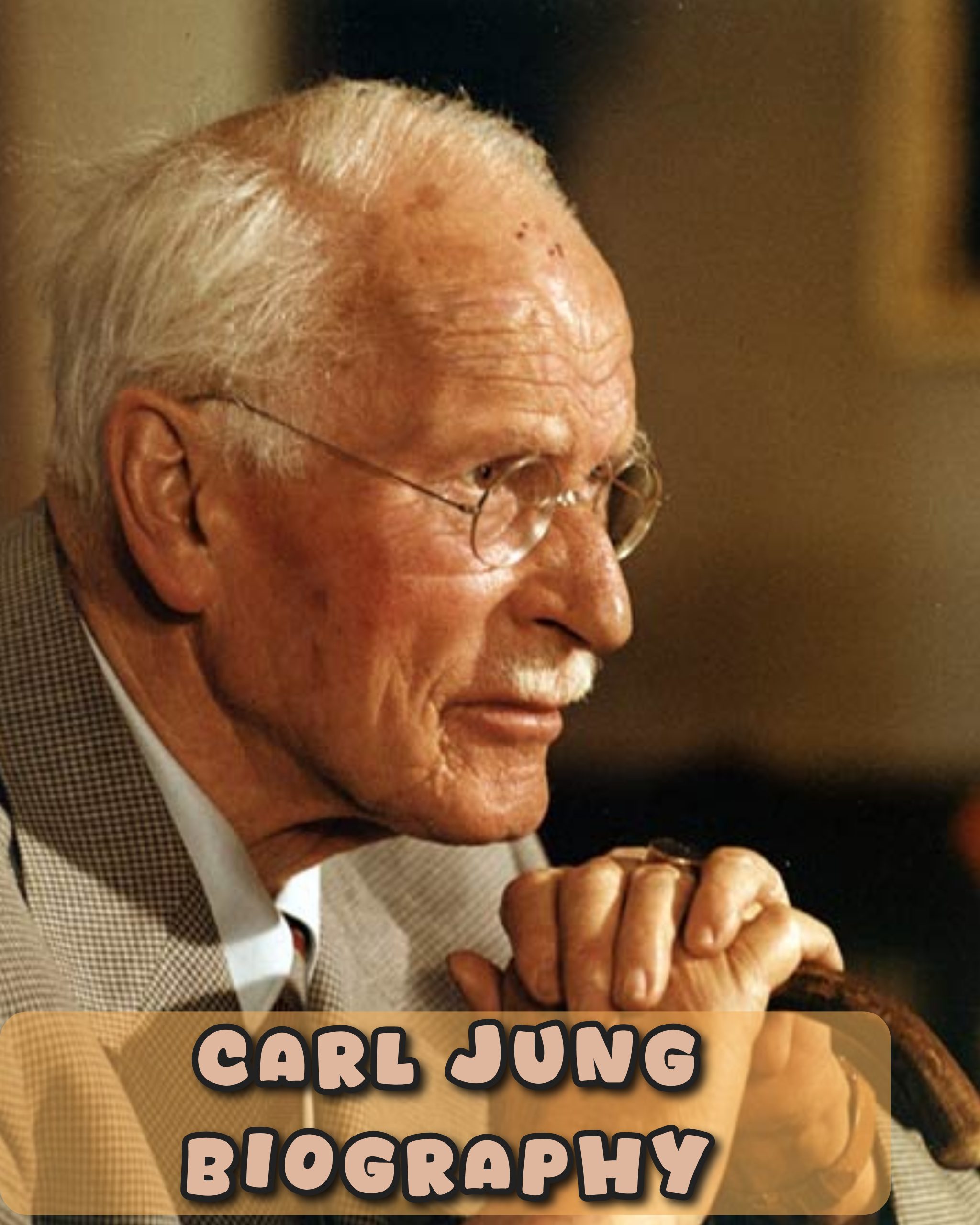
Carl Gustav Jung was born on July 26, 1875, in Kesswil, in the Swiss canton of Thurgau. He was the son of Paul Achilles Jung, a Swiss Reformed pastor, and Emilie Preiswerk Jung. When Carl was still very young, his family moved to Laufen, and later to Klein-Hüningen near Basel. His father’s religious profession and his mother’s interest in spiritual and unusual experiences exposed Jung from childhood to questions about religion, dreams, the unconscious and human nature.
Jung was an introspective and intellectually curious child who spent much of his early life observing people and reflecting on his own inner experiences. His childhood was marked by a strong interest in philosophy, religion, mythology and the workings of the human mind. He later described several vivid dreams and experiences from his youth that influenced his understanding of the unconscious. These early experiences became important foundations for ideas he would develop decades later, particularly his theories about dreams, symbolism and the collective unconscious.
After completing his early education in Basel, Jung entered the University of Basel, where he initially developed broad interests in the humanities before choosing medicine. He graduated with a medical degree in 1900 and soon turned toward psychiatry, attracted by the opportunity to study the relationship between the mind and human behavior. He began his psychiatric career at the Burghölzli psychiatric hospital in Zürich under Eugen Bleuler, where his early clinical work and experiments with word association helped establish the foundations of the psychological theories that would eventually make him one of the most influential figures in modern psychology.
Carl Gustav Jung Education
Carl Gustav Jung received his early education in Basel, Switzerland, where he developed a strong interest in philosophy, religion, literature, mythology and the natural sciences. As a young student, he was especially fascinated by questions about human consciousness, dreams and spirituality. Although he initially considered studying archaeology, his intellectual interests eventually led him toward medicine, which offered him an opportunity to explore both the physical and psychological aspects of human beings.
Jung enrolled at the University of Basel to study medicine and completed his medical training in 1900. During his university years, he developed a particular interest in psychiatry and the study of mental illness. His exposure to philosophy, science and medicine helped shape the broad intellectual approach that later became characteristic of his work. He was particularly influenced by the writings of philosophers and thinkers who explored consciousness, religion and human nature.
After graduating with his medical degree, Jung moved to Zürich and began working at the Burghölzli Psychiatric Hospital under the renowned psychiatrist Eugen Bleuler. His work at Burghölzli gave him practical experience treating psychiatric patients and allowed him to conduct research into psychological processes. He became particularly interested in word-association experiments and the hidden emotional forces behind human behavior. These early studies formed an important foundation for his later development of analytical psychology and his theories of the unconscious, complexes and psychological types.
Carl Gustav Jung Career
Carl Gustav Jung began his professional career in psychiatry in 1900 at the Burghölzli Psychiatric Hospital in Zürich, where he worked under the influential psychiatrist Eugen Bleuler. Jung quickly distinguished himself through his research into mental illness, particularly his experiments with word association. These studies helped him develop the concept of psychological complexes, suggesting that emotionally charged experiences could operate outside conscious awareness and influence a person’s thoughts and behavior. His early research established him as a promising young psychiatrist and scholar.
Jung’s career took a major turn after he became acquainted with Sigmund Freud in the early 1900s. The two initially developed a close intellectual relationship, with Jung becoming one of the leading figures associated with the emerging psychoanalytic movement. However, differences in their views about the nature of the unconscious, sexuality and human psychology eventually led to their break in 1913. Following this separation, Jung developed his own school of thought, which he called analytical psychology. He introduced influential concepts including the collective unconscious, archetypes, the persona, the shadow, introversion and extraversion.
Throughout the remainder of his career, Jung expanded his work beyond clinical psychiatry into mythology, religion, philosophy, literature and cultural studies. He established a private practice in Küsnacht, Switzerland, while continuing to write, lecture and conduct psychological research. Among his most influential works were Psychological Types, Symbols of Transformation, Aion, Psychology and Religion and The Red Book. His ideas eventually became influential not only in psychology and psychotherapy but also in literature, art, religious studies and popular culture, making Jung one of the most significant figures in the history of modern psychology.
Carl Gustav Jung Personal Life and Family
Carl Gustav Jung married Emma Jung (née Rauschenbach) in 1903. Emma came from a wealthy Swiss industrial family, and her financial independence helped provide stability during the early years of Jung’s professional career. She was also deeply interested in psychology and eventually became a practicing analyst and an important contributor to the development of Jungian psychology. The couple had five children: Agathe, Gret, Franz, Marianne and Helene. Emma remained closely involved in Jung’s intellectual and professional world until her death in 1955.
Jung’s family life was closely connected with his work. His wife Emma studied Jung’s ideas and later trained as a psychoanalyst, while their home in Küsnacht, Switzerland, became an important setting for Jung’s personal and professional life. Jung also maintained relationships with several women who were connected to his psychological work, most notably Toni Wolff, a Swiss analyst who became his close collaborator and companion for many years. His relationships and family circumstances have remained subjects of considerable interest in biographies of Jung because of their connection to his ideas about relationships, personality and the unconscious.
Jung was also shaped by his parents and extended family. His father, Paul Achilles Jung, was a Protestant pastor, while his mother, Emilie Preiswerk Jung, came from a family with strong religious and spiritual traditions. Jung’s childhood experiences within this family environment contributed to his lifelong interest in religion, dreams, symbolism and spirituality. Despite the complexities of his personal relationships, Jung remained devoted to intellectual exploration throughout his life, and his family and close relationships formed an important part of the personal background behind the development of his psychological theories.
Carl Gustav Jung Age, Religion, Nationality, Height and Physical Appearance
Carl Gustav Jung was born on July 26, 1875, and died on June 6, 1961, making him 85 years old at the time of his death. He was Swiss by nationality and was raised in a Swiss Reformed Christian family, as his father, Paul Achilles Jung, was a Protestant pastor. Although Christianity strongly influenced his upbringing, Jung developed a broad interest in comparative religion, mythology, spirituality and the psychological meaning of religious experiences throughout his career.
Jung’s exact height is not reliably documented in authoritative biographical sources, so specific figures sometimes published online should be treated cautiously. In photographs, he is generally depicted as a broad-faced, solidly built man with a prominent forehead, thick hair that became gray with age, and a distinctive full mustache. His appearance changed considerably over his long life, from a younger, clean-shaven physician to the older, distinguished Swiss psychologist recognizable from many later portraits.
In his later years, Jung often appeared with gray or white hair and a full mustache, giving him a serious and scholarly appearance. His photographs frequently show him wearing formal suits or traditional academic attire, reflecting the professional and intellectual status he held during the later decades of his career.
Carl Gustav Jung Death and Cause of Death
Carl Gustav Jung died on June 6, 1961, at his home in Küsnacht, Switzerland, at the age of 85. He had spent the final years of his life continuing to write, reflect on psychology, religion and spirituality, and correspond with colleagues and students. His death marked the end of the life of one of the most influential figures in 20th-century psychology.
Jung’s cause of death was complications following a circulatory illness, after suffering a stroke and experiencing declining health in his final years. He had also experienced serious health problems earlier in life, including a heart attack in 1944. His condition gradually weakened as he grew older, and he died peacefully at his home surrounded by his family.
Jung was buried at the Küsnacht Reformed Church cemetery in Switzerland, where members of his family were also laid to rest. Although he died more than six decades ago, his ideas about the unconscious mind, archetypes, dreams, personality and spirituality continue to influence psychology, psychotherapy, literature and cultural studies around the world.
Carl Gustav Jung Net Worth
There is no reliable historical record of Carl Jung’s exact personal net worth at the time of his death in 1961, and modern websites that give a precise “Carl Jung net worth” figure are largely speculative. Jung earned his income primarily as a psychiatrist, private practitioner, university lecturer and professor, author, and speaker. His books and professional work brought him considerable recognition, but there is no documented salary history that would allow his earnings to be converted accurately into a modern net-worth figure.
Jung’s financial circumstances also changed significantly during his lifetime. He came from a relatively modest background and initially faced financial difficulties while studying medicine. After marrying Emma Rauschenbach, however, the family’s financial position became substantially stronger because Emma came from a wealthy industrial family. Historical accounts note that the couple’s house in Küsnacht was financed largely through Emma’s family resources and inheritance. This means that Jung’s household wealth should not automatically be interpreted as wealth generated solely from his psychiatric career.
For an SEO biography, it is therefore safer to describe Carl Jung’s net worth as unknown rather than attach an unsupported dollar figure. If an estimate must be included, a cautious description would be that Jung was financially comfortable and professionally successful in his later life, with income coming from psychiatric practice, academic appointments, writing and intellectual work, while significant family wealth also came through Emma Rauschenbach. His financial legacy is better documented through his properties, publications and family estate than through a verified personal net-worth figure.
Legacy
Carl Gustav Jung left a lasting influence on psychology through his development of analytical psychology, a school of thought that emphasized the unconscious mind, dreams, symbolism and the individual’s search for psychological wholeness. His concepts of the collective unconscious, archetypes, the persona, the shadow, introversion and extraversion became some of the most recognizable ideas associated with modern psychology. Although some of Jung’s theories remain debated within contemporary scientific psychology, his work continues to influence psychotherapy and discussions about personality and human consciousness.
Jung’s influence also extended far beyond clinical psychology. His ideas have been widely explored in religion, mythology, literature, philosophy, art and cultural studies. His writings encouraged scholars and therapists to examine dreams, myths and religious symbols as expressions of deeper psychological processes. The publication of The Red Book decades after his death further increased public interest in his personal experiences and intellectual development, providing readers with insight into the inner exploration that influenced his later theories.
Today, Jung remains one of the most influential and controversial figures in the history of psychology. His work continues to inspire Jungian analysts, psychotherapists, writers, artists, scholars and readers interested in spirituality and self-understanding. Institutions and archives dedicated to preserving his writings and correspondence continue to support research into his life and ideas, ensuring that Jung’s intellectual legacy remains an important part of discussions about the unconscious mind, personality, dreams and the search for meaning.
Conclusion
Carl Gustav Jung remains one of the most influential figures in the history of psychology, remembered for transforming the study of the human mind through his theories of the collective unconscious, archetypes, dreams, personality and psychological development. From his early life and medical education in Switzerland to his groundbreaking psychiatric career and eventual development of analytical psychology, Jung dedicated his life to exploring the deeper dimensions of human consciousness. Although some of his ideas remain debated, his influence continues across psychology, psychotherapy, religion, literature and cultural studies. His writings, particularly The Red Book and Psychological Types, have helped preserve his intellectual legacy, ensuring that Carl Jung’s ideas continue to shape how people understand the mind, identity and the search for meaning.
Frequently Asked Questions About Carl Jung
Who was Carl Jung?
Carl Gustav Jung was a Swiss psychiatrist and psychologist who founded analytical psychology. He is best known for developing concepts such as the collective unconscious, archetypes, the shadow, persona, introversion and extraversion.
When was Carl Jung born?
Carl Jung was born on July 26, 1875, in Kesswil, Switzerland.
When did Carl Jung die?
Carl Jung died on June 6, 1961, at the age of 85, at his home in Küsnacht, Switzerland.
What was Carl Jung’s cause of death?
Carl Jung died following declining health and complications associated with a stroke and circulatory illness in his final years.
What was Carl Jung’s nationality?
Carl Jung was Swiss. He was born in Switzerland and spent most of his professional life there.
What religion was Carl Jung?
Jung was raised in a Swiss Reformed Christian family. His father was a Protestant pastor. As an adult, Jung developed a broad interest in Christianity, comparative religion, mythology and spirituality and studied their psychological significance.
Who was Carl Jung’s wife?
Carl Jung’s wife was Emma Jung (née Rauschenbach). They married in 1903 and remained married until Emma’s death in 1955.
Did Carl Jung have children?
Yes. Carl Jung and Emma Jung had five children: Agathe, Gret, Franz, Marianne and Helene.
What is Carl Jung famous for?
Carl Jung is famous for founding analytical psychology and introducing influential psychological concepts including the collective unconscious, archetypes, psychological types, the persona and the shadow.
What is Jung’s collective unconscious?
The collective unconscious is Jung’s theory that humans share an inherited layer of the unconscious mind containing universal patterns and symbolic forms known as archetypes.
What are Jungian archetypes?
Jungian archetypes are universal symbolic patterns or recurring psychological themes that Jung believed are found across cultures and influence human behavior, dreams and stories. Examples include the Hero, Mother, Shadow and Wise Old Man.
What is Carl Jung’s most famous book?
One of Jung’s best-known works is Psychological Types, while The Red Book is among his most famous and influential works for understanding his personal psychological exploration.
Did Carl Jung work with Sigmund Freud?
Yes. Jung worked closely with Sigmund Freud during the early development of psychoanalysis. Their relationship later broke down because of significant disagreements about psychology and the nature of the unconscious.
What was Carl Jung’s net worth?
Carl Jung’s exact net worth is unknown. There is no reliable historical financial record that establishes a precise figure for his wealth at the time of his death in 1961. His income came from psychiatric practice, academic work, writing and lectures, while his family also had substantial financial resources.
How tall was Carl Jung?
Carl Jung’s exact height is not reliably documented in authoritative biographical sources. Precise height figures commonly published online should therefore be treated as estimates rather than confirmed facts.
What is Carl Jung’s legacy?
Carl Jung’s legacy is his lasting influence on psychology, psychotherapy, religion, mythology, literature and cultural studies. His theories of archetypes, the collective unconscious, dreams and personality continue to influence psychologists, therapists, scholars and writers worldwide.