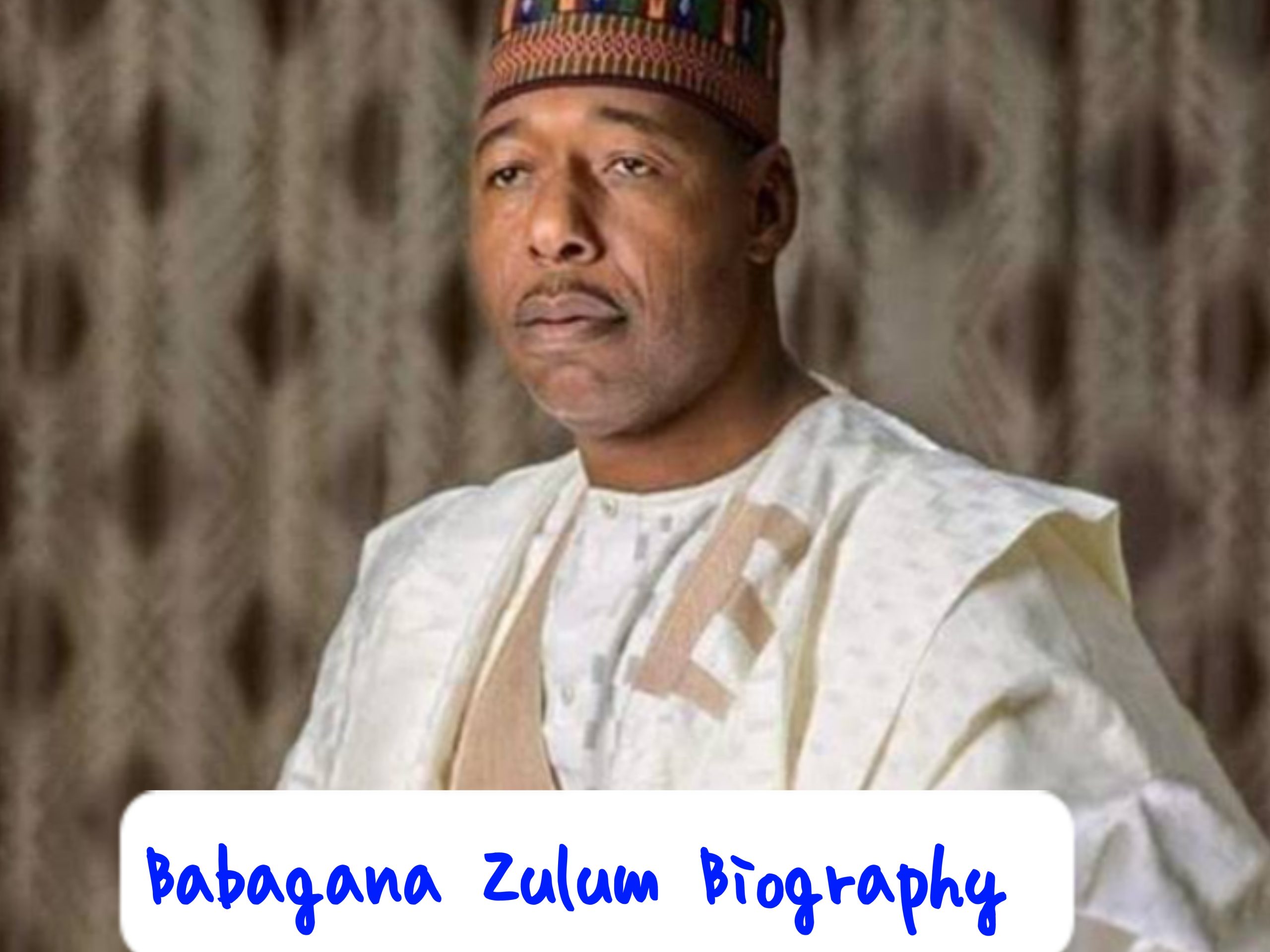
Babagana Umara Zulum is the Governor of Borno State in Nigeria. He is a professor of agricultural engineering who transitioned into politics and has led efforts to rebuild the state after years of conflict. Born into a farming family in a rural area, Zulum rose through education and hard work to become an academic leader and then a state governor known for hands-on governance and reconstruction projects.
His leadership focuses on resettling displaced people, building schools and infrastructure, improving security, and supporting agriculture in a region severely affected by insurgency. Zulum’s approach combines technical expertise with direct engagement, often visiting project sites and communities despite risks. This has earned him recognition both within Nigeria and internationally for resilience and service.
Babagana Zulum Early Life
Babagana Umara Zulum was born on 25 August 1969 in Loskuri village, Mafa Local Government Area of Borno State, Nigeria. He grew up in a humble farming family where his late father worked the land. From a young age, Zulum joined his father in farming activities. He trekked about seven kilometers daily from home to the farm while also attending school.
This rural upbringing in central Borno instilled values of hard work, perseverance, and connection to the land. Borno State, located in northeastern Nigeria, has a rich history tied to the ancient Kanem-Bornu Empire. The region features diverse ethnic groups, with Kanuri people prominent in many areas, including Mafa. The state borders countries like Niger, Chad, and Cameroon, influencing its culture, trade, and challenges such as cross-border security issues. Traditional leadership, including the Shehu of Borno, plays a significant role in community life alongside modern governance.
Zulum’s early experiences with poverty and manual labor shaped his empathy for ordinary citizens. He combined farming with education, attending Mafa Primary School from 1975 to 1980. He then moved to Government Secondary School in Monguno from 1980 to 1985. By secondary school, around class five, he began fully supporting his own education and helping younger siblings.
To fund his studies, Zulum worked as a commercial driver for about 16 years, from around 1984 to 1999. He drove Peugeot 404 taxis, buses for passengers to villages and neighboring states, and pickup trucks carrying firewood. He also learned vehicle repairs and operated a commercial grinding machine on weekends in Mafa. These jobs supplemented his income while he pursued education. He often trekked long distances to school due to lack of transport money.
Babagana Zulum Education
Zulum’s educational journey reflects determination amid financial hardship. After secondary school, he gained admission to Ramat Polytechnic in Maiduguri in 1986 for a National Diploma in Irrigation Engineering, graduating in 1988. He continued trekking long distances during this period.
In 1990, while working, he secured admission to the University of Maiduguri for a Bachelor of Science degree in Agricultural Engineering, which he completed in 1994. He served in the National Youth Service Corps at Katsina State Polytechnic. He then earned a Master’s degree in Agricultural Engineering from the University of Ibadan between 1997 and 1998. To pay fees, he worked temporarily in Lagos.
In 2005, Zulum enrolled for a PhD in Soil and Water Engineering at the University of Maiduguri, completing it in 2009. His academic path combined practical experience in irrigation and engineering with advanced research, focusing on areas relevant to agriculture in arid and conflict-affected regions.
Babagana Zulum Career
Zulum began his professional life in public service before moving into academia and administration.
Early Professional Roles
In 1989, Zulum joined the Borno State Civil Service as an Assistant Technical Officer in the Ministry of Agriculture. In 1990, he moved to the Borno State Unified Local Government Service as Senior Field Overseer and later became Principal Water Engineer. These roles involved practical work in agriculture and water management, building expertise he later applied in governance.
Academic Career
In 2000, Zulum took an appointment as Assistant Lecturer at the University of Maiduguri. He rose through the ranks to become a full Professor of Soil and Water Engineering. He served as Deputy Dean and Acting Dean of the Faculty of Engineering around 2010-2011. His teaching and research contributed to agricultural engineering knowledge in Nigeria.
In 2011, he was appointed Rector of Ramat Polytechnic in Maiduguri while retaining his university position. As rector, he demonstrated administrative skills in managing a state-owned institution.
Political and Administrative Career
In 2015, then-Governor Kashim Shettima appointed Zulum as Commissioner for Reconstruction, Rehabilitation and Resettlement. In this role, he oversaw rebuilding efforts in areas affected by Boko Haram insurgency. He managed the construction of over 30,000 resettlement homes, schools, hospitals, and other infrastructure. He facilitated the return of internally displaced persons (IDPs) to their communities and worked across 14 local government areas to restore civil authority. His hands-on approach, including visits to volatile areas, built public trust.
On 1 October 2018, Zulum won the All Progressives Congress (APC) gubernatorial primary for Borno State. He was elected Governor on 9 March 2019, polling 1,175,440 votes. He was sworn in on 29 May 2019, succeeding Kashim Shettima.
Governance as Governor of Borno State
Since taking office, Zulum has prioritized security, reconstruction, education, healthcare, agriculture, and infrastructure. His administration follows a “Borno Model” of resettlement and recovery. Key achievements include resettling over one million IDPs, closing IDP camps in Maiduguri, and rebuilding communities.
In education, the state has constructed over 104 new mega schools, rehabilitated thousands of classrooms, distributed learning materials, and supported school feeding and vocational training. Out-of-school children numbers dropped significantly, with enrollment rising. Zulum has invested in girl-child education and modernized aspects of traditional Tsangaya schooling.
Healthcare improvements include building and upgrading hospitals and primary centers. Infrastructure projects encompass roads, flyovers, drainage systems, markets, and public buildings. By mid-2025, reports indicated over 1,300-1,500 capital projects delivered across all 27 local government areas.
Agriculture remains central, given Zulum’s background. Initiatives include fertilizer distribution, improved seeds, irrigation rehabilitation, livestock vaccination, and support for smallholder farmers. The administration has addressed food security and job creation through mechanization and insurance programs.
Zulum responds directly to challenges, such as floods in Maiduguri, by leading relief and mitigation efforts. He promotes transparency, including local government financial autonomy, and focuses on youth empowerment and SME support.
Babagana Zulum Awards
Zulum has received numerous awards for leadership and service. These include:
- Commander of the Order of the Niger (CON) by President Muhammadu Buhari in 2022.
- Second-Order of National Honour from Niger Republic (“de Grand Officer Dans l’Ordre”) in 2021, equivalent to GCON.
- Multiple Governor of the Year awards from media outlets like Tell Magazine, Vanguard, Leadership, BusinessDay, New Telegraph, and others (2019-2025).
- Forbes Magazine African Leadership Award (2024).
- African Governor of the Year Award (Education and People Development, 2023).
- NUJ awards, including Most Promising First-Term Governor and Media-Friendly Governor.
- Zik Prize for Leadership, Muslim Personality of the Year, and various sectoral recognitions in education, agriculture, peace, and public service up to 2025-2026.
These honors reflect his impact on governance, reconstruction, and human development.
Babagana Zulum Personal Life
Zulum is a devout Muslim. He is married to Dr. Falmata Umara Zulum. The couple has several children, including Aisha, Mamman, Umar, and others. In 2026, high-profile weddings of Zulum’s children and a relative drew national figures, highlighting family and community ties.
He maintains a relatively private family life while serving publicly. His background influences his focus on supporting vulnerable groups, including widows, orphans, and farmers. Zulum holds fellowships such as mni (National Institute), FNSE (Nigerian Society of Engineers), and others.
Other Relevant Aspects of Babagana Zulum Leadership
Security and Peacebuilding
Zulum works closely with security agencies to improve stability. His administration supports de-radicalization and reintegration of former insurgents while strengthening community policing and logistics.
Economic Recovery
Efforts include reviving markets, supporting SMEs through microfinance like Rayyan Microfinance Bank, and promoting trade. Urban renewal projects in Maiduguri and other areas aim to boost economic activities.
Environmental and Climate Resilience
Given experiences with floods and arid conditions, Zulum’s government invests in water management, drainage, and sustainable agriculture. His engineering expertise informs these initiatives.
International and Regional Engagement
Zulum collaborates with neighboring countries on refugee repatriation and cross-border issues. His awards from Niger highlight regional recognition.
Conclusion
Babagana Umara Zulum’s life story—from rural farmer and commercial driver to professor and governor—illustrates resilience and commitment to public service. His tenure in Borno State emphasizes practical solutions to complex problems, focusing on people-centered development. Through reconstruction, education, and security efforts, he continues to shape the state’s recovery and future prospects.
FAQs
Who is Babagana Zulum?
Babagana Umara Zulum is a Nigerian professor and politician serving as Governor of Borno State since 2019.
What is Babagana Zulum date of birth?
He was born on 25 August 1969.
Where was Babagana Zulum born?
He was born in Loskuri village, Mafa Local Government Area, Borno State.
What is Babagana Zulum educational qualification?
He holds a B.Sc. in Agricultural Engineering, M.Eng., and PhD in Soil and Water Engineering.
What are some major achievements of Babagana Zulum as governor?
Key achievements include resettling over a million IDPs, building numerous schools and infrastructure projects, and supporting agriculture and security.
Has Babagana Zulum received national honors?
Yes, including the Commander of the Order of the Niger (CON) and international recognitions.