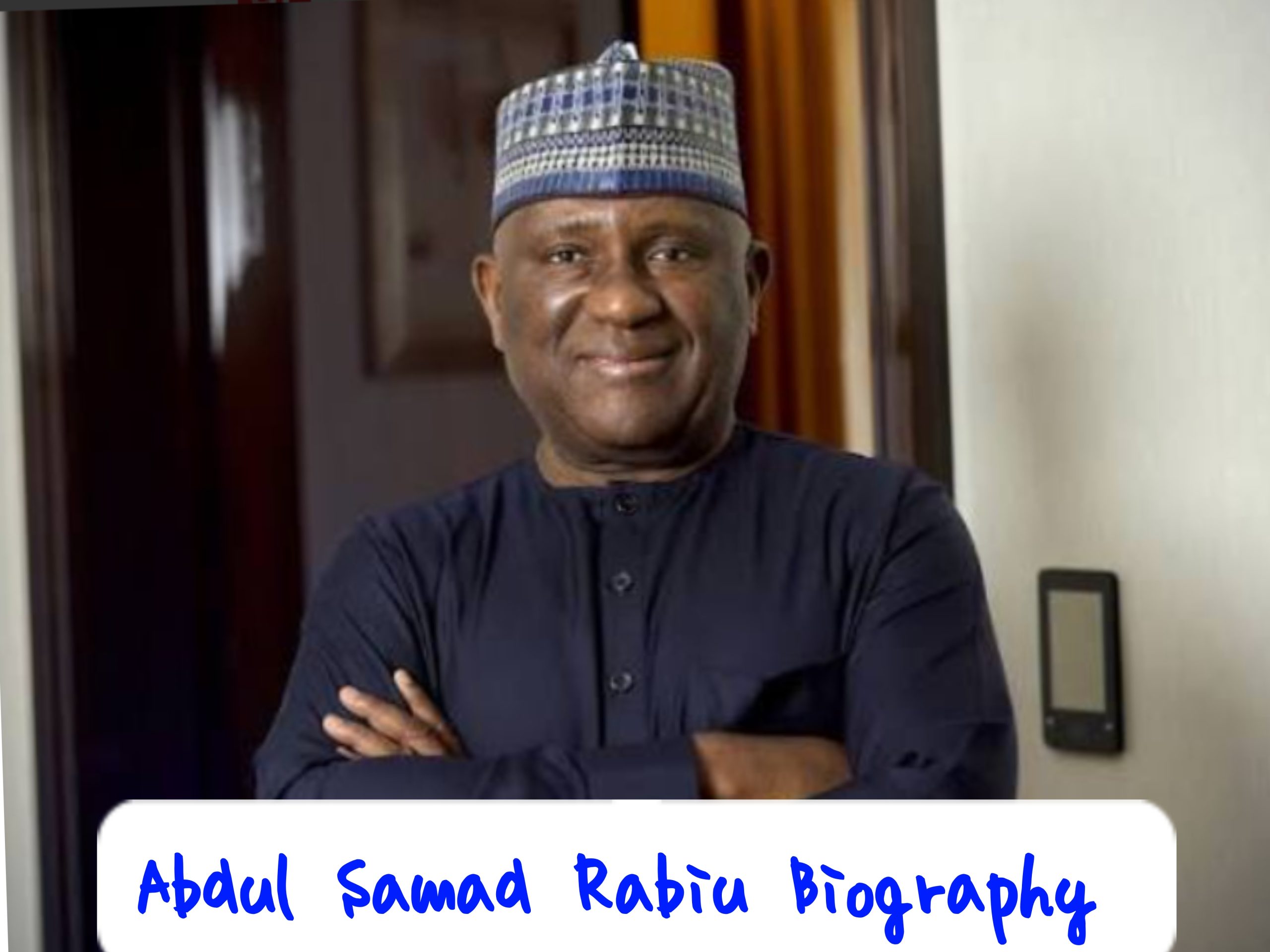
Abdul Samad Isyaku Rabiu is a prominent Nigerian businessman and philanthropist known for building one of Africa’s major industrial conglomerates. Born on 4 August 1960, he founded and chairs BUA Group, a diversified company active in manufacturing, infrastructure, agriculture, and food processing. His work has created thousands of jobs, contributed significantly to Nigeria’s GDP, and supported industrial growth across the country.
Rabiu comes from a family with a strong business tradition in Kano. He took over family responsibilities at a young age and turned challenges into opportunities by establishing BUA Group in 1988. Through steady expansion, strategic investments, and a focus on local production, he has grown the business into a powerhouse that includes major listed companies like BUA Cement Plc and BUA Foods Plc. His approach emphasizes backward integration, job creation, and long-term value addition to the Nigerian economy.
Abdul Samad Rabiu Early Life
Abdul Samad Isyaku Rabiu was born on 4 August 1960 in Kano, Kano State, in north-western Nigeria. He grew up in a prominent Hausa Muslim family with deep roots in commerce and Islamic scholarship. Kano has long served as a historic commercial hub in the Sahel region, known for trade in commodities, textiles, and agriculture. This environment shaped his early understanding of business.
His father, the late Khalifah Isyaku Rabiu, was a leading industrialist in Nigeria during the 1970s and 1980s. The elder Rabiu started with trading religious books, bicycles, and sewing machines before expanding into textiles, real estate, and sugar production. He built a substantial business empire under the IRS Group. Abdul Samad’s grandfather was an imam, and the family maintained strong ties to both faith and enterprise.
Rabiu received his early education in Kano. He attended primary school there and obtained his First School Leaving Certificate. For secondary education, he went to Federal Government College, Kano, where he performed well. The city of Kano, his state of origin, provided a foundation in trade networks and community values that later influenced his business and philanthropic decisions. Kano State remains central to his identity and many of his investments.
At around age 24, after his studies abroad, Rabiu returned to Nigeria. This period coincided with a major family challenge: his father was detained by the military administration of General Muhammadu Buhari over alleged unpaid import duties on rice. Rabiu stepped in to help manage and stabilize the family business during this difficult time. These experiences taught him resilience, the importance of family duty, and the complexities of operating in Nigeria’s economic and regulatory environment.
Abdul Samad Rabiu Education
Abdul Samad Rabiu pursued higher education in the United States. He attended Capital University in Columbus, Ohio, where he studied Economics. This training gave him knowledge of market dynamics, finance, and business management that proved valuable when he returned home.
His time in the US exposed him to different business practices and global perspectives. He completed his degree and returned to Nigeria before turning 25. The combination of formal education and practical involvement in the family business created a strong foundation for his later success. Rabiu has since received several honorary doctorate degrees from Nigerian institutions, including the University of Benin, Nasarawa State University, Sokoto State University, and Crescent University, in recognition of his contributions to industry and society.
Abdul Samad Rabiu Career
Early Business Ventures
Abdul Samad Rabiu began his professional journey by joining the family’s IRS Group after returning from the United States. He gained hands-on experience in commodity trading and management. In 1988, he founded BUA International Limited with a focus on importing and trading major commodities such as rice, edible oils, flour, pasta, and iron and steel rods. This move marked the beginning of his independent entrepreneurial path.
The company started as a trading firm but quickly moved toward local production. Rabiu emphasized backward integration, investing in manufacturing facilities to reduce reliance on imports and create jobs. This strategy helped BUA Group weather economic fluctuations and build long-term sustainability.
Growth of BUA Group
BUA Group expanded significantly under Rabiu’s leadership. The conglomerate now operates in key sectors including cement manufacturing, sugar refining, flour milling, edible oils, rice processing, real estate, and infrastructure. It has become one of Nigeria’s largest privately-owned industrial groups, with revenue exceeding $2.6 billion and substantial contributions to national GDP and employment.
A major milestone came with the development of cement production capacity. BUA Cement Plc, listed on the Nigerian Exchange, is one of the country’s leading producers. Rabiu owns a majority stake, and the company has plants in locations including Sokoto and other parts of Nigeria. Expansions, such as new lines adding millions of metric tonnes of capacity, have strengthened domestic supply and supported infrastructure projects.
BUA Foods Plc represents another core pillar. It handles sugar refining, flour, pasta, oils, and rice. The company is also publicly listed, with Rabiu holding a large majority. Strong performance in these areas has driven significant value for the group and the broader economy by promoting local food production and reducing import dependence.
The group has diversified into infrastructure, real estate, and other areas. Subsidiaries include operations in steel, ports, and agriculture. BUA has invested in community infrastructure such as roads in Kano and Kwara states as part of tax rebate initiatives. These projects demonstrate a commitment to national development beyond pure commercial interests.
Rabiu has held leadership roles outside his core businesses. He served as chairman of Tropical Continental Bank from 1993 to 2000 and as chairman of Nigeria’s Bank of Industry on two occasions. He also chairs BUA Cement Plc and BUA Foods Plc. In 2022, French President Emmanuel Macron reappointed him as President of the France-Nigeria Business Council, recognizing his role in promoting investment ties.
Key Achievements in Industry
BUA Group stands among the top contributors to Nigeria’s manufacturing sector. Its operations employ thousands directly and support many more in supply chains. The group’s focus on local raw materials has boosted agriculture and related industries. Public listings of BUA Cement and BUA Foods have increased market capitalization and investor confidence in Nigerian industry.
Rabiu’s leadership has navigated economic challenges, including currency fluctuations and policy shifts, while continuing expansions. The company’s plants and projects in multiple states have helped decentralize industrial activity and support regional economies, particularly in the north.
Abdul Samad Rabiu Philanthropy
Abdul Samad Rabiu has made philanthropy a central part of his legacy. Through the BUA Foundation and the Abdul Samad Rabiu Africa Initiative (ASR Africa), established in 2021, he channels resources into health, education, and social development. ASR Africa commits $100 million annually, with half allocated to Nigeria and the rest to other African countries.
Major initiatives include donations for tuberculosis control, HIV prevention, and gender-based violence support in partnership with USAID. ASR Africa has provided diagnostic equipment, renovated treatment centers, and supplied dignity kits. During the COVID-19 pandemic, efforts included ambulances, personal protective equipment, and food distribution to over 1.5 million people in states like Kano, Lagos, and Rivers.
In education, ASR Africa has awarded grants of one billion naira each to several universities for infrastructure. Projects include the Abdul Samad Rabiu Laboratory Complex at the University of Lagos and an administrative block at Al-Qalam University. Other support covers mentorship programs and facility upgrades.
Health interventions feature prominently. Examples include a pediatric ward at Aminu Kano Teaching Hospital, an oncology center in Kwara State, and contributions to teaching hospitals in Akwa Ibom and elsewhere. The initiative also funded a police hospital in Abuja.
Community projects address water, sanitation, electrification, sports, and infrastructure in host communities. These align with United Nations Sustainable Development Goals and demonstrate a structured approach to giving back.
Abdul Samad Rabiu Personal Life
Abdul Samad Rabiu maintains a relatively private personal life. He was previously married to Hannatu Musawa, and they have four children: Khadija (Cookie) Rabiu, Isyaku Khalifa Rabiu, Junaid Rabiu, and Rania Rabiu. He is known for a disciplined and simple lifestyle despite his success.
He has a large extended family, with reports of numerous siblings from his father’s household. Relatives include Nafiu Rabiu and others active in business and aviation. Family values and community ties remain important to him, influencing both his business decisions and charitable work.
Rabiu divides time between business oversight and philanthropic activities. He resides primarily in Lagos but maintains strong connections to Kano, his state of origin. His faith and cultural heritage continue to guide his approach to leadership and service.
Abdul Samad Rabiu Awards
Abdul Samad Rabiu has received numerous recognitions for his business leadership and philanthropy. He holds Nigerian national honours as Commander of the Order of the Federal Republic (CFR) and Commander of the Order of the Niger (CON). He also received the highest civilian honour in Niger Republic.
Other notable awards include African Industrialist of the Year (2016) by the All-Africa Business Leaders Awards, CEO of the Year at the African CSR Awards (2022), Sun Man of the Year (2022), Vanguard Businessperson of the Year (2020), and New Telegraph Philanthropist of the Year (2021). He has earned a Pearl Lifetime Achievement Award and various other honours for economic contributions and public service.
These accolades reflect his impact on industry, job creation, and social development across Nigeria and Africa.
Abdul Samad Rabiu Legacy and Influence
Rabiu’s career illustrates the potential of Nigerian entrepreneurship. From commodity trading to large-scale manufacturing, he has shown how private initiative can drive national progress. His emphasis on local production, infrastructure, and human capital development sets an example for other businesses.
Through consistent investment and philanthropy, he has supported education, healthcare, and community welfare in ways that complement government efforts. His work in Kano and other northern states highlights commitment to balanced regional growth. As one of Africa’s leading industrialists, Rabiu continues to advocate for policies that encourage investment and manufacturing on the continent.
Conclusion
Abdul Samad Rabiu has built a remarkable record as a businessman and philanthropist. His journey from Kano roots through education and family business challenges to founding a major conglomerate demonstrates vision and perseverance. BUA Group’s contributions to Nigeria’s economy and ASR Africa’s social investments highlight a balanced approach to wealth creation and giving back. As he continues to lead, Rabiu’s influence on industry and development in Nigeria and beyond remains significant.
FAQs
Who is Abdul Samad Rabiu?
Abdul Samad Isyaku Rabiu is a Nigerian businessman, founder and chairman of BUA Group, and a philanthropist known for contributions to manufacturing, infrastructure, and social development.
What is Abdul Samad Rabiu’s date of birth and place of origin?
He was born on 4 August 1960 in Kano, Kano State, Nigeria, where his family has deep commercial and cultural roots.
What companies does Abdul Samad Rabiu lead?
He chairs BUA Group, with major interests in BUA Cement Plc and BUA Foods Plc, among other subsidiaries in food processing, cement, and infrastructure.
What is the focus of ASR Africa Initiative?
The initiative, founded by Rabiu, supports health, education, and social development projects across Nigeria and other African countries with an annual commitment of $100 million.
What national honours has Abdul Samad Rabiu received?
He holds the Commander of the Order of the Federal Republic (CFR) and Commander of the Order of the Niger (CON), along with other national and international recognitions.
How has Abdul Samad Rabiu contributed to Nigeria’s economy?
Through BUA Group, he has created jobs, boosted local manufacturing, expanded industrial capacity, and supported infrastructure that aids national development.