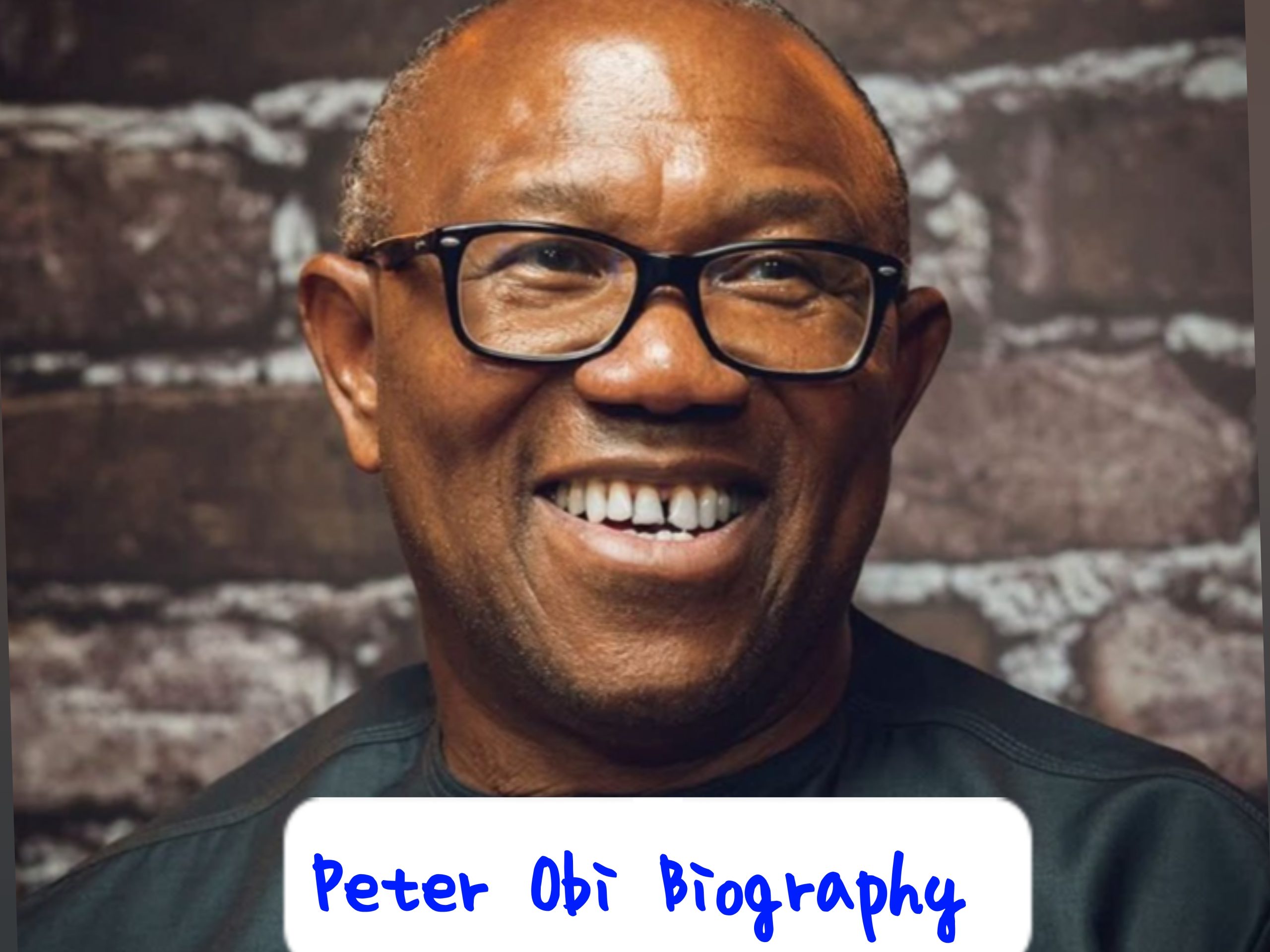
Peter Gregory Obi is a Nigerian politician, businessman, and former governor of Anambra State. Born on 19 July 1961 in Onitsha, Anambra State, Nigeria, he is a citizen of Nigeria from the Igbo ethnic group. He hails from Agulu in Anaocha Local Government Area of Anambra State. Obi has built a reputation for fiscal prudence, effective governance, and a focus on education, health, and economic development. He served as governor of Anambra State across multiple periods from 2006 to 2014 and was the Labour Party’s presidential candidate in the 2023 Nigerian general elections.
Peter Obi rose from a business background to prominence in Nigerian public life through a combination of legal battles for his mandate, disciplined leadership as governor, and a message of accountability that resonated with many, especially younger Nigerians. His approach emphasizes managing public resources like a successful private enterprise, prioritizing production over consumption, and investing in human capital. This biography explores his journey in detail.
Peter Obi Early Life and Background
Peter Gregory Obi was born on 19 July 1961 in Onitsha, Anambra State, Nigeria, into a devout Christian family from Agulu in Anaocha Local Government Area. His parents, Josephat and Agnes Obi, ran a successful supermarket business called Ideal Soul Super Market before the Nigerian Civil War disrupted their lives. The family faced significant challenges after the war and the early death of his father when Peter was young, around seven or nine years old. These experiences taught him resilience, the value of hard work, and the importance of starting small in business.
Agulu, his community of origin, is known for its entrepreneurial spirit, with residents pioneering aspects of supermarket and confectionery businesses in Nigeria. Obi grew up in Onitsha, a major commercial hub in the Southeast. From a young age, he engaged in trading, selling items like eggs sourced from farms in Delta State while still in secondary school. This early exposure to commerce shaped his practical understanding of economics and resource management. He has often spoken about learning the “egg principle” — guarding even small profits carefully — which influenced his later emphasis on prudence in governance.
The Obi family emphasized education and Christian values. Peter attended primary schools in Onitsha, including Sancta Maria Primary School. These formative years instilled in him a strong sense of discipline, faith, and community responsibility that would guide his personal and professional life.
Peter Obi Education
Obi completed his secondary education at Christ the King College in Onitsha, where he obtained his West African Examination Council (WAEC) certificate. In 1980, he enrolled at the University of Nigeria, Nsukka, graduating in 1984 with a Bachelor of Arts (Hons) degree in Philosophy. His studies in philosophy equipped him with critical thinking skills, ethical reasoning, and an analytical approach to problem-solving.
Beyond his undergraduate degree, Obi pursued extensive executive education to build business and leadership expertise. He attended programs at Lagos Business School for the Chief Executive Program. He also completed studies at Harvard Business School (two major programs), London School of Economics, Columbia Business School, International Institute for Management Development (IMD) in Switzerland (Senior Executive and CEO programs), Kellogg School of Management at Northwestern University, Saïd Business School at Oxford University, and Cambridge Judge Business School. These international exposures broadened his perspective on management, finance, and governance, which he later applied in both corporate and public roles.
Peter Obi Pre Political Career
Before entering politics, Obi built a successful career in business and banking. Born into a trading family, he started as a trader and expanded into corporate leadership. He held positions in companies such as Next International Nigeria Ltd, Guardian Express Mortgage Bank Ltd, Guardian Express Bank Plc, Future View Securities Ltd, Paymaster Nigeria Ltd, Chams Nigeria Ltd, Data Corp Ltd, and Card Centre Ltd. He served as the youngest chairman of Fidelity Bank Plc, demonstrating strong managerial skills at a young age.
His business experience emphasized efficiency, investment, and value creation. Obi has described himself as someone who understands the challenges of small traders and medium-sized enterprises, insights that informed his later policies. This phase of his life established his reputation for integrity and competence in the private sector.
Peter Obi Political Career
Peter Obi’s entry into politics came in 2003 when he contested the Anambra State governorship election under the All Progressives Grand Alliance (APGA). Although Chris Ngige of the Peoples Democratic Party was initially declared the winner, Obi challenged the result in court. After a prolonged legal battle, the Court of Appeal declared him the rightful winner in March 2006, and he was sworn in on 17 March 2006.
Peter Obi First Tenure Challenges and Impeachment
Obi’s first tenure faced immediate hurdles. In November 2006, the state assembly impeached him under controversial circumstances, installing his deputy, Virginia Etiaba, as the first female governor in Nigeria. Obi successfully challenged the impeachment in court and was reinstated in February 2007. These events highlighted the political instability in Anambra at the time but also showcased Obi’s determination.
Further legal action followed the 2007 elections. Obi argued that his tenure from the 2003 election had not fully run, leading to a Supreme Court ruling that allowed him to complete his term. This set a precedent for staggered elections in the state.
Peter Obi Governance Achievements as Governor
Obi served until 2014, winning re-election in 2010 against strong opponents. His administration focused on fiscal discipline, education, health, security, and infrastructure. Key highlights include:
- Education: Returned mission schools to church owners while continuing government funding. Anambra rose from around 24th-26th position to first in WAEC and NECO examinations for three consecutive years. Distributed over 30,000 computers to schools, provided internet access, buses, and infrastructure. The World Bank studied this “Obi Education Model.”
- Health: Upgraded facilities, secured accreditations for institutions, and partnered with churches. Received recognition from the Bill & Melinda Gates Foundation for immunization efforts, using the prize to build maternal and child care centers.
- Infrastructure and Economy: Constructed or rehabilitated over 800-900 km of roads and bridges, earning praise for the best road network in Nigeria at the time. Attracted investments like SABMiller brewery and supported Innoson Vehicle Manufacturing. Built the Anambra State University Teaching Hospital and improved security with vehicles distributed to communities and agencies.
- Fiscal Management: Left the state with substantial savings (reports vary around ₦75 billion or more in local and foreign currencies) without borrowing for projects or owing salaries and pensions. Rated as the least indebted and most financially stable state by relevant bodies. Introduced sub-sovereign wealth savings, a first in Sub-Saharan Africa.
Obi avoided personal extravagance, focusing resources on public needs. His tenure emphasized partnerships, especially with churches and development organizations, and brought international attention to Anambra.
Peter Obi Post Governorship and 2023 Presidential Bid
After leaving office in 2014, Obi joined the Peoples Democratic Party and served as vice presidential candidate in 2019. In 2022, he moved to the Labour Party and became its presidential candidate for 2023. His campaign, driven by the “Obidient” movement, mobilized youth and emphasized a “New Nigeria” focused on competence, production, and reduced waste. He placed third but challenged the results, gaining significant support.
He has remained active in public discourse, advocating for better governance, education, and economic reforms. Reports indicate affiliations with other parties in later years, but his core message of prudence persists.
Peter Obi Awards
Peter Obi has received numerous awards for his leadership and contributions. Notable ones include:
- The Sun Newspaper Man of the Year (2007)
- ThisDay Most Prudent Governor in Nigeria (2009)
- Bill & Melinda Gates Foundation Best Performing Governor on Immunization in South-East Nigeria (2012)
- Silverbird Man of the Year (2013, shared)
- Nigerian Library Association Golden Merit Award (2014)
- Pontifical Equestrian Order of Saint Sylvester (2014)
- Champion Newspaper recognitions, including Most Outstanding Igbo Man of the Decade
- ThisDay Governor of the Decade (2020)
- Various others from churches, foundations, and media for governance, education, and peace efforts.
These honors reflect independent assessments of his impact rather than self-promotion.
Peter Obi Personal Life
In 1992, Peter Obi married Margaret Brownson Usen (née Usen). They have two children: Gregory Peter Oseloka Obi and Gabriella Frances Nwamaka Obi. Obi is a devout Catholic of Igbo descent and maintains a relatively private family life. His wife and children have largely stayed out of the public spotlight, though family values feature in his public statements.
Obi is known for his simple lifestyle, often carrying his own luggage and avoiding ostentatious displays of wealth. He continues to engage in philanthropy and community support, particularly in education and health.
Peter Obi Business Philosophy and Legacy
Obi’s approach, sometimes called “Obinomics,” combines ethical leadership with business-like efficiency in public service. He stresses moving from consumption to production, supporting local enterprises, investing in people, and eliminating waste. His record as governor demonstrates measurable improvements in key sectors without heavy borrowing.
Post-governorship, he has spoken on national issues, urging investment in education, security, and youth empowerment. His influence extends beyond formal office through advocacy for transparent governance.
Peter Obi State of Origin Details
Obi originates from Agulu in Anaocha Local Government Area, Anambra State, in Nigeria’s Southeast geopolitical zone. Anambra is part of the Igbo heartland, known for commerce, education, and resilience. Agulu is a community with a strong trading tradition, which shaped Obi’s entrepreneurial mindset. The state itself has a rich history, from pre-colonial times through the Biafran War to its current status as a commercial and industrial hub. Obi has often highlighted the potential of the Southeast and advocated for equitable national development that unlocks regional strengths.
Conclusion
Peter Obi represents a model of leadership grounded in personal integrity, practical experience, and a commitment to public good. From his early days in trade to governance and national politics, he has consistently promoted prudence, education, and economic productivity. While his political journey continues, his contributions to Anambra State and broader discourse on Nigerian governance remain significant. His story underscores the impact one individual can make through focused, ethical service.
FAQs
Who is Peter Obi?
Peter Gregory Obi is a Nigerian politician and businessman who served as governor of Anambra State from 2006 to 2014 and ran for president in 2023 under the Labour Party.
When and where was Peter Obi born?
He was born on 19 July 1961 in Onitsha, Anambra State, Nigeria.
What is Peter Obi’s state of origin?
He is from Agulu in Anaocha Local Government Area of Anambra State.
What are Peter Obi’s major achievements as governor?
Key achievements include improving education rankings, infrastructure development, fiscal savings, health upgrades, security enhancements, and attracting investments.
Is Peter Obi married and does he have children?
Yes, he has been married to Margaret Brownson Obi since 1992. They have two children.
What political parties has Peter Obi been associated with?
He has been linked to APGA, PDP, Labour Party, and later others like NDC in different phases of his career.
What awards has Peter Obi won?
He has received awards from The Sun, ThisDay, Bill & Melinda Gates Foundation, Silverbird, churches, and others for governance, prudence, and leadership.