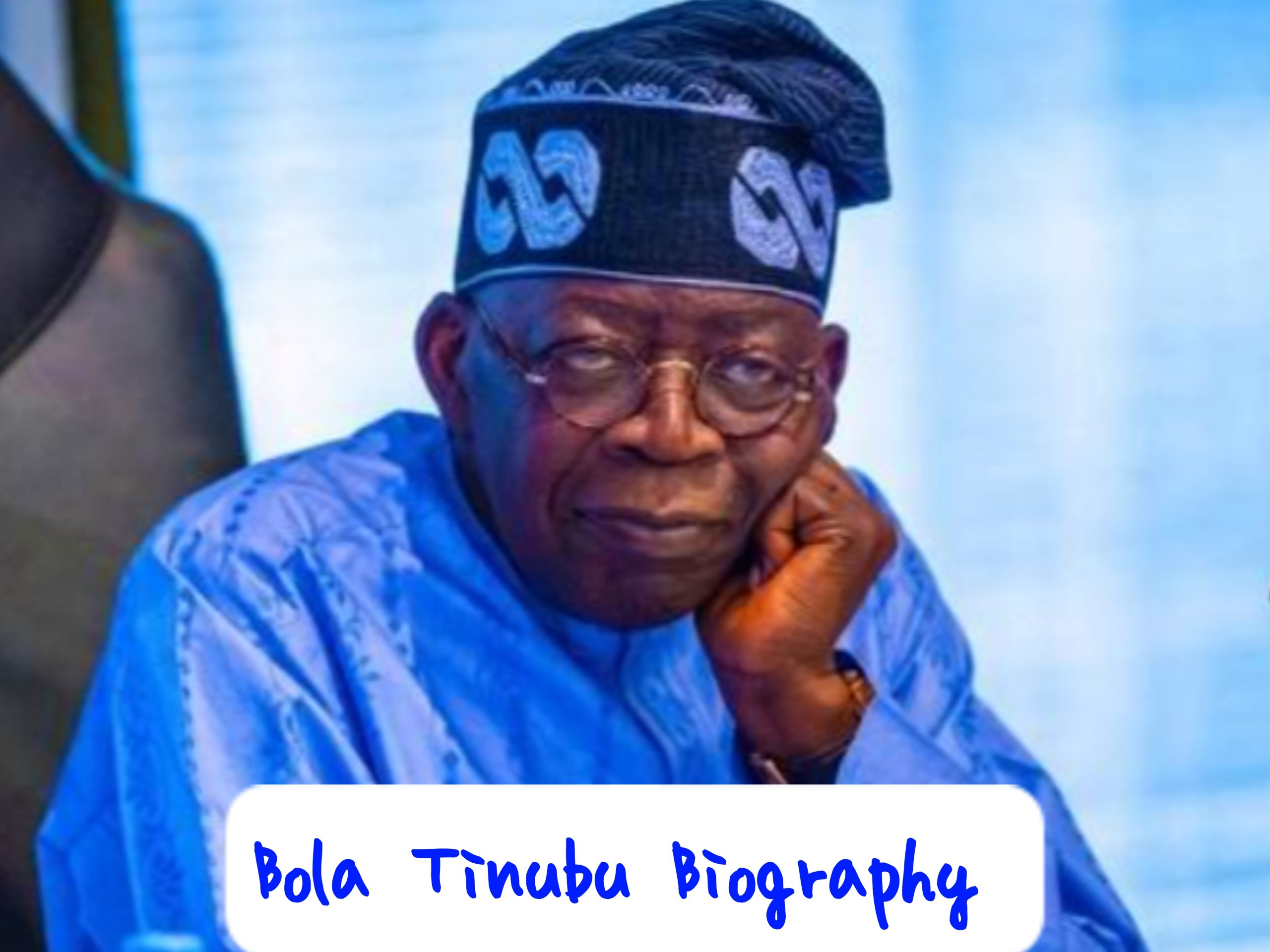
Bola Ahmed Adekunle Tinubu is a prominent Nigerian politician, accountant, and the 16th President of the Federal Republic of Nigeria. He has served in this role since May 29, 2023. Born into a Yoruba Muslim family with deep roots in Lagos, he rose from a background in accounting and business to become a key figure in Nigerian politics. His career spans roles as a senator, two-term governor of Lagos State, and a major architect of the All Progressives Congress (APC). Tinubu is known for his influence in the southwest region and his contributions to democratic transitions and economic reforms in Nigeria.
Tinubu’s journey reflects the complexities of Nigerian public life. He faced military rule, went into exile for pro-democracy activism, and later drove significant development in Lagos State. As president, he has pursued bold economic policies amid challenges like inflation and security issues. His leadership style emphasizes strategic alliances, fiscal innovation, and long-term planning, earning him titles such as Asiwaju of Lagos and Jagaban Borgu. This biography explores his life, from early years to the presidency.
Bola Tinubu Early Life
Bola Ahmed Adekunle Tinubu was born on March 29, 1952, in Lagos, British Nigeria (now Nigeria). He comes from a Yoruba Muslim family. His mother, Abibatu Mogaji, was a successful trader who later became the Iyaloja (market leader) of Lagos, a position of significant influence in traditional and commercial circles. This family background provided him with exposure to commerce and community leadership from a young age.
Tinubu spent his early years in southwestern Nigeria, particularly in Lagos. He attended St. John’s Primary School in Aroloya, Lagos, and then proceeded to Children Home School in Ibadan. These formative experiences occurred during a period of post-independence optimism mixed with political instability in Nigeria. Growing up in a trading family instilled in him values of resilience, entrepreneurship, and community engagement. Lagos, as Nigeria’s commercial hub, offered a vibrant environment that shaped his understanding of urban challenges and opportunities.
Details of his early life include accounts of determination. In interviews, Tinubu has spoken of facing youthful challenges and using them as motivation. His mother’s support was crucial when he decided to seek further education abroad. The move to the United States in 1975 marked a turning point, as he sought better opportunities amid Nigeria’s economic and educational landscape at the time.
Tinubu belongs to the Yoruba ethnic group, one of Nigeria’s major ethnic groups concentrated in the southwest, including Lagos State. His state of origin is Lagos, though family ties extend across the region. Yoruba culture emphasizes education, commerce, and political engagement, elements evident in his career. Lagos State, his base, is Nigeria’s most populous and economically vibrant state, contributing significantly to the national economy through trade, finance, and industry. This connection to Lagos has remained central to his identity and political strength.
Bola Tinubu Education
Tinubu’s educational path combined local schooling with international exposure. After primary education in Lagos and Ibadan, he traveled to the United States in 1975. He first attended Richard J. Daley College (formerly Southwest College) in Chicago, where he excelled and made the honors list. He then transferred to Chicago State University, majoring in accounting and management.
At Chicago State University, Tinubu demonstrated strong academic performance. He served as president of the university’s accounting society in his senior year, maintained a cumulative GPA of 3.54, and graduated summa cum laude with a Bachelor of Science degree in Business Administration (focusing on accounting) in 1979. He worked odd jobs, including as a dishwasher, night security guard, and cab driver, to support himself. He also taught remedial classes, helping classmates improve their grades.
This period abroad exposed him to advanced business practices and diverse environments. Upon returning to Nigeria in the early 1980s, his qualifications opened doors in the corporate sector. Questions have arisen over the years about aspects of his educational records, such as secondary school details and certificate variations, which have been subjects of political debate and legal scrutiny. Reliable sources, including the university, confirm his attendance and graduation from Chicago State University.
Bola Tinubu Early Career
Before entering politics, Tinubu built a successful career in accounting and finance. After graduating in 1979, he worked for reputable firms in the United States, including Arthur Andersen, Deloitte (then Deloitte Haskins & Sells), and GTE Services Corporation. These roles honed his expertise in auditing, financial management, and corporate operations.
In 1983, he returned to Nigeria and joined Mobil Oil Nigeria (now ExxonMobil), where he rose to become a senior auditor and later a treasurer or executive. His international experience and skills in financial oversight proved valuable in the oil industry, a cornerstone of Nigeria’s economy. This corporate background gave him insights into revenue management, efficiency, and business-government relations that later informed his public service.
Tinubu’s early career combined technical proficiency with an emerging interest in public affairs. His time in the private sector during Nigeria’s military eras exposed him to economic challenges like mismanagement and the need for better governance.
Bola Tinubu Political Career
Bola Tinubu Entry into Politics and Senate Role
Tinubu entered politics in the early 1990s during Nigeria’s transition to civilian rule. In 1992, he won election as Senator for Lagos West under the Social Democratic Party (SDP) during the short-lived Third Republic. He chaired the Senate Committee on Banking, Finance, and Appropriations, gaining experience in legislative oversight of economic matters.
The 1993 annulment of the presidential election by General Ibrahim Babangida and the subsequent rise of General Sani Abacha’s regime disrupted democratic progress. Tinubu became active in the National Democratic Coalition (NADECO), a pro-democracy group opposing military rule. His involvement led to exile in 1994 for safety. He returned after Abacha’s death in 1998, contributing to the restoration of democracy in 1999.
Bola Tinubu As Governor of Lagos State
Tinubu served as Governor of Lagos State from 1999 to 2007 under the Alliance for Democracy (AD), later aligning with other parties. He won the first post-transition election by a wide margin and secured re-election in 2003. His administration focused on transforming Lagos, a megacity facing infrastructure decay, traffic congestion, waste management issues, and revenue shortfalls.
Key achievements included massive growth in Internally Generated Revenue (IGR). From around N600 million monthly at the start, it rose significantly through reforms like professionalizing the revenue service, computerization, tax database expansion, and public-private partnerships. This reduced dependence on federal allocations and enabled larger budgets and projects.
Infrastructure developments covered roads (hundreds rehabilitated or built), the Bus Rapid Transit (BRT) system, LASTMA for traffic management, and water transportation initiatives. Urban planning efforts improved sanitation and waste management. Public-private partnerships attracted investments, such as in the Lekki Free Trade Zone and expressways. Health and education saw upgrades, including hospitals and school rehabilitations. Judiciary reforms and security measures addressed crime and governance efficiency.
Tinubu’s tenure emphasized long-term planning, including a development blueprint that successors built upon. He promoted federalism, resisting federal overreach, such as when Lagos State funds were withheld. His model influenced subsequent Lagos governors like Babatunde Fashola.
Bola Tinubu Post Governorship Influence
After leaving office in 2007, Tinubu played a pivotal role in opposition politics. He helped form the Action Congress of Nigeria (ACN) and was central to the 2013 merger creating the All Progressives Congress (APC). This coalition brought together major opposition parties and contributed to Muhammadu Buhari’s victories in 2015 and 2019. Tinubu earned recognition as a political strategist and kingmaker in Nigerian politics.
He supported democratic consolidation and party-building while maintaining influence in Lagos politics.
Bola Tinubu Path to Presidency
In 2022, Tinubu announced his presidential bid. He won the APC primary with 1,271 votes against strong contenders. In the February 2023 general election, he secured victory with 8,794,726 votes (about 36.6%), defeating Atiku Abubakar and Peter Obi. He was inaugurated on May 29, 2023.
Bola Tinubu Presidency
As president, Tinubu has implemented major reforms under the “Renewed Hope” agenda. On his inauguration day, he declared the end of fuel subsidies, a long-contested policy costing billions annually. This was followed by unifying foreign exchange windows to address distortions.
These steps aimed at fiscal sustainability, attracting investment, and reducing corruption in subsidy regimes. Outcomes include increased government revenues, higher FAAC allocations to states, and growth in non-oil revenue. Oil production improved through security measures, and local refining advanced with facilities like Dangote Refinery contributing.
Infrastructure projects progressed, such as the Lagos-Calabar Coastal Highway and other roads. Initiatives in agriculture (mechanization), student loans, and power sector reforms (including state participation) were launched. Tax reforms sought to simplify the system and boost compliance.
Challenges have included initial spikes in inflation and living costs from reforms, security concerns, and poverty pressures. The administration has responded with cash transfers, wage adjustments, and CNG initiatives for transport. By mid-2026, indicators showed moderating inflation, GDP growth, and reserve improvements, though socioeconomic impacts remain debated.
Tinubu has engaged regionally, serving as ECOWAS chairman at times, and focused on security cooperation.
Bola Tinubu Awards and Honours
Tinubu has received various awards and traditional titles. As governor, recognitions included Best Governor in Nigeria (2000) by the Nigerian-Belgian Chamber of Commerce, Best Practices Prize for environment (2002) by the Federal Ministry of Works and UN-Habitat, and Best Computerized Government Award (2000). He holds honorary doctorates and chieftaincy titles like Asiwaju and Jagaban. In 2023, he received Nigeria’s highest honour, Grand Commander of the Order of the Federal Republic (GCFR).
Bola Tinubu Personal Life
Tinubu married Oluremi Tinubu in 1987. She is a former senator for Lagos Central. They have three children together: Zainab Abisola, Habibat, and Olayinka. He has three other children from previous relationships: Kazeem Olajide (deceased 2017), Folashade, and Oluwaseyi. The family maintains a relatively private life amid public scrutiny. Tinubu is a Muslim.
Bola Tinubu Controversies
Like many long-serving politicians, Tinubu’s career has included controversies. These involve questions about his personal history, including age, educational documents, and past financial matters, often raised by political opponents. A 1993 US civil forfeiture case linked accounts in his name to investigations, which he has addressed in legal contexts without criminal conviction. Allegations of corruption or undue influence in Lagos governance have surfaced, alongside defenses highlighting his achievements.
Certificate-related issues have featured in elections and courts, with ongoing debates. Tinubu and supporters maintain his qualifications meet constitutional requirements, and institutions like Chicago State University have confirmed attendance. These matters reflect the intense nature of Nigerian politics.
Conclusion
Bola Ahmed Adekunle Tinubu’s life traces a path from Lagos roots through education and corporate success to national leadership. His contributions to Lagos State’s development, party politics, and current reforms highlight a focus on economic restructuring and governance. As Nigeria navigates challenges and opportunities, his presidency continues to shape the country’s trajectory. Future assessments will depend on long-term outcomes of his policies and ability to deliver inclusive progress.
FAQs
Who is Bola Tinubu?
Bola Ahmed Adekunle Tinubu is the current President of Nigeria, a former governor of Lagos State, and a leading politician in the All Progressives Congress.
When and where was Bola Tinubu born?
He was born on March 29, 1952, in Lagos, Nigeria.
What is Bola Tinubu’s educational background?
He studied at Chicago State University, earning a Bachelor of Science in Business Administration with a focus on accounting in 1979.
What were Bola Tinubu’s major achievements as governor of Lagos State?
He significantly increased the state’s internally generated revenue, improved infrastructure including roads and public transport, enhanced waste management, and attracted investments through public-private partnerships.
What are key policies of Bola Tinubu’s presidency?
Major policies include the removal of fuel subsidies, foreign exchange unification, tax reforms, infrastructure development, and initiatives in agriculture, education, and power sector liberalization.
How many children does Bola Tinubu have?
He has six children.
What titles is Bola Tinubu known by?
He is often referred to as Asiwaju of Lagos and Jagaban Borgu.