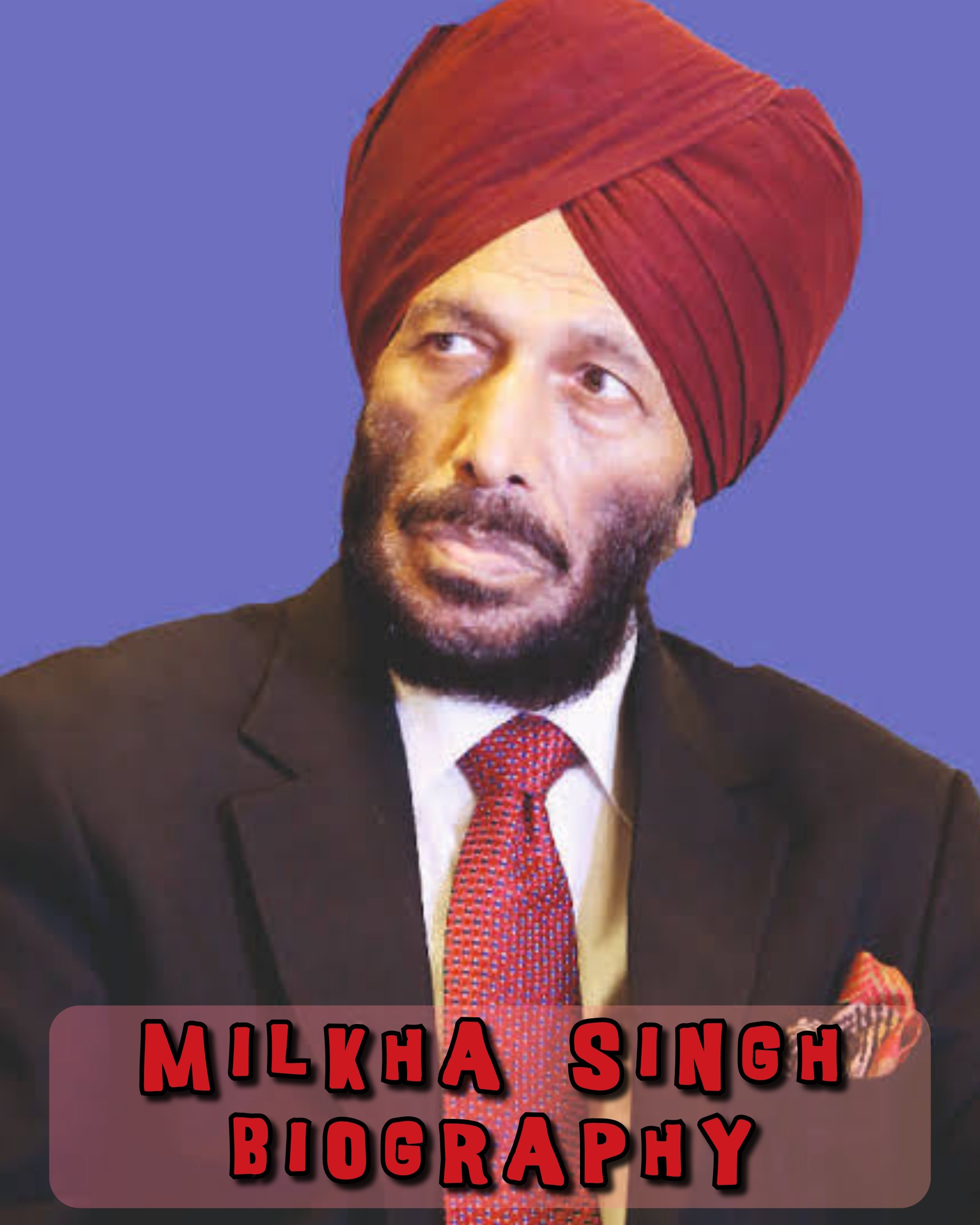
Milkha Singh was born in Govindpura, a village in the Muzaffargarh district of British India, an area that is now part of Pakistan. His exact birth date has been disputed by different sources, with 17 October 1935 and 20 November 1929 both reported. He grew up in a large Sikh family in rural Punjab, where life was simple and physically demanding. From an early age, Singh developed the strength and endurance that would later become important to his athletics career.
His childhood was deeply affected by the Partition of India in 1947. As a young boy, he witnessed the violence and upheaval that accompanied the division of India and Pakistan. During the chaos, he lost several members of his family, including his parents. Singh eventually escaped to India and was reunited with his siblings. The traumatic experiences of Partition left a lasting mark on him, but they also became part of the remarkable story of resilience that defined his later life.
After arriving in India, Singh struggled with poverty and uncertainty before gradually rebuilding his life. He eventually joined the Indian Army, where his athletic potential was discovered and encouraged. The disciplined environment of the military gave him an opportunity to train seriously as a runner. What began as a difficult childhood shaped by displacement and loss ultimately became the foundation for Singh’s transformation into one of India’s greatest track and field athletes, earning him the legendary nickname “The Flying Sikh.”
Milkha Singh Education
Milkha Singh’s formal education was limited because his childhood was marked by poverty, displacement, and the turmoil surrounding the Partition of India in 1947. Unlike many celebrated athletes who had the opportunity to pursue extensive academic studies, Singh’s early years were focused largely on survival and rebuilding his life after moving to India. His formative experiences during this period played a major role in developing the determination and resilience that later became central to his sporting career.
As a young man, Singh joined the Indian Army, where he received structured military training and discipline. Although this was not conventional academic education, his time in the Army became an important part of his personal development. The demanding physical routines, strict discipline, and opportunities to compete in athletics helped him discover and develop his exceptional talent as a sprinter.
Singh’s education was therefore shaped as much by life experience, military discipline, and athletic training as by formal schooling. The Indian Army provided him with the environment in which his natural running ability could flourish, eventually leading him to represent India at the Olympics and win major international medals. His journey demonstrated how determination, discipline, and practical experience could transform a young man who had endured severe hardship into one of India’s most celebrated athletes.
Milkha Singh Career
Milkha Singh’s athletics career began to take shape after he joined the Indian Army, where his exceptional running ability was discovered. He initially entered competitive races within the military before progressing to national and international competition. His remarkable speed, endurance and disciplined training quickly established him as one of India’s leading sprinters, particularly in the 200 metres and 400 metres. He represented India at three Olympic Games—Melbourne 1956, Rome 1960 and Tokyo 1964.
Singh achieved some of the biggest victories of his career at the 1958 Asian Games in Tokyo, where he won gold medals in both the 200m and 400m events. The same year, he made history at the Commonwealth Games in Cardiff, winning gold in the 440-yard race and becoming the first Indian male athlete to win an individual Commonwealth Games athletics gold medal. He returned to the Asian Games in 1962, winning two more gold medals, one in the 400m and another as part of India’s 4 × 400m relay team.
The defining moment of Singh’s Olympic career came at the 1960 Rome Olympics, where he narrowly missed a medal in the 400m final after finishing fourth. His time of approximately 45.6 seconds was an Indian national record that remained unbeaten for decades. Singh later competed at the 1964 Tokyo Olympics before retiring from competitive athletics. His achievements earned him international recognition and the legendary nickname “The Flying Sikh,” and he went on to dedicate much of his later life to promoting sports and encouraging young athletes in India.
Milkha Singh Death and Cause of Death
Milkha Singh died on 18 June 2021 in Chandigarh, India, at the age of 91 according to the widely reported 1929 birth year. His death came just days after the passing of his wife, Nirmal Kaur, who had also died after battling COVID-19. Singh had been receiving treatment at a hospital in Chandigarh after testing positive for the coronavirus.
The cause of death was complications from COVID-19. He initially recovered from the infection but subsequently developed complications, including pneumonia and respiratory problems. His condition deteriorated despite medical treatment, and he passed away at PGIMER (Postgraduate Institute of Medical Education and Research), Chandigarh.
Milkha Singh’s death was widely mourned across India and the international sporting community. From overcoming the trauma of Partition to becoming an Olympic athlete and one of India’s most celebrated runners, his life story continued to inspire generations. His nickname, “The Flying Sikh,” remains closely associated with India’s athletics history and his enduring sporting legacy.
Milkha Singh Personal Life and Family
Milkha Singh married Nirmal Kaur, a former captain of the Indian women’s volleyball team, in 1962. The couple remained together for nearly six decades and became one of India’s best-known sporting families. Nirmal was not only Singh’s wife but also a respected sports personality in her own right. She died on 13 June 2021, just five days before Milkha Singh, after complications related to COVID-19.
Milkha Singh and Nirmal Kaur had four children: daughters Sonia Sanwalka, Mona Singh and Aliza Singh, and son Jeev Milkha Singh. Jeev followed his father’s sporting legacy by becoming a professional golfer and representing India internationally. Their children largely stayed away from the spotlight compared with their famous parents, although Jeev became a prominent name in Indian golf.
Family remained an important part of Milkha Singh’s life, particularly his relationship with his children and his close bond with Nirmal Kaur. His daughter Sonia Sanwalka later co-authored his autobiography, The Race of My Life, which helped bring his extraordinary journey to a wider audience. Singh’s family continued to preserve and promote his legacy after his death in 2021, while his son Jeev and daughters have remained connected to his remarkable story.
Milkha Singh Age, Religion, Nationality, Height and Physical Appearance
Milkha Singh was 91 years old at the time of his death in 2021, based on the commonly reported birth year of 1929, although some authoritative sporting records list his birth year as 1935, creating a long-standing discrepancy over his exact age. He was Indian by nationality and was born into a Sikh family, with his Sikh faith and Punjabi heritage forming an important part of his identity. His sporting achievements made him one of the most recognizable Indian athletes of the 20th century.
Milkha Singh was reported to have been approximately 5 feet 10 inches (178 cm) tall. As a professional sprinter, he maintained a lean, athletic physique shaped by years of intense training, running and military discipline. His physical fitness, powerful stride and exceptional endurance were among the qualities that helped him compete successfully at the highest level of international athletics.
Even in his later years, Singh retained the distinctive athletic appearance associated with his career. His strong build, upright posture and determined expression reflected the discipline that characterized his life as an athlete and former soldier. His appearance, however, became secondary to the extraordinary determination and resilience that earned him the iconic nickname “The Flying Sikh.”
Milkha Singh Social Media Presence
Milkha Singh himself was not known for maintaining a personal social media presence, particularly because his career and public life predated the rise of platforms such as Instagram and Facebook. However, his legacy continues to have a strong digital presence, with fans, sports organizations and pages dedicated to his life regularly sharing photographs, achievements, quotes and archival footage.
His family has also helped keep his memory alive online. His son, Jeev Milkha Singh, has maintained a public presence on social media, while official and legacy-focused accounts continue to share content about the legendary athlete. On Instagram, Milkha Singh is associated with the handle @milkhasingh_official, which features posts celebrating his career, achievements and enduring legacy.
Although Milkha Singh passed away in 2021, his name continues to attract significant attention across social media platforms. Tributes, old interviews, photographs and clips from his historic races are frequently shared by fans and sports communities, ensuring that “The Flying Sikh” remains remembered by younger generations around the world.
Milkha Singh Net Worth
Milkha Singh’s exact net worth was never officially disclosed, so figures published online should be treated as estimates rather than confirmed financial records. Recent estimates vary considerably, with some sources placing his wealth at around ₹10–15 crore (approximately US$1.2–1.8 million), while others have suggested figures as high as ₹33–42 crore. For a biography, a cautious estimate of ₹10–15 crore is more appropriate because there is no verified public estate valuation.
Much of Singh’s financial foundation came from his long career in the Indian Army, where he served before later working in sports administration in Punjab. His income and assets were also supplemented over the years by government awards and benefits, book royalties, public appearances and selected commercial opportunities. Unlike modern elite athletes, Singh competed during an era when athletics offered relatively limited prize money and sponsorship income, so his wealth was not primarily built from enormous sporting salaries.
One notable example of Singh’s approach to money was his decision regarding the 2013 biographical film Bhaag Milkha Bhaag. He reportedly sold the film rights for a symbolic ₹1, while arranging for a share of the film’s profits to benefit the Milkha Singh Charitable Trust, which supports underprivileged athletes. This makes his financial legacy different from that of many contemporary sports stars: his greatest value was ultimately measured not by personal wealth but by his achievements, charitable work and lasting influence on Indian athletics.
Legacy
Milkha Singh left behind a remarkable legacy as one of India’s greatest track and field athletes and one of the most recognizable figures in the country’s sporting history. His four gold medals at the Asian Games, Commonwealth Games gold medal and historic fourth-place finish in the 400 metres at the 1960 Rome Olympics established him as a pioneer of Indian athletics. His nickname, “The Flying Sikh,” became synonymous with speed, determination and national pride.
Beyond his medals and records, Singh’s greatest legacy lies in the extraordinary journey that brought him to international prominence. Having survived the violence and displacement of the 1947 Partition, he rebuilt his life in India and rose from poverty to become an elite athlete through discipline and relentless training. His autobiography, The Race of My Life, and the 2013 Bollywood film Bhaag Milkha Bhaag introduced his story to millions of people and helped preserve his experiences for future generations.
Milkha Singh also dedicated much of his later life to supporting and encouraging young athletes. Through his charitable work and public advocacy for sports, he sought to create opportunities for talented youngsters, particularly those from less privileged backgrounds. Even after his death in June 2021, his story continues to inspire athletes and sports fans, making him more than a champion runner—he remains a lasting symbol of resilience, perseverance and the power of determination.
Conclusion
Milkha Singh’s life remains one of the most inspiring stories in Indian sports history. From enduring the trauma of Partition and overcoming poverty to becoming an internationally celebrated athlete known as “The Flying Sikh,” he demonstrated extraordinary courage, discipline and determination. His Olympic journey, Asian Games victories, Commonwealth Games triumph, family life and commitment to supporting young athletes have ensured that his influence extends far beyond the track. Although Milkha Singh died in 2021, his remarkable achievements and inspirational story continue to inspire generations of athletes and admirers around the world.
Frequently Asked Questions About Milkha Singh
Who was Milkha Singh?
Milkha Singh was an Indian track and field athlete and one of the country’s most celebrated sprinters. He specialized in the 200 metres and 400 metres and represented India at three Olympic Games. He was popularly known as “The Flying Sikh.”
When was Milkha Singh born?
Milkha Singh’s birth date is disputed. 17 October 1935 is listed by Olympedia, while several Indian sources give 20 November 1929. Because of this discrepancy, both dates are reported in biographies of the athlete.
How old was Milkha Singh when he died?
Milkha Singh was 91 years old when he died, based on the widely reported 1929 birth year. He died on 18 June 2021 in Chandigarh, India.
What was Milkha Singh’s cause of death?
Milkha Singh died from complications related to COVID-19 on 18 June 2021. He had tested positive for the coronavirus and was subsequently treated for related health complications.
Who was Milkha Singh’s wife?
Milkha Singh’s wife was Nirmal Kaur, a former captain of the Indian women’s volleyball team. They married in 1962 and remained together until her death in June 2021.
How many children did Milkha Singh have?
Milkha Singh and Nirmal Kaur had four children: daughters Sonia Sanwalka, Mona Singh and Aliza Singh, and son Jeev Milkha Singh, a professional golfer.
What was Milkha Singh famous for?
Milkha Singh was famous for his exceptional achievements in sprinting, particularly the 400 metres. His fourth-place finish in the 400m final at the 1960 Rome Olympics and his victories at the Asian Games made him a sporting legend in India.
Why was Milkha Singh called the Flying Sikh?
Milkha Singh became known as “The Flying Sikh” because of his extraordinary speed and achievements as a sprinter. The nickname became permanently associated with him after his successful international athletics career.
How many Olympic medals did Milkha Singh win?
Milkha Singh won no Olympic medals. His closest Olympic result came at the 1960 Rome Olympics, where he finished fourth in the 400 metres after narrowly missing a podium position.
How many gold medals did Milkha Singh win?
Milkha Singh won four Asian Games gold medals—two at the 1958 Asian Games and two at the 1962 Asian Games. He also won a gold medal in the 440-yard race at the 1958 Commonwealth Games.
What was Milkha Singh’s height?
Milkha Singh was commonly reported to be approximately 5 feet 10 inches (178 cm) tall. He maintained a lean and athletic physique throughout his competitive running career.
What was Milkha Singh’s religion?
Milkha Singh was born into a Sikh family and was associated with the Sikh faith. His Sikh heritage was an important part of his identity and public life.
What was Milkha Singh’s nationality?
Milkha Singh was Indian. He was born in what is now Pakistan before moving to India following the Partition of British India in 1947.
What was Milkha Singh’s net worth?
Milkha Singh’s exact net worth was not publicly confirmed. Online estimates vary, with some sources placing his wealth in the range of ₹10–15 crore, but these figures should be considered estimates rather than an officially verified amount.
Did Milkha Singh have Instagram?
Milkha Singh did not have a widely documented personal Instagram account during his lifetime. However, accounts dedicated to his legacy continue to share photographs, achievements and archival content about the legendary athlete.
What happened to Milkha Singh’s wife?
Nirmal Kaur died on 13 June 2021, five days before Milkha Singh. She had been battling complications related to COVID-19.
Which movie is based on Milkha Singh’s life?
The Bollywood film Bhaag Milkha Bhaag, released in 2013, is based on Milkha Singh’s life. Actor Farhan Akhtar portrayed Singh in the film.
What is Milkha Singh’s greatest legacy?
Milkha Singh’s greatest legacy is his transformation from a young survivor of Partition into one of India’s most successful athletes. His story of resilience, discipline and determination continues to inspire athletes and sports fans across generations.