Subhas Chandra Bose was born on January 23, 1897, in Cuttack, in present-day Odisha, India, into a prominent Bengali family. He was the ninth child of Janakinath Bose, a successful lawyer who served as a government pleader and later became a public prosecutor, and Prabhavati Devi. Bose grew up in a large family and was exposed from an early age to education, discipline, patriotism and the social and political conditions of British India.
Bose received his early education at the Protestant European School in Cuttack, now known as Stewart School, before continuing his studies at Ravenshaw Collegiate School. He was an intelligent and disciplined student with a strong interest in philosophy, spirituality and Indian culture. His academic abilities eventually took him to Presidency College in Calcutta, where he studied before moving to Scottish Church College and completing his undergraduate education in philosophy at the University of Calcutta in 1919.
In 1919, Bose travelled to England to prepare for the Indian Civil Service (ICS) examination, following his family’s wishes. He studied at Fitzwilliam Hall, Cambridge, and successfully passed the highly competitive examination in 1920, ranking fourth among the candidates. However, Bose was deeply uncomfortable with the idea of serving the British colonial government and resigned from the ICS in 1921. His decision marked a major turning point in his life, as he chose the struggle for India’s independence over a prestigious career under British rule.
Subhas Chandra Bose Education
Subhas Chandra Bose began his formal education at the Protestant European School in Cuttack, where he developed a strong academic foundation. He later attended Ravenshaw Collegiate School, one of the leading educational institutions in Odisha at the time. Bose was an exceptional student with a keen interest in philosophy, history, literature and Indian culture, while his upbringing also encouraged discipline, self-development and a strong sense of responsibility.
After completing his schooling, Bose moved to Calcutta and enrolled at Presidency College. He later studied at Scottish Church College, where he completed a Bachelor of Arts degree in Philosophy from the University of Calcutta in 1919. During his university years, he became increasingly influenced by Indian philosophical thought and nationalist ideas. His growing opposition to British colonial rule also shaped his ambitions beyond conventional academic and professional success.
In 1919, Bose travelled to England to prepare for the Indian Civil Service examination at the University of Cambridge. He studied at Fitzwilliam Hall and successfully passed the ICS examination in 1920, securing the fourth position among the candidates. Despite achieving this prestigious qualification, Bose resigned from the Indian Civil Service in 1921 because he did not want to serve the British colonial administration. His decision demonstrated the strength of his commitment to India’s independence and set the course for his future political career.
Subhas Chandra Bose Career
Subhas Chandra Bose began his political career after returning to India in 1921, following his resignation from the Indian Civil Service. He joined the Indian National Congress and quickly emerged as a prominent young nationalist leader. Working closely with Chittaranjan Das in Bengal, Bose became involved in the independence movement and was elected as the chief executive officer of the Calcutta Corporation when Das served as mayor. His political activities and opposition to British rule led to repeated arrests and imprisonment.
Bose rose rapidly within the Congress and became one of its most influential leaders. He served as president of the Indian National Congress in 1938 at the Haripura session and was re-elected in 1939 at Tripuri. However, his more militant approach toward British rule and his differences with Mahatma Gandhi and other senior Congress leaders created serious tensions. After resigning as Congress president in 1939, Bose founded the Forward Bloc to bring together more radical nationalist forces and continued advocating immediate and uncompromising independence for India.
During the Second World War, Bose escaped British surveillance in India in 1941 and eventually reached Germany, where he sought international support for India’s independence. He later travelled to Japanese-controlled Southeast Asia and took leadership of the Indian National Army (INA), also known as the Azad Hind Fauj. In 1943, he proclaimed the Provisional Government of Free India, or Azad Hind, and led the INA in its campaign against British forces in Southeast Asia. His famous call, “Give me blood, and I will give you freedom,” became closely associated with his revolutionary struggle. Although the INA’s military campaign ultimately failed, Bose’s leadership became an enduring part of India’s independence history.
Subhas Chandra Bose Personal Life and Family
Subhas Chandra Bose was born into a large and influential Bengali family. His father, Janakinath Bose, was a prominent lawyer and public figure, while his mother, Prabhavati Devi, was a deeply religious and disciplined woman who raised a large family. Bose was particularly close to his elder brother Sarat Chandra Bose, a lawyer, politician and fellow nationalist who later became an important figure in India’s independence movement. Other members of the extended Bose family also became involved in politics and public life, making the family an important part of Bengal’s intellectual and nationalist circles.
During his years in Europe, Bose developed a close relationship with Emilie Schenkl, an Austrian woman whom he met in Vienna in 1934. Schenkl initially worked as his secretary and helped him with typing and English-language work connected with his book The Indian Struggle. Their relationship eventually became romantic, and surviving accounts indicate that they secretly married, with the precise date described differently by various sources. Bose and Emilie maintained a largely private relationship because of the political circumstances surrounding his life.
Bose and Emilie had one child, Anita Bose Pfaff, who was born in Vienna in November 1942 and became his only known daughter. In 1943, Bose left Europe to continue his struggle for Indian independence in Southeast Asia, while Emilie and Anita remained in Europe. After the war, Bose’s family in India established contact with Emilie and Anita, and the relationship between the Austrian branch and the Bose family continued. Anita later became an accomplished economist and professor in Germany.
Subhas Chandra Bose Age, Religion, Nationality, Height and Physical Appearance
Subhas Chandra Bose was born on January 23, 1897, and was 48 years old at the time of his reported death on August 18, 1945. He was Indian by nationality and came from a Bengali Hindu family. His religious background was Hindu, although his worldview was influenced by broader Indian philosophical and spiritual traditions, and he advocated unity among people of different religious communities during the independence movement.
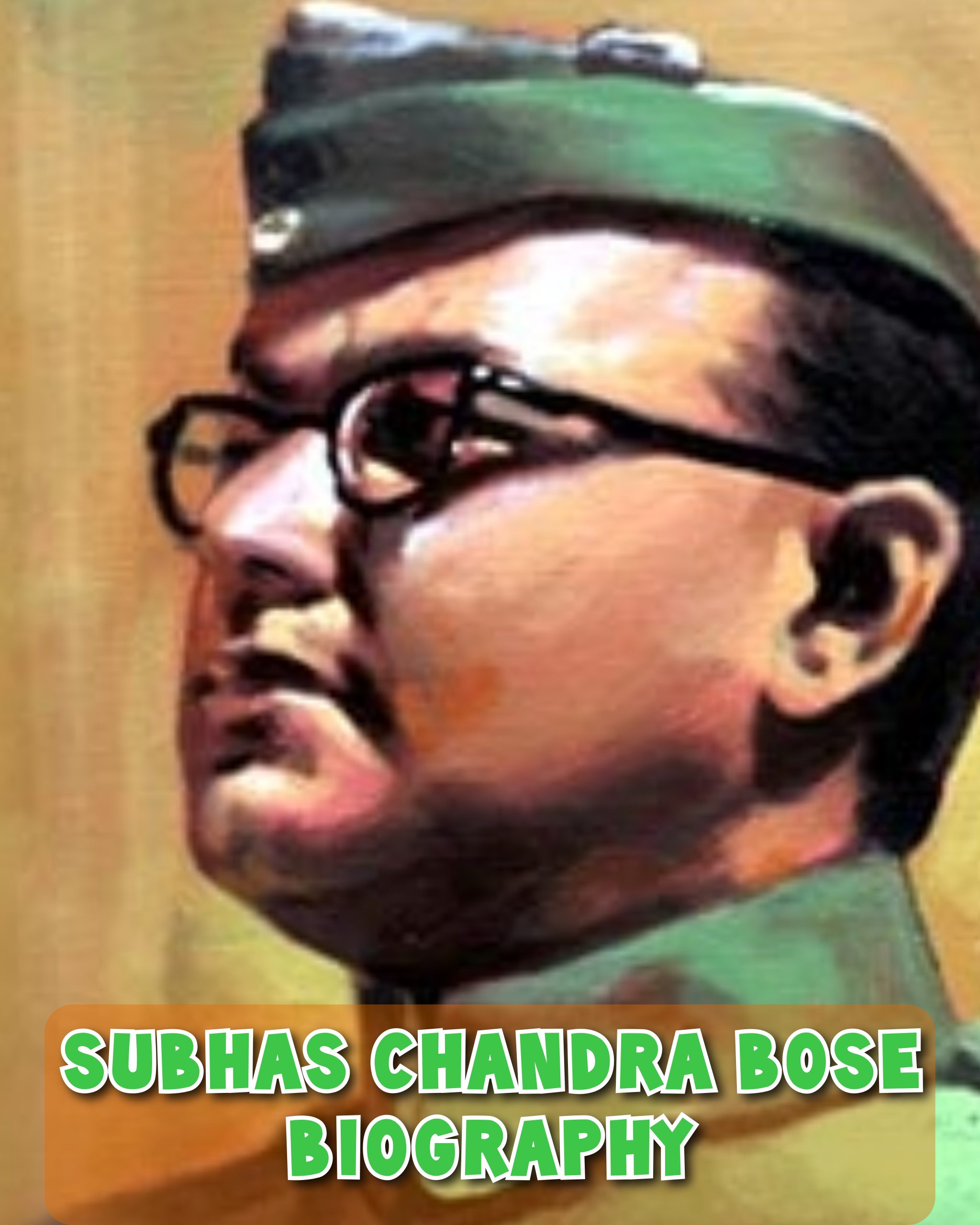
Bose was widely recognized for his disciplined appearance and commanding presence. Historical photographs show him as a medium-built man with a distinctive round face, neatly combed dark hair and a well-groomed moustache. He was frequently seen wearing traditional Indian clothing or military-style attire, particularly during his leadership of the Indian National Army (INA).
There is no reliably documented official height for Subhas Chandra Bose in authoritative historical records. Various websites have published different estimates, but these figures are not sufficiently verified to be presented as fact. For an accurate biography, it is therefore better to state that his exact height is not publicly confirmed rather than use an unsupported measurement. His physical image, particularly his military uniform, cap and spectacles, nevertheless became one of the most recognizable symbols associated with Netaji.
Subhas Chandra Bose Net Worth
There is no reliable historical record of Subhas Chandra Bose’s personal net worth, and it would be misleading to assign him a modern rupee or dollar figure. Bose was not primarily a businessman or wealthy professional; much of his adult life was devoted to India’s independence movement. Before entering politics, he qualified for the Indian Civil Service (ICS) and ranked fourth in the 1920 examination, but he resigned in 1921 before establishing a long-term career in the service. His resignation letter records that he had received only £100 in allowances as an ICS probationer and intended to return the money after his resignation was accepted.
Bose subsequently worked in political and public-service roles rather than pursuing personal wealth. Historical correspondence also shows that finances could be a practical concern during his political career, including discussions about salary and house-rent expenses. At the same time, biographical records indicate that Bose personally contributed money to charitable causes and supported people involved in the nationalist movement. His financial circumstances therefore cannot reasonably be reconstructed into a conventional celebrity-style “net worth” figure.
It is also important to distinguish Bose’s personal finances from the funds of the Azad Hind Government and Indian National Army (INA). Large amounts of cash, gold, jewellery and property were donated by Indians in Southeast Asia to support the independence campaign, and the Azad Hind Government maintained financial institutions to handle these resources. Historical research notes that the exact amount of liquid assets carried during Bose’s final retreat from Southeast Asia is not known. Therefore, the most accurate biography entry is: Subhas Chandra Bose’s personal net worth is unknown and cannot be reliably estimated from available historical records; figures sometimes published online should not be presented as fact.
Legacy
Subhas Chandra Bose remains one of the most influential and controversial figures in India’s struggle for independence. Known popularly as Netaji, he is remembered for his uncompromising opposition to British colonial rule and his belief that India needed to achieve complete independence rather than accept gradual constitutional reforms. His leadership of the Indian National Army (INA), also known as the Azad Hind Fauj, gave his nationalist movement an international and military dimension and inspired many Indians during the final years of British rule.
Bose’s legacy also extends to his emphasis on discipline, sacrifice, national unity and political determination. His famous appeals to Indians to make sacrifices for freedom became powerful symbols of the independence movement. Although the INA was ultimately defeated militarily, the trials of INA officers after the Second World War generated widespread public sympathy in India and contributed to the growing pressure on the British government. His vision of a strong, modern and independent India continues to attract historical and political discussion.
The circumstances surrounding Bose’s reported death have also become an enduring part of his legacy. He was officially reported to have died following a plane crash in Taiwan on August 18, 1945, but questions about his fate have persisted for decades. Government investigations and historical research have produced differing conclusions, while debates about his disappearance continue to attract public interest. Today, monuments, museums, books, films, academic research and annual commemorations preserve his memory, while his contributions to India’s independence remain an important part of the country’s modern history.
Conclusion
Subhas Chandra Bose remains a towering figure in the history of India’s independence movement, remembered for his courage, discipline, political determination and leadership of the Indian National Army. From his early education and promising career in the Indian Civil Service to his decision to dedicate his life to India’s freedom, Bose consistently placed national independence above personal ambition. His relationship with Emilie Schenkl, his daughter Anita Bose Pfaff, his revolutionary activities and the enduring mystery surrounding his reported death have all contributed to the continuing public interest in his life. More than eight decades after his disappearance, Netaji’s legacy continues to inspire discussions about patriotism, sacrifice, leadership and India’s struggle for independence.
Frequently Asked Questions
Who was Subhas Chandra Bose?
Subhas Chandra Bose, popularly known as Netaji, was an Indian nationalist leader and a major figure in India’s struggle for independence from British rule. He led the Indian National Army (INA) and established the Provisional Government of Free India during World War II.
When was Subhas Chandra Bose born?
Subhas Chandra Bose was born on January 23, 1897, in Cuttack, Odisha, India. He was born into a prominent Bengali family and was the ninth child of Janakinath Bose and Prabhavati Devi.
How old was Subhas Chandra Bose when he died?
Subhas Chandra Bose was 48 years old when he was officially reported to have died on August 18, 1945.
How did Subhas Chandra Bose die?
Subhas Chandra Bose was officially reported to have died from injuries sustained in a plane crash in Taiwan on August 18, 1945. However, the circumstances of his death have remained controversial and have been the subject of several investigations.
Who was Subhas Chandra Bose’s wife?
Subhas Chandra Bose’s wife was Emilie Schenkl, an Austrian woman whom he met in Europe. Historical accounts indicate that they married privately, although details about the exact date and circumstances of their marriage have been debated.
Did Subhas Chandra Bose have children?
Yes. Subhas Chandra Bose and Emilie Schenkl had one daughter, Anita Bose Pfaff, who was born in Vienna in 1942. She later became an economist and professor in Germany.
What was Subhas Chandra Bose’s religion?
Subhas Chandra Bose was born into a Hindu Bengali family. His outlook was strongly influenced by Indian philosophical and spiritual traditions, while his political vision emphasized unity among India’s different religious communities.
What was Subhas Chandra Bose’s nationality?
Subhas Chandra Bose was Indian. He dedicated his political career to ending British colonial rule and achieving India’s independence.
What was Subhas Chandra Bose’s education?
Bose studied at Ravenshaw Collegiate School, Presidency College, and Scottish Church College in Calcutta. He later studied at Cambridge in England and passed the Indian Civil Service examination in 1920, ranking fourth.
Why did Subhas Chandra Bose resign from the Indian Civil Service?
Bose resigned from the Indian Civil Service in 1921 because he did not want to serve the British colonial administration. He chose instead to devote himself to India’s independence movement.
What was Subhas Chandra Bose famous for?
Subhas Chandra Bose is best known for his leadership of the Indian National Army (INA) and his efforts to secure India’s independence through international alliances and armed resistance against British rule.
What is Subhas Chandra Bose’s net worth?
There is no reliable historical record of Subhas Chandra Bose’s personal net worth. Unlike modern public figures, his wealth was not documented through contemporary net-worth estimates, and online figures claiming a specific amount are generally unsupported.
What was Subhas Chandra Bose’s height?
Subhas Chandra Bose’s exact height is not reliably documented in authoritative historical records. Different figures appear online, but there is insufficient evidence to confirm a precise measurement.
What is Subhas Chandra Bose’s legacy?
Subhas Chandra Bose is remembered as one of India’s most important nationalist leaders. His leadership of the INA, commitment to independence and emphasis on sacrifice and national unity made him an enduring symbol of India’s freedom struggle.