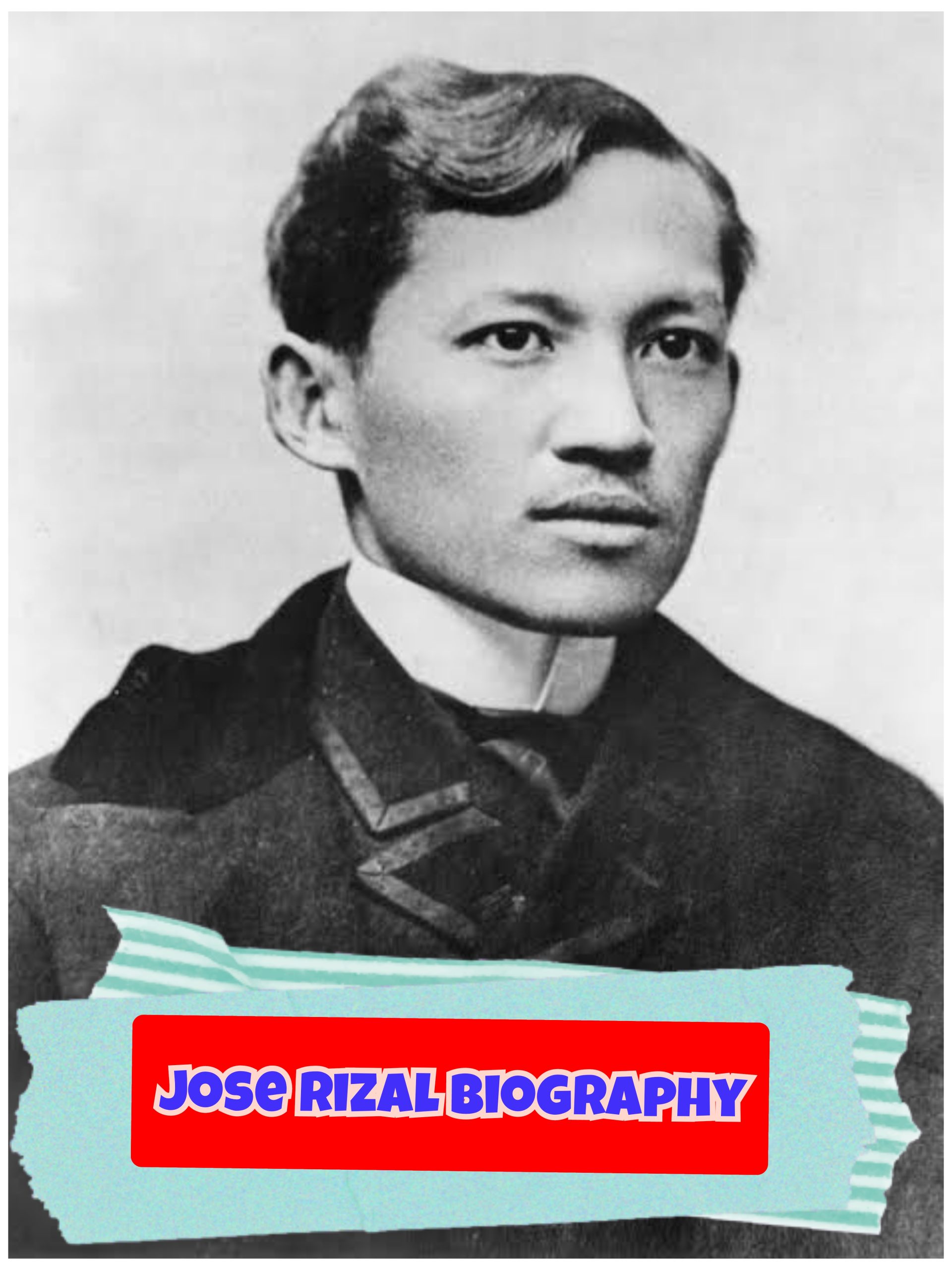
José Protacio Rizal was born on June 19, 1861, in Calamba, Laguna, Philippines, to Francisco Mercado Rizal and Teodora Alonso Realonda. He was the seventh of eleven children in a well-educated and relatively prosperous family. His parents valued education, discipline, religion, and intellectual development, which greatly influenced Rizal during his childhood. Growing up in Calamba, he developed an early appreciation for nature, literature, art, and learning.
Rizal showed exceptional intellectual ability from a very young age. His mother, Teodora, was among his earliest teachers and introduced him to reading and writing. He later received formal instruction in Calamba before continuing his education in Manila. As a child, he also demonstrated talents in drawing, sculpture and poetry, and he became interested in languages and the world around him. These early interests would eventually become important parts of his career as a writer, physician, artist and intellectual.
His childhood was also shaped by the social and political conditions of the Philippines under Spanish colonial rule. Experiences involving his family and the wider community helped him become aware of inequality and abuses within colonial society. The execution of the three Filipino priests Mariano Gómez, José Burgos and Jacinto Zamora (GOMBURZA) in 1872 particularly affected him and later influenced his growing sense of Filipino identity. These experiences, together with his strong education and intellectual curiosity, helped lay the foundation for Rizal’s later advocacy for reform and Filipino national consciousness.
José Rizal’s Education
José Rizal began his formal education in his hometown of Calamba, Laguna, after receiving his earliest lessons from his mother, Teodora Alonso, and private tutors. He later traveled to Manila to continue his studies at the Ateneo Municipal de Manila, where he excelled academically. He earned a Bachelor of Arts degree in 1877 and continued studying at the institution, developing strong interests in literature, philosophy, languages and the sciences. His academic achievements reflected the exceptional intellectual ability he had demonstrated since childhood.
After Ateneo, Rizal enrolled at the University of Santo Tomas (UST) in Manila, where he studied medicine and philosophy. However, he became dissatisfied with aspects of the educational environment and later decided to continue his studies in Europe. In 1882, he traveled to Spain and enrolled at the Universidad Central de Madrid, where he pursued medicine and philosophy and letters. He completed his medical degree in 1885, giving him professional training that would later support his work as an ophthalmologist.
Rizal’s education continued beyond formal university studies. While living in Europe, he broadened his knowledge through extensive reading, travel and interaction with intellectuals and reformists. He studied and practiced ophthalmology in Paris and Heidelberg, gaining additional medical experience and exposure to European culture and ideas. His years abroad also strengthened his knowledge of languages, literature, history and political thought, shaping the intellectual foundation that influenced his writings and advocacy for reforms in the Philippines.
José Rizal’s Career
José Rizal built a diverse career that combined medicine, writing, education, research, art and civic work. After completing his medical studies in Spain, he specialized in ophthalmology and continued his professional training in Europe, including in Paris and Heidelberg. He later returned to the Philippines and established himself as a physician, treating patients and gaining a reputation for his medical skills. His work as an ophthalmologist was particularly significant because he was able to help people suffering from eye conditions, including members of his own family.
Rizal was also a highly influential writer and intellectual. In 1887, he published his first novel, Noli Me Tangere, which portrayed the social injustices and abuses experienced under Spanish colonial rule. Four years later, he published El Filibusterismo, a darker sequel that explored corruption, oppression and the consequences of failed reform. Through these works, as well as his essays, poems, letters and other writings, Rizal became one of the leading voices of the Filipino reform movement and helped develop a stronger sense of Filipino national identity.
Beyond medicine and literature, Rizal worked as an educator, community leader, linguist, artist and researcher. During his exile in Dapitan from 1892 to 1896, he practiced medicine, established a school for local boys, improved community facilities and conducted studies in science and natural history. He also founded La Liga Filipina in 1892, an organization that promoted unity, mutual assistance and peaceful reforms. Although Rizal did not advocate violent revolution, his intellectual and civic activities made him a central figure in the development of Filipino nationalism.
José Rizal’s Personal Life and Family
José Rizal was born into the Mercado-Rizal family, the son of Francisco Mercado Rizal and Teodora Alonso Realonda. He was the seventh of eleven children and grew up in a close-knit, educated family in Calamba, Laguna. His siblings included Paciano Rizal, his older brother and one of his most trusted confidants; Narcisa, Lucia, Maria, Concepción, Josefa, Trinidad, Soledad, Saturnina, and Olympia. His family played an important role in his development, and several of his siblings supported him throughout his life and preserved his memory after his death.
Rizal never married and had no surviving children, but he had several romantic relationships during his lifetime. Among the women associated with him were Segunda Katigbak, Leonor Valenzuela, Leonor Rivera, Consuelo Ortiga y Rey, O-Sei-San (Seiko Usui), and Gertrude Beckett. His relationship with Leonor Rivera is particularly well known; she is often described as one of the most important women in his life, although their relationship did not result in marriage. Rizal also became engaged to Josephine Bracken, an Irish-born woman whom he met during his exile in Dapitan.
Josephine Bracken remained with Rizal during the final period of his life, and historical accounts describe their relationship as deeply significant. They attempted to marry, although the circumstances surrounding their marriage remain a subject of historical discussion. Josephine reportedly gave birth to a premature child with Rizal, but the baby, known as Francisco Rizal, died shortly after birth. Rizal was executed on December 30, 1896, while Josephine was still in Dapitan. His family, particularly his mother and siblings, later helped preserve his writings, belongings and legacy, ensuring that his contribution to Philippine history would not be forgotten.
José Rizal’s Age, Religion, Nationality, Height and Physical Appearance
José Rizal was 35 years old when he was executed on December 30, 1896. He was born on June 19, 1861, in Calamba, Laguna, making him a Filipino national and one of the most influential figures in Philippine history. Rizal was raised in a Roman Catholic family and was baptized into the Catholic faith, although his later writings and experiences reflected a thoughtful and sometimes critical approach to religious institutions and colonial authority.
Rizal was generally described as a slim, well-built and dignified man with a composed appearance. Historical photographs and portraits show him with dark hair, dark eyes, a prominent forehead, a straight nose and a neatly groomed appearance. He was known for dressing formally and maintaining a scholarly, refined image that reflected his education and professional background.
His exact height is not reliably documented in contemporary historical records. Some modern sources give estimates of around 5 feet 3 inches (160 cm), but this figure should be treated as an approximation rather than a confirmed measurement. Rizal’s physical appearance is best documented through photographs, portraits and descriptions from people who knew him, which consistently portray him as a serious, intellectual and well-presented man.
José Rizal’s Net Worth
There is no reliable historical record giving José Rizal a specific net worth, and assigning him a modern peso or dollar figure would be speculative. Unlike modern public figures, Rizal did not leave behind a documented financial statement that allows historians to calculate his total assets, savings and income at the time of his death. Therefore, claims that he had a precise multimillion-dollar net worth should be treated cautiously.
Rizal’s financial position was nevertheless relatively comfortable for a Filipino of his period. He came from a prosperous family, trained as a physician and ophthalmologist, and earned money through medical practice. During his exile in Dapitan, he treated patients, including performing eye operations, and also engaged in agriculture and other activities. Historical accounts indicate that he sometimes treated patients who could not afford to pay, making his medical practice more than simply a source of personal income.
For a biography, the most accurate estimate is therefore that José Rizal was financially comfortable or upper-middle-class by the standards of his time, but his exact net worth is unknown. It would be misleading to convert his nineteenth-century earnings directly into a modern “net worth” figure without reliable records of his income, property and expenses. His greatest legacy was ultimately not financial wealth but his books, medical work, intellectual contributions and influence on Philippine nationalism.
José Rizal’s Death and Cause of Death
José Rizal was executed on December 30, 1896, at Bagumbayan Field in Manila, now part of Rizal Park. He was 35 years old. After being arrested and returned to Manila, Rizal was tried by Spanish colonial authorities and convicted on charges connected to rebellion, sedition and the formation of illegal societies. He spent his final days imprisoned at Fort Santiago before being taken to Bagumbayan for his execution.
Rizal’s cause of death was execution by firing squad. At approximately 7:03 a.m. on December 30, 1896, he was shot by a squad of Filipino soldiers serving in the Spanish colonial army. The execution followed his conviction by the Spanish colonial government, which accused him of inspiring or supporting the Philippine Revolution. Historical records identify his execution as a major turning point that strengthened Filipino nationalism.
Following his execution, Rizal’s body was secretly buried at Paco Cemetery in Manila on the same day. His remains were later exhumed in 1898 and, on December 30, 1912, were placed beneath his monument at Luneta, now Rizal Park. His death transformed him into a martyr and enduring symbol of Filipino nationalism, with his writings and sacrifice continuing to influence the country’s historical and national identity.
Legacy
José Rizal’s legacy is deeply connected to the development of Filipino nationalism and national identity. Through his novels, essays, poems and letters, he exposed social injustices and abuses during Spanish colonial rule and encouraged Filipinos to seek dignity, education and meaningful reforms. His two major novels, Noli Me Tangere and El Filibusterismo, became influential works that helped awaken national consciousness among Filipinos.
Rizal’s execution on December 30, 1896, transformed him into a national martyr. Although he advocated peaceful reform rather than armed revolution, his death strengthened the growing movement against Spanish colonial rule. His life and writings influenced revolutionary leaders and generations of Filipinos, and his name became permanently associated with courage, intellectual freedom, patriotism and the struggle for national dignity.
Today, Rizal remains one of the most revered figures in Philippine history. Rizal Day is commemorated every December 30, and monuments, schools, streets, universities and public institutions throughout the Philippines bear his name. His former residences and places associated with his life, including sites in Calamba, Dapitan and Manila, have been preserved as historical landmarks. Beyond the Philippines, his writings and ideas continue to be studied as an important part of Southeast Asian history and the broader struggle against colonialism.
Conclusion
José Rizal remains one of the most influential figures in Philippine history, remembered not only as a physician, writer and intellectual but also as a symbol of patriotism and national consciousness. Through Noli Me Tangere, El Filibusterismo and his other writings, he courageously exposed social injustices and inspired Filipinos to seek reform, education and dignity. His execution at the age of 35 turned him into a national martyr whose ideas continued to influence the struggle for Philippine independence. More than a century after his death, Rizal’s life, sacrifices and works continue to shape Philippine history and inspire generations to value knowledge, courage, service and love of country.
Frequently Asked Questions About José Rizal
Who was José Rizal?
José Rizal was a Filipino physician, writer, poet, educator and nationalist best known for writing Noli Me Tangere and El Filibusterismo. His writings exposed abuses under Spanish colonial rule and helped strengthen Filipino national consciousness.
When and where was José Rizal born?
José Rizal was born on June 19, 1861, in Calamba, Laguna, Philippines. He was the seventh of eleven children of Francisco Mercado Rizal and Teodora Alonso Realonda.
How old was José Rizal when he died?
José Rizal was 35 years old when he died. He was executed on December 30, 1896, in Bagumbayan, Manila.
How did José Rizal die?
José Rizal died by firing squad on December 30, 1896. Spanish colonial authorities executed him after a military trial in which he was convicted on charges including rebellion, sedition and conspiracy.
What was José Rizal’s cause of death?
The cause of José Rizal’s death was execution by firing squad. He was shot by Filipino soldiers serving under the Spanish colonial government at Bagumbayan in Manila.
What was José Rizal’s religion?
José Rizal was raised and baptized as a Roman Catholic. His views on religion and the Catholic Church became more complex as he grew older and encountered different intellectual and political ideas.
Who was José Rizal’s wife?
José Rizal did not have a legally established wife. He was romantically involved with several women, most notably Leonor Rivera, and later became closely associated with Josephine Bracken during his exile in Dapitan.
Did José Rizal have children?
José Rizal had no surviving children. He and Josephine Bracken reportedly had a premature son, Francisco Rizal, who died shortly after birth.
Who were José Rizal’s parents?
José Rizal’s parents were Francisco Mercado Rizal and Teodora Alonso Realonda. His family was relatively prosperous and placed strong importance on education.
What did José Rizal study?
José Rizal studied medicine, philosophy and letters. He attended the Ateneo Municipal de Manila and the University of Santo Tomas before continuing his education in Spain, where he completed medical studies at the Universidad Central de Madrid.
What was José Rizal’s profession?
José Rizal was primarily a physician and ophthalmologist, but he was also a writer, poet, educator, linguist, artist and reformist. His career combined medicine with intellectual and civic activities.
What books did José Rizal write?
José Rizal’s two most famous novels are Noli Me Tangere, published in 1887, and El Filibusterismo, published in 1891. Both criticized social injustices and colonial abuses in the Philippines.
What is José Rizal famous for?
José Rizal is famous for his writings, nationalism, advocacy for reform and martyrdom. His novels helped awaken Filipino national consciousness during Spanish colonial rule.
What was José Rizal’s net worth?
José Rizal’s exact net worth is unknown because there are no reliable historical records that calculate his total wealth. He earned income as a physician and came from a relatively prosperous family, but modern net-worth figures are speculative.
What was José Rizal’s height?
José Rizal’s exact height is not reliably documented in contemporary historical records. Some modern sources estimate that he was around 5 feet 3 inches (160 cm) tall, but this should be considered an approximation.
What is José Rizal’s greatest legacy?
José Rizal’s greatest legacy is his contribution to Filipino nationalism and national consciousness. His writings challenged colonial abuses, while his execution turned him into a national martyr and enduring symbol of patriotism.
Why is José Rizal important to the Philippines?
José Rizal is important because his writings and ideas helped Filipinos recognize social and political injustices under Spanish colonial rule. His life and martyrdom became powerful symbols of the country’s struggle for reform, dignity and eventual independence.
When is José Rizal Day celebrated?
José Rizal Day is celebrated every December 30 in the Philippines. The national holiday commemorates the anniversary of his execution in 1896 and honors his contribution to Philippine history.