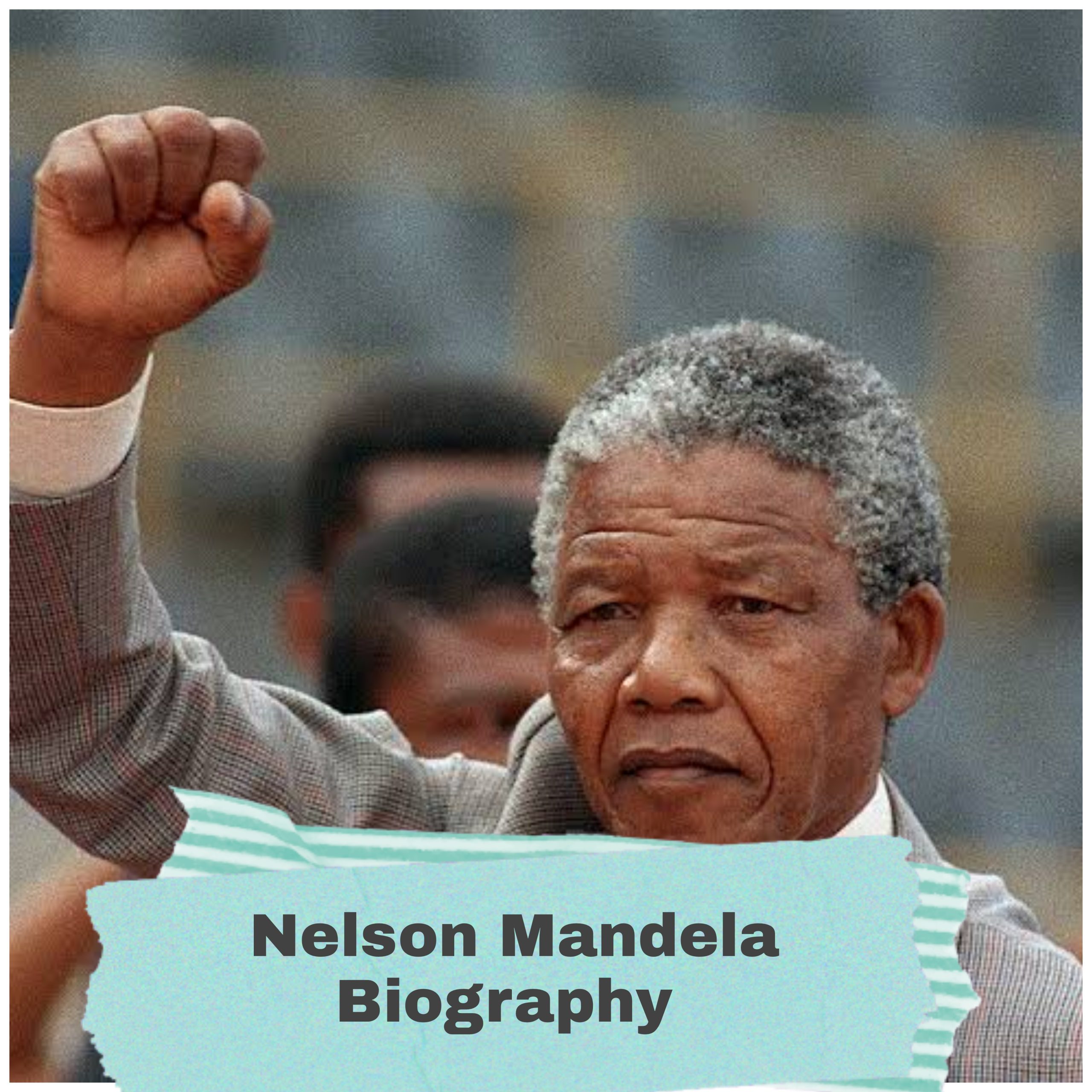
Nelson Rolihlahla Mandela was born on 18 July 1918 in the small village of Mvezo, in South Africa’s Eastern Cape Province. He was the son of Gadla Henry Mphakanyiswa Mandela, a local chief and counselor to the Thembu royal family, and Nosekeni Fanny, one of his father’s four wives. Mandela belonged to the Thembu ethnic group, and his birth name, Rolihlahla, is a Xhosa word that literally means “pulling the branch of a tree,” but is commonly interpreted as “troublemaker.” Growing up in a traditional rural community, he was immersed in Xhosa customs, storytelling, and the values of leadership, respect, and service that would later shape his character.
After his father died when Nelson was just nine years old, he was taken under the guardianship of Chief Jongintaba Dalindyebo, the acting regent of the Thembu people. This move exposed him to a different way of life, where he observed tribal councils and learned the importance of listening carefully before making decisions. These early experiences sparked his interest in justice, leadership, and public service. During this period, he also became the first member of his family to attend school. On his first day, a Methodist teacher gave him the English name “Nelson,” following the colonial-era practice of assigning English names to African students.
Mandela showed great promise as a student and continued his education at Clarkebury Methodist High School and later Healdtown, a Wesleyan secondary school. He then enrolled at the University College of Fort Hare, one of the few higher education institutions available to Black Africans at the time. While there, he became involved in student politics and was suspended after participating in a boycott against the university administration. Refusing an arranged marriage proposed by his guardian, Mandela left for Johannesburg, where he worked while completing his law studies through the University of South Africa and later attended the University of the Witwatersrand. His experiences during these formative years laid the foundation for his lifelong commitment to equality, justice, and the struggle against apartheid.
Nelson Mandela’s Education
Nelson Mandela’s educational journey began in the rural village of Qunu, where he attended a local Methodist primary school. He was the first member of his family to receive a formal education, an opportunity that was uncommon for many Black South Africans at the time. On his first day of school, his teacher gave him the English name “Nelson,” a common practice during the colonial era. His early schooling instilled in him a love of learning and introduced him to the values of discipline, responsibility, and perseverance.
After completing his primary education, Mandela attended Clarkebury Methodist High School, a boarding institution known for educating African students. He later enrolled at Healdtown, a prestigious Wesleyan secondary school, where he excelled academically and developed leadership qualities. In 1939, he entered the University College of Fort Hare, then the leading institution of higher learning for Black Africans in Southern Africa. While at Fort Hare, Mandela studied for a Bachelor of Arts degree but was suspended before graduating after taking part in a student boycott protesting university policies and student representation.
Following his departure from Fort Hare, Mandela moved to Johannesburg, where he continued his studies while working to support himself. He completed his Bachelor of Arts degree through the University of South Africa (UNISA) by correspondence and later enrolled at the University of the Witwatersrand to study law. At Witwatersrand, he was one of the few Black students and experienced firsthand the racial discrimination that reinforced his commitment to fighting injustice. Although his political activism interrupted his legal studies, Mandela eventually qualified as a lawyer, enabling him to co-found one of South Africa’s first Black-owned law firms and use the law as a powerful tool in the struggle against apartheid.
Nelson Mandela’s Career
Nelson Mandela began his professional career as a lawyer after completing his legal training in Johannesburg. In 1952, he and fellow activist Oliver Tambo established Mandela & Tambo, the first Black-owned law firm in South Africa. The firm provided affordable legal representation to Black South Africans who faced racial discrimination under the apartheid system. Through his legal work, Mandela witnessed the harsh realities of apartheid firsthand, strengthening his determination to fight for equality, justice, and human rights.
Alongside his legal career, Mandela became an influential leader in the African National Congress (ANC). He joined the ANC in 1944 and helped found its Youth League, which advocated for more direct action against racial segregation. During the 1950s, Mandela organized campaigns of peaceful resistance, including the Defiance Campaign, and emerged as one of the country’s leading anti-apartheid activists. Following the Sharpeville Massacre in 1960 and the banning of the ANC, Mandela concluded that peaceful protest alone was no longer sufficient. In 1961, he co-founded Umkhonto we Sizwe (Spear of the Nation), the armed wing of the ANC, to carry out acts of sabotage against government installations while seeking to avoid civilian casualties.
Mandela was arrested in 1962 and, after the Rivonia Trial, was sentenced to life imprisonment in 1964. He spent 27 years in prison, most of them on Robben Island, becoming the global symbol of the struggle against apartheid. Released on 11 February 1990, Mandela led negotiations that ended apartheid and paved the way for South Africa’s first democratic elections. In 1994, he was elected the country’s first Black president, serving until 1999. His presidency focused on national reconciliation, democratic institution-building, economic development, and healing the divisions created by decades of racial oppression. After leaving office, Mandela devoted himself to philanthropy, peacebuilding, and humanitarian causes through the Nelson Mandela Foundation, leaving a lasting legacy as one of the world’s greatest champions of freedom, justice, and reconciliation.
Nelson Mandela’s Personal Life and Family
Nelson Mandela was born into the Thembu royal family and remained deeply connected to his heritage throughout his life. He was the son of Gadla Henry Mphakanyiswa Mandela, a chief and counselor to the Thembu king, and Nosekeni Fanny Mandela, one of his father’s four wives. After his father’s death in 1927, Mandela was raised by Chief Jongintaba Dalindyebo, the acting regent of the Thembu people, who treated him as a member of his own family. The guidance he received from Chief Dalindyebo played a significant role in shaping his sense of leadership, responsibility, and public service.
Mandela was married three times. His first marriage was to Evelyn Ntoko Mase in 1944, and together they had four children: Thembekile “Thembi” Mandela, Makgatho Lewanika Mandela, Makaziwe Mandela (who died in infancy), and Makaziwe Mandela, who was later named after her late sister. The couple divorced in 1958. That same year, Mandela married Winnie Madikizela-Mandela, a social worker and anti-apartheid activist who became an international symbol of resistance during his imprisonment. They had two daughters, Zenani Mandela-Dlamini and Zindziswa “Zindzi” Mandela-Hlongwane. Their marriage ended in divorce in 1996 after years of separation during Mandela’s imprisonment and presidency.
On his 80th birthday in 1998, Mandela married Graça Machel, the widow of former Mozambican President Samora Machel and a respected humanitarian in her own right. Their marriage remained strong until Mandela’s death on 5 December 2013. Beyond his immediate family, Mandela was a proud grandfather and great-grandfather to a large extended family. Despite the personal tragedies he experienced—including the deaths of his son Thembi in 1969 while he was imprisoned and his son Makgatho in 2005—Mandela remained devoted to his family. He often spoke about the sacrifices his loved ones made during the struggle against apartheid and credited them for their resilience, support, and unwavering commitment throughout his life.
Nelson Mandela’s Age, Religion, Nationality, Height and Physical Appearance
Nelson Mandela was born on 18 July 1918 in Mvezo, Eastern Cape, South Africa, and was 95 years old at the time of his death on 5 December 2013. He was a South African by nationality and belonged to the Thembu ethnic group, a branch of the Xhosa people. Mandela was raised in the Methodist Christian faith and remained deeply influenced by Christian values such as forgiveness, humility, compassion, and service throughout his life. Although he respected people of all faiths and beliefs, his moral outlook and leadership were shaped in part by his Christian upbringing.
Mandela stood at approximately 1.93 meters (6 feet 4 inches) tall, making him an imposing and recognizable public figure. He had a lean build, dark brown eyes, and black hair in his younger years, which gradually turned gray and then white with age. His warm smile, calm demeanor, and dignified presence became defining features of his public image. Whether dressed in a formal suit or his signature colorful “Madiba shirts,” Mandela carried himself with grace, humility, and confidence, qualities that complemented his reputation as one of the world’s most respected statesmen and champions of peace.
Nelson Mandela’s Net Worth
At the time of his death in 2013, Nelson Mandela’s estimated net worth was between US$1 million and US$5 million, although some reports placed it closer to US$2 million. Unlike many world leaders, Mandela did not pursue personal wealth and lived a relatively modest lifestyle. His income came primarily from his salary as President of South Africa (1994–1999), royalties from his bestselling autobiography Long Walk to Freedom, speaking engagements, book publications, and pension benefits earned through his years of public service.
During his presidency, Mandela earned the official salary of the South African president, but he became widely known for donating a significant portion of his income to charitable causes. He also directed much of the revenue generated from his books, public appearances, and licensing agreements toward humanitarian initiatives through the Nelson Mandela Foundation and other charitable organizations. Rather than building a vast personal fortune, Mandela focused on improving education, healthcare, children’s welfare, and the fight against HIV/AIDS across Africa.
Although his personal wealth was modest by the standards of many global political figures, Nelson Mandela’s true legacy lies in the immeasurable social and political impact he made. His influence helped transform South Africa into a democratic nation and inspired millions around the world to pursue justice, equality, and reconciliation. Today, Mandela’s name remains one of the most respected and valuable legacies in modern history, with his enduring influence far exceeding any financial wealth he accumulated during his lifetime.
Nelson Mandela’s Death and Cause of Death
Nelson Mandela died on 5 December 2013 at the age of 95 at his home in Houghton Estate, Johannesburg, South Africa. His death was announced by then-South African President Jacob Zuma, who described him as the nation’s greatest son and called on South Africans to honor his legacy of reconciliation, peace, and unity. Mandela’s passing prompted an outpouring of tributes from world leaders, royal families, religious figures, and millions of people around the globe, reflecting the profound impact he had on the fight for freedom and human rights.
The official cause of Mandela’s death was complications from a prolonged respiratory infection. He had experienced recurring lung problems for many years, largely attributed to the harsh conditions he endured during his 27 years of imprisonment, particularly while incarcerated on Robben Island, where prisoners were exposed to limestone dust in the prison quarry. In the months leading up to his death, Mandela was hospitalized several times with lung infections before returning home to receive intensive medical care.
Mandela was honored with a 10-day national period of mourning, one of the largest state memorials in modern history. A memorial service attended by dozens of world leaders was held at FNB Stadium in Johannesburg, followed by several days during which the public paid their respects as his body lay in state at the Union Buildings in Pretoria. On 15 December 2013, Nelson Mandela was laid to rest in his ancestral village of Qunu in the Eastern Cape, with full state honors. His death marked the end of an extraordinary life, but his enduring legacy of forgiveness, justice, democracy, and equality continues to inspire generations around the world.
Legacy
Nelson Mandela’s legacy is defined by his unwavering commitment to freedom, equality, justice, and reconciliation. After spending 27 years in prison for opposing apartheid, he emerged without bitterness and instead championed forgiveness and national unity. His leadership during South Africa’s transition from apartheid to democracy prevented widespread violence and helped establish a peaceful, multiracial society. As the country’s first Black president, Mandela laid the foundation for democratic governance, constitutional rights, and the protection of human dignity, earning worldwide admiration as one of history’s greatest statesmen.
Beyond South Africa, Mandela became a global symbol of courage, resilience, and peaceful resistance against oppression. His life inspired countless movements for civil rights, democracy, and social justice across the world. In recognition of his extraordinary contributions, he received hundreds of international honors, including the 1993 Nobel Peace Prize, shared with F.W. de Klerk for their joint efforts to end apartheid peacefully. The United Nations also declared 18 July, his birthday, as Nelson Mandela International Day, encouraging people worldwide to dedicate 67 minutes of community service each year in honor of the 67 years Mandela devoted to public service and the struggle for human rights.
Mandela’s influence continues through institutions such as the Nelson Mandela Foundation, which promotes dialogue, social justice, education, and the preservation of his values for future generations. His autobiography, Long Walk to Freedom, remains one of the most influential political memoirs ever written, while his speeches and philosophy of forgiveness continue to inspire leaders, students, and activists around the world. More than a decade after his death, Mandela is remembered not only as the man who helped end apartheid but also as a timeless symbol of hope, compassion, humility, and the belief that lasting change is achieved through courage, reconciliation, and service to humanity.
Conclusion
Nelson Mandela’s life is a remarkable testament to the power of courage, perseverance, forgiveness, and visionary leadership. From his humble beginnings in rural South Africa to becoming the nation’s first Black president and a global icon of peace and justice, Mandela dedicated his life to fighting oppression and building a more equal society. His sacrifices, including 27 years of imprisonment, transformed him into one of the most respected figures in modern history. Although he passed away in 2013, his enduring legacy continues to inspire millions around the world to stand for freedom, uphold human dignity, embrace reconciliation, and work toward a future founded on equality, compassion, and hope.
Frequently Asked Questions (FAQs)
Who was Nelson Mandela?
Nelson Mandela was a South African anti-apartheid activist, lawyer, philanthropist, and politician who became the country’s first Black president from 1994 to 1999. He is widely regarded as one of the world’s greatest champions of freedom, equality, and human rights.
How old was Nelson Mandela when he died?
Nelson Mandela was 95 years old when he died on 5 December 2013.
What was Nelson Mandela’s real name?
Nelson Mandela’s full birth name was Nelson Rolihlahla Mandela. His Xhosa name, Rolihlahla, means “pulling the branch of a tree” and is commonly interpreted as “troublemaker.”
Why was Nelson Mandela imprisoned?
Mandela was imprisoned for opposing South Africa’s apartheid government. He was convicted during the Rivonia Trial in 1964 on charges of sabotage and sentenced to life imprisonment. He spent 27 years in prison, most of them on Robben Island.
How long was Nelson Mandela in prison?
Nelson Mandela spent 27 years in prison, from 1962 until his release on 11 February 1990.
Who was Nelson Mandela’s wife?
Nelson Mandela was married three times: Evelyn Mase (1944–1958), Winnie Madikizela-Mandela (1958–1996), and Graça Machel (1998 until his death in 2013).
Did Nelson Mandela have children?
Yes. Nelson Mandela had six children: Thembekile (Thembi), Makgatho, Makaziwe (who died in infancy), another daughter also named Makaziwe, Zenani, and Zindziswa (Zindzi).
What religion was Nelson Mandela?
Nelson Mandela was a Christian and was raised in the Methodist Church, although he respected people of all faiths and beliefs.
What was Nelson Mandela’s nationality?
Nelson Mandela was South African and belonged to the Thembu ethnic group, a branch of the Xhosa people.
How tall was Nelson Mandela?
Nelson Mandela was approximately 1.93 meters (6 feet 4 inches) tall.
What was Nelson Mandela’s net worth?
At the time of his death, Nelson Mandela’s estimated net worth was between US$1 million and US$5 million, with many estimates placing it at around US$2 million. Most of his earnings came from his presidential salary, book royalties, and public speaking, much of which supported charitable causes.
What was the cause of Nelson Mandela’s death?
Nelson Mandela died on 5 December 2013 from complications related to a prolonged respiratory infection after battling recurring lung problems for several years.
Why is Nelson Mandela famous?
Nelson Mandela is famous for leading the struggle against apartheid, spending 27 years in prison for his beliefs, helping bring democracy to South Africa, and becoming the country’s first Black president. He is celebrated worldwide for promoting peace, reconciliation, and human rights.
What is Nelson Mandela’s greatest legacy?
Mandela’s greatest legacy is helping end apartheid through reconciliation rather than revenge. He is remembered as a global symbol of freedom, justice, forgiveness, democracy, and equality.
When is Nelson Mandela International Day?
Nelson Mandela International Day is observed every year on 18 July, Mandela’s birthday. The United Nations encourages people to spend 67 minutes performing community service in honor of his 67 years of public service.