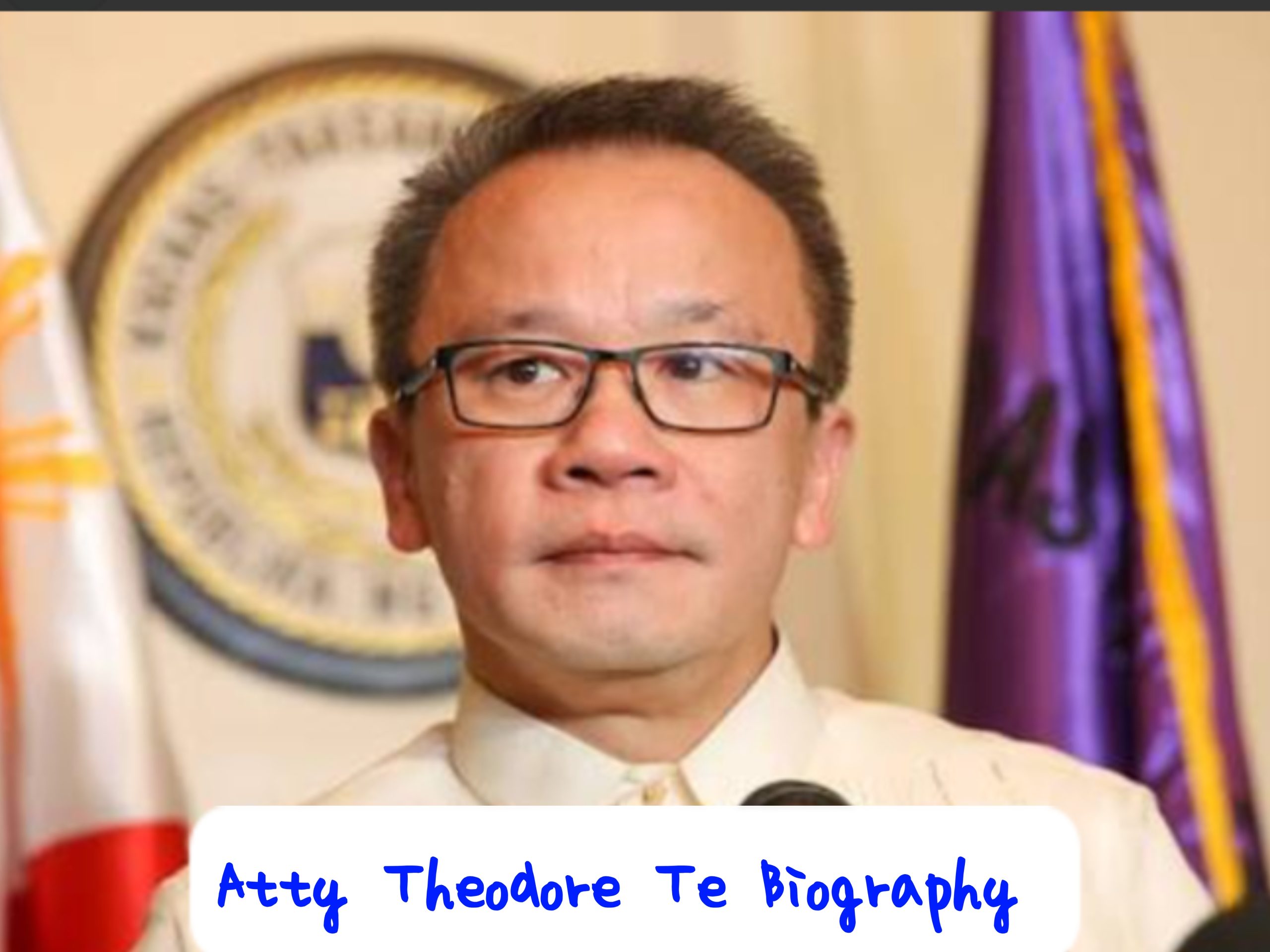
Atty. Theodore O. Te is a prominent Filipino human rights lawyer, legal scholar, professor, and advocate known for his work in public interest litigation, constitutional law, and clinical legal education. A native of Davao City in the southern Philippines, he has dedicated his career to defending civil liberties, challenging the death penalty, supporting press freedom, and advancing access to justice through academic and pro bono efforts.
Te has represented high-profile clients in landmark cases, served in key roles within the judiciary and human rights organizations, and influenced generations of law students at the University of the Philippines College of Law. His contributions span litigation at all court levels, policy advocacy, and public communication on legal matters. As of recent years, he continues to lead initiatives at the Free Legal Assistance Group (FLAG) and remains active in teaching and clinical programs.
Atty. Theodore Te Early Life and Background
Theodore O. Te was born on April 3, 1966, in Davao City, Philippines. He grew up in a middle-class Chinese-Filipino family during the early years of martial law under President Ferdinand Marcos. As a six-year-old when martial law was declared in September 1972, young Ted initially misunderstood the term, thinking it referred to a family relative amid the hushed conversations around him. His family navigated the period with caution, as many did, while life in Davao continued under the controlled environment of the regime.
Davao City, located in the southern Philippines on Mindanao island, has a significant Chinese-Filipino community. The Te (or Dai in Mandarin) surname is notably common there, with local expressions highlighting the presence of families like the Tes and Angs in business and community life. This cultural background shaped Te’s early experiences in a diverse, migrant-influenced region known for its agricultural economy, indigenous communities, and growing urban center.
Te attended local schools and later moved to Cagayan de Oro for high school, where his awareness of broader political realities grew. The optimism projected by state media contrasted with emerging understandings of repression. These formative years under martial law planted seeds for his later commitment to human rights and the rule of law. The 1986 EDSA People Power Revolution, which ousted Marcos, occurred during his university years and reinforced his sense of civic engagement.
Atty. Theodore Te Education
Te pursued higher education at the University of the Philippines (UP) Diliman, where he earned a Bachelor of Arts degree in Psychology. During this time, he participated in student movements, including efforts opposing tuition fee increases, reflecting early activism within the academic community.
He continued at the UP College of Law, receiving his Bachelor of Laws (LL.B., later equivalent to Juris Doctor) in 1990. As a law student, Te engaged deeply with legal scholarship and human rights work. He served as vice chairperson of the Philippine Law Journal and became involved with the Free Legal Assistance Group (FLAG), the country’s oldest human rights lawyers’ network. He passed the Philippine Bar Examination in 1990 (some sources note 1991 in context of joining FLAG).
In 2012, Te completed a Master of Laws (LL.M.) at Columbia University Law School in New York City. This advanced degree enriched his expertise in international and comparative law, particularly relevant to his human rights advocacy.
His educational path combined rigorous academic training with practical exposure to social issues, preparing him for a career balancing scholarship and activism.
Atty. Theodore Te State of Origin
Davao City serves as Atty. Theodore Te’s state of origin and hometown. Situated in the Davao Region of Mindanao, it is one of the Philippines’ largest cities and a major economic hub in the south. Known for its durian fruit, Mount Apo (the country’s highest peak), and diverse population including indigenous Lumad groups, Visayan migrants, and Chinese-Filipino communities, Davao has a unique cultural tapestry.
The Chinese-Filipino presence in Davao traces back to early traders and settlers, with families like the Tes contributing to commerce, such as in retail and other businesses. Te’s roots in this vibrant, resilient city amid Mindanao’s complex history of conflict, peace processes, and development inform his perspective on national issues, including justice and human rights in regions often marginalized in Manila-centric narratives. He maintains ties to his origins while building a national career.
Atty. Theodore Te Career
Early Legal Practice and Private Sector Work
After passing the bar, Te entered private practice while volunteering with FLAG. In 1997, he co-founded the law firm Sanidad, Abaya, Te, Enriquez, & Tan, focusing on various legal matters alongside human rights cases.
Human Rights Advocacy with FLAG
Te’s long association with the Free Legal Assistance Group defines much of his career. He joined shortly after becoming a lawyer and rose to leadership roles, including Regional Coordinator for Metro Manila, National Vice Chairperson for Luzon, and later National Chairperson (or interim chair around 2025). Through FLAG, he has litigated cases involving civil and political rights, abolition of the death penalty, and freedom of expression.
Notable early work includes serving as counsel for Leo Echegaray, the first person executed by lethal injection in the Philippines after the death penalty’s restoration in the 1990s. Te argued before the Supreme Court on the constitutionality of capital punishment, highlighting issues of due process, cruelty, and state-sponsored penalties for parricide and other crimes. The case drew national attention and fueled debates leading to the eventual abolition of the death penalty.
He has represented journalists and media organizations, notably Maria Ressa and Rappler in multiple cyberlibel and related cases. These efforts defended press freedom against what many viewed as politically motivated charges during the Duterte administration. Te and FLAG lawyers filed motions, presented arguments on prescription periods, multiple publication rules, and broader implications for journalism.
Te has also handled cases involving the Anti-Terrorism Law, special writs like amparo and habeas data, and communications to international human rights bodies on behalf of death row inmates and others. His advocacy extends to environmental issues, such as anti-plastic pollution efforts, and training for journalists and NGOs against red-tagging.
Academic Career and Legal Education
Te has taught at the UP College of Law for over three decades as an Assistant Professor. Subjects include criminal law, civil and criminal procedure, evidence, labor law, and specialized courses on human rights writs, law and medicine, martial law jurisprudence, and international criminal law. He pioneered electives and co-taught interdisciplinary classes.
He directed the UP Office of Legal Aid and heads the Clinical Legal Education Program (CLEP), emphasizing hands-on training for students in real cases. He has taught at Ateneo Law School and De La Salle University as well. As a bar examiner in criminal law (2014), labor law (2015), and procedure (2021/22), he influenced professional standards.
Te served as Vice President for Legal Affairs of the University of the Philippines System. He contributes to the Philippine Judicial Academy (PHILJA) as Chair of the Humanitarian and Human Rights Law Department and sits on Supreme Court technical working groups for Rules of Court revisions.
Supreme Court Spokesperson Role
From 2013 to 2018 (with spokesperson duties notably 2017–2019), Te served as Chief Public Information Officer and Assistant Court Administrator under Chief Justice Maria Lourdes Sereno. He acted as the judiciary’s public face, communicating decisions, policies, and addressing media on sensitive issues like the “judicial massacre” of lower court judges.
He resigned in September 2018 shortly after Sereno’s ouster via quo warranto, citing a desire to return to full-time academia and allow the new Chief Justice freedom to appoint her team. His resignation was accepted, and he returned to teaching and advocacy.
Publications and Thought Leadership
Te has authored and edited scholarly works, including articles on legal education, death penalty arguments, judicial precedents, Miranda rights, transitional justice, and critiques of justice systems. He edited volumes on capital cases for FLAG. He engages in public commentary, podcasts, and forums on rule of law issues.
Atty. Theodore Te Awards
In 2002, Te received the Ten Outstanding Young Men (TOYM) of the Philippines Award for Legal Aid and Human Rights, recognizing his pro bono work and advocacy.
His contributions have earned respect in legal and academic circles, though he maintains a focus on service over personal accolades.
Atty. Theodore Te Personal Life
Information on Te’s family and private life remains largely private, consistent with many public interest lawyers who prioritize discretion amid sensitive work. He is known professionally as “Ted” and balances demanding roles in law, academia, and advocacy. His Chinese-Filipino heritage and Davao roots provide personal grounding.
Other Important Aspects of Atty. Theodore Te Work
Te’s involvement in clinical legal education promotes social justice-oriented training, preparing students for public service. His work on martial law jurisprudence educates on historical accountability. Consultancies on tobacco control and environmental campaigns show a broad public interest scope.
Conclusion
Atty. Theodore O. Te exemplifies a life committed to justice, education, and human rights in the Philippines. From Davao City roots through decades of litigation, teaching, and institutional service, he has influenced legal practice and public discourse on fundamental rights. His ongoing work continues to shape the next generation and defend democratic values.
FAQs
Who is Atty. Theodore Te?
Atty. Theodore O. Te is a Filipino human rights lawyer, professor at UP College of Law, and former Supreme Court spokesperson known for high-profile cases and advocacy.
What is Atty. Theodore Te date of birth and place?
He was born on April 3, 1966, in Davao City, Philippines.
What cases has Atty. Theodore Te handled?
Key cases include representing Leo Echegaray on death penalty issues and Maria Ressa/Rappler in cyberlibel matters, among many human rights litigations.
What is Atty. Theodore Te role in FLAG?
He has held various leadership positions, including National Chairperson, and remains actively involved in human rights defense.
Has Atty. Theodore Te received awards?
Yes, notably the 2002 TOYM Award for Legal Aid and Human Rights.