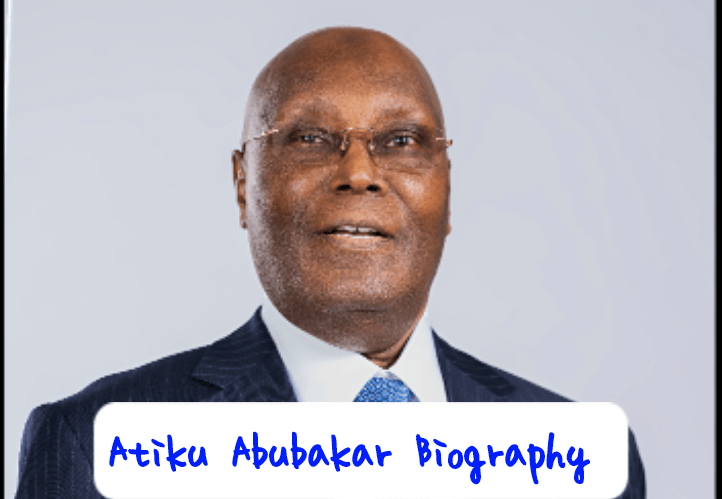
Atiku Abubakar is a prominent Nigerian politician, businessman, and philanthropist. Born on 25 November 1946 in Jada, a village in what was then British Cameroons and later became part of Adamawa State in Nigeria, he holds Nigerian nationality. He served as the Vice President of Nigeria from 1999 to 2007 under President Olusegun Obasanjo. Over several decades, Atiku Abubakar has remained a key figure in Nigerian politics, known for his business success, commitment to education, and repeated bids for the presidency.
His journey reflects resilience shaped by humble beginnings, personal loss, and determination to overcome obstacles. From a childhood marked by his father’s opposition to Western education to rising through the ranks in the Nigeria Customs Service and building a business empire, Atiku Abubakar has influenced Nigeria’s political and economic landscape. He continues to advocate for national unity, economic reforms, and opportunities for younger generations.
Atiku Abubakar Early Life
Atiku Abubakar was born on 25 November 1946 in Jada village, Adamawa State. His father, Garba Abubakar, was a Fulani trader and farmer, and his mother was Aisha Kande. He was named after his paternal grandfather, Atiku Abdulkadir, following Fulani tradition of naming first sons after paternal grandfathers. His paternal grandfather originated from Wurno in Sokoto State and migrated to Kojoli village near Jada. His maternal grandfather, Inuwa Dutse, came from Dutse in what is now Jigawa State.
Jada was part of British Cameroons at the time of his birth. In 1961, following a referendum, the area joined Nigeria. Atiku Abubakar grew up in a modest environment in Kojoli, about 30 kilometers east of Jada. He became the only surviving child after his older sister died in infancy. His parents later divorced before his father’s death.
Tragedy struck when Atiku was around 11 years old. In 1957, his father drowned while attempting to cross a swollen river near Toungo. His mother raised him and later remarried. She passed away in 1984 from a heart attack. These early losses shaped his sense of responsibility and desire for a large family.
Atiku Abubakar’s father opposed Western education, preferring his son to become an Islamic scholar, herdsman, farmer, or trader. When authorities discovered Atiku was not attending mandatory school, his father spent a few days in jail until his mother paid the fine. At age eight, Atiku enrolled at Jada Primary School in 1954 (some accounts say around 1958). He performed well and completed primary education in 1960.
He then attended Adamawa Provincial Secondary School in Yola, joining 59 other students in 1961. He graduated in 1965 with a Grade III in the West African Senior School Certificate Examination. He excelled in English and Literature but faced challenges in subjects like Physics, Chemistry, and Mathematics.
After secondary school, Atiku briefly studied at the Nigeria Police College in Kaduna but left due to missing an O-Level Mathematics result. He worked shortly as a Tax Officer in the Regional Ministry of Finance. In 1966, he gained admission to the School of Hygiene in Kano, graduating with a Diploma in 1967 and serving as Interim Student Union President. That same year, he received a government scholarship for a Law Diploma at Ahmadu Bello University Institute of Administration in Zaria, completing it in 1969.
In 2021, Atiku Abubakar earned a Master’s degree in International Relations from Anglia Ruskin University in the United Kingdom, demonstrating his lifelong commitment to learning.
Atiku Abubakar State of Origin
Atiku Abubakar hails from Adamawa State in northeastern Nigeria. Adamawa is known for its diverse ethnic groups, including the Fulani, to which Atiku belongs. The state borders Taraba, Gombe, Borno, and Cameroon, with a rich cultural heritage blending Islamic traditions and local customs. Jada Local Government Area, his birthplace, features fertile lands supporting farming and trade, activities his father pursued.
Adamawa has produced notable leaders and plays a key role in Nigeria’s politics and agriculture. Atiku’s roots in this region influenced his political base and title as Turaki (or Waziri) of Adamawa, conferred in 1983 by the late Lamido of Adamawa. This traditional title underscores his integration into the state’s royal and cultural structures despite not being of royal blood originally. The Lamido facilitated this by arranging his marriage to Princess Rukaiyatu.
The state’s history of migration, border dynamics, and community ties mirrors Atiku’s own background of movement and adaptation. Adamawa’s challenges, including security issues in recent years, have featured in his political advocacy for better governance and development across Nigeria’s regions.
Atiku Abubakar Education
Atiku Abubakar’s educational path began late due to family resistance but became a foundation for his achievements. Starting at Jada Primary School, he advanced to Adamawa Provincial Secondary School, where he developed strong language skills. His time at the School of Hygiene in Kano honed leadership through student union activities. The Law Diploma from Ahmadu Bello University equipped him for public service.
His later Master’s degree in International Relations reflects ongoing personal growth. Education has remained central to his philanthropy, including founding the American University of Nigeria in Yola, which promotes American-style liberal arts education in Sub-Saharan Africa.
Atiku Abubakar Career
Atiku Abubakar’s professional life spans public service, business, and politics.
Atiku Abubakar Customs Service Career
In 1969, during the Nigerian Civil War, Atiku joined the Nigeria Customs Service. He served for 20 years, rising to Deputy Director, the second-highest position at the time. Postings across cities like Kano, Maiduguri, Kaduna, Seme, Ibadan, and Lagos exposed him to Nigeria’s diversity and built networks. He retired in April 1989 to focus on business and politics.
Atiku Abubakar Business Ventures
After retiring from customs, Atiku built a diverse business portfolio. He engaged in real estate, agriculture, oil services, food and beverages, media, banking, insurance, and pharmaceuticals. He co-founded Intels, a major oil servicing company with operations in Nigeria and abroad. He also established Adama Beverages Limited.
His enterprises created jobs and contributed to economic development. Challenges included an early farm closure in 1986, but persistence led to success. Business acumen supported his political activities and philanthropic efforts.
Atiku Abubakar Political Career
Atiku Abubakar entered politics in the late 1980s and early 1990s. He ran for governor of Gongola State (now split into Adamawa and Taraba) in 1991 without success. In 1993, he contested the Social Democratic Party presidential primaries, placing third behind MKO Abiola and Babagana Kingibe.
He won the Adamawa State governorship in 1998 under the People’s Democratic Party (PDP) but was selected as Olusegun Obasanjo’s running mate for the 1999 presidential election. They won, and he served as Vice President from 1999 to 2007, re-elected in 2003. As Vice President, he contributed to economic policies, privatization efforts, and infrastructure. Tensions arose with Obasanjo over issues like term limits, leading to conflicts.
Atiku has changed parties at times, including brief stints with Action Congress and All Progressives Congress, before returning to PDP. He contested the presidency multiple times: 2007, 2011, 2015 (primaries), 2019, and 2023 under PDP, often placing second or facing legal challenges. In 2025-2026 developments, he joined the African Democratic Congress (ADC) for future contests.
His campaigns emphasized restructuring, economic liberalization, job creation, security, and national unity. He has advocated for devolution of powers and youth empowerment.
Atiku Abubakar Achievements
Atiku Abubakar played a key role in deepening Nigeria’s democracy. He opposed Obasanjo’s third-term bid, helping preserve constitutional limits. His court cases advanced rule of law precedents. As Vice President, he supported policies that boosted private sector involvement.
In business and philanthropy, he founded institutions like the American University of Nigeria, investing heavily in education. His companies generated employment. He received the title Turaki of Adamawa and honors like GCON.
Atiku Abubakar Awards
Atiku Abubakar has received various recognitions for public service and philanthropy. He was named Times Statesman of the Year in some accounts for his influence and contributions. Traditional titles and national honors reflect his standing. Specific awards include commendations for educational initiatives and democratic defense.
Atiku Abubakar Personal Life
Atiku Abubakar has been married multiple times and has 28 children. He explained his polygamous family as a response to his lonely childhood as an only child. He wanted his children to have siblings and support. His wives are described as sisters, friends, and advisers.
His first wife, Titilayo (Titi) Albert, married secretly in 1971. They have four children: Fatima, Adamu, Halima, and Aminu. Second wife Ladi Yakubu (married 1979, later divorced) has six children: Abba, Atiku, Zainab, Ummi-Hauwa, Maryam, and Rukaiyatu. Third wife Princess Rukaiyatu Mustafa (1983) has seven children: Aisha, Hadiza, Aliyu, Asmau, Mustapha, Laila, and Abdulsalam. Fourth wife Fatima Shettima (1986) has seven children including Amina, Mohammed, twins, and others. He was also married to Jennifer Iwenjiora Douglas (Jamila), divorced in 2022, with three children.
Family remains central, with properties and business interests shared among members. He maintains a balance between public duties and private life.
Atiku Abubakar Philanthropy
Beyond politics and business, Atiku Abubakar has invested in education and community development. The American University of Nigeria stands as a flagship project, offering quality higher education. He has supported schools, scholarships, and health initiatives, particularly in Adamawa and across Nigeria. His efforts aim to provide opportunities he fought hard to access.
Conclusion
Atiku Abubakar’s life illustrates determination, adaptability, and service. From rural Jada to national prominence, he has navigated challenges while contributing to Nigeria’s growth. His legacy includes business innovation, educational advancement, and persistent political engagement. As Nigeria evolves, his experiences offer insights into leadership and resilience.
FAQs
Who is Atiku Abubakar?
Atiku Abubakar is a Nigerian politician, businessman, and former Vice President of Nigeria from 1999 to 2007.
When and where was Atiku Abubakar born?
He was born on 25 November 1946 in Jada, Adamawa State, Nigeria.
What is Atiku Abubakar’s state of origin?
His state of origin is Adamawa State, where he holds traditional titles and maintains strong ties.
How many children does Atiku Abubakar have?
Atiku Abubakar has 28 children from his marriages.
What businesses is Atiku Abubakar involved in?
He has interests in oil services, agriculture, beverages, real estate, and more, including co-founding Intels.
Has Atiku Abubakar run for president?
Yes, he has contested the Nigerian presidency multiple times, including in 2019 and 2023.
What is Atiku Abubakar’s educational background?
He holds a Law Diploma from Ahmadu Bello University and a Master’s in International Relations from Anglia Ruskin University.