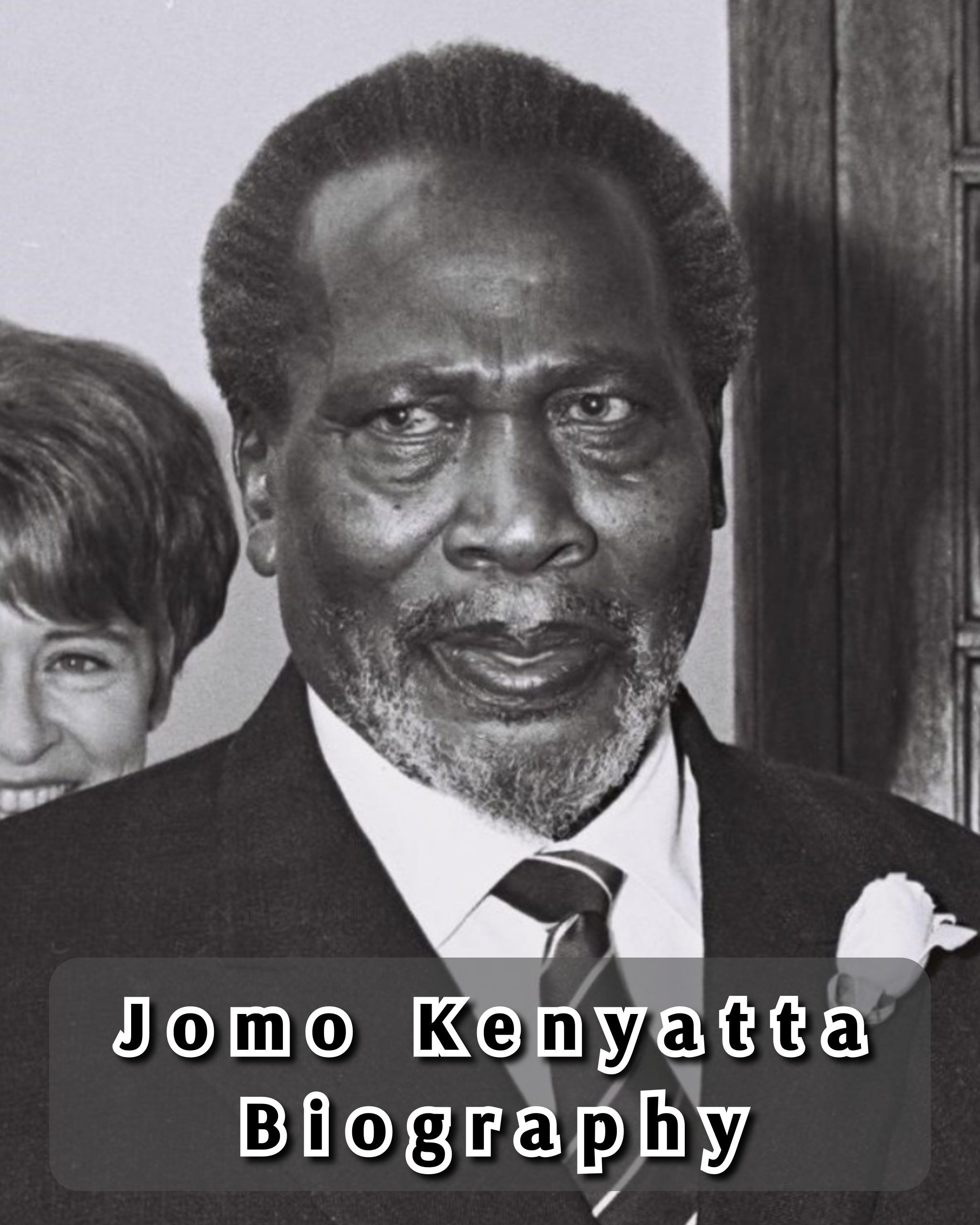
Jomo Kenyatta was born Kamau wa Muigai around 1895 in Ngenda, Gatundu, in what is now Kiambu County, Kenya. The exact date of his birth remains uncertain. He was the eldest surviving son of Muigai and Wambui, farming people from the Kikuyu community. After his father’s death, his mother remarried according to Kikuyu custom, and Kamau later became known as Kamau wa Ngengi. His mother’s subsequent death left him with important family responsibilities, including caring for younger relatives.
Kenyatta grew up at a time when colonial rule was transforming Kenyan society. As a young boy, he learned about Kikuyu traditions, family lineage, land and customary institutions. He was also exposed to Christianity and European education through the Church of Scotland Mission at Thogoto. His experiences of traditional Kikuyu life and the rapidly changing colonial environment later became important influences on his political and intellectual work.
In November 1909, Kenyatta enrolled at Thogoto Mission School, where he learned practical skills as well as basic academic subjects. He later worked in several occupations, including carpentry and clerical work, before becoming increasingly involved in African political affairs. His fluency in English and familiarity with both African traditions and European institutions eventually helped him become an important intermediary and political activist.
Jomo Kenyatta Education
Kenyatta’s formal education began at Thogoto Mission School. He studied reading, writing, English and religious subjects while also undertaking practical duties such as gardening and domestic work. After completing his primary schooling in 1912, he pursued apprenticeship training in carpentry, adding vocational skills to his early missionary education.
His education later expanded beyond Kenya. During his years in Europe, he became involved in intellectual and political circles concerned with African nationalism and colonialism. He also spent time in Moscow and became exposed to international political thought and Pan-African activism. These experiences broadened his understanding of colonial politics and connected him with other African and anti-colonial activists.
In the 1930s, Kenyatta studied social anthropology at the London School of Economics (LSE) under the renowned anthropologist Bronisław Malinowski. He attended seminars at LSE beginning in 1934 and completed postgraduate work that resulted in Facing Mount Kenya: The Tribal Life of the Gikuyu, published in 1938. The book became an influential study of Kikuyu society and an important part of his intellectual and political legacy.
Jomo Kenyatta Career
Jomo Kenyatta’s political career developed through his involvement in African nationalist organizations. He became associated with the Kikuyu Central Association (KCA) and eventually served as its secretary. In the late 1920s, he travelled to Britain on behalf of the organization to present African grievances, particularly concerning land, political representation and colonial policies. His international activism increasingly made him a prominent voice for Kenyan self-government.
Kenyatta returned to Kenya in 1946 and became leader of the newly formed Kenya African Union (KAU). In 1952, after the declaration of a state of emergency during the Mau Mau uprising, he was arrested by British colonial authorities. He was convicted and spent years in detention before his release in 1961.
After his release, Kenyatta became a central figure in negotiations leading to Kenyan independence. He became Kenya’s first Prime Minister in 1963 and, when Kenya became a republic on December 12, 1964, he became the country’s first President. He remained in office until his death in 1978. His administration was associated with economic growth and political stability, while historical scholarship also documents the concentration of political power and suppression of opposition during his presidency.
Jomo Kenyatta Personal Life and Family
Jomo Kenyatta married Grace Wahu in the early twentieth century. They had two children, Peter Muigai Kenyatta and Margaret Wambui Kenyatta. According to Kenya’s Presidential Library, Grace gave birth to their son Muigai on November 20, 1920, while their daughter Wambui was born in February 1928 and was later baptized Margaret. Margaret subsequently became Nairobi’s first female mayor.
During his years in Britain, Kenyatta married Edna Grace Clarke in 1942. Their son, Peter Magana Kenyatta, was born in 1943. Kenyatta’s political and intellectual activities meant that his family life was often intertwined with his long periods abroad and his involvement in the independence struggle.
Later in life, Kenyatta married Ngina Muhoho, popularly known as Mama Ngina Kenyatta. Their children included Uhuru Kenyatta, who later became Kenya’s fourth President, as well as other children including Christine Wambui, Anna Nyokabi and Muhoho Kenyatta. Jomo Kenyatta’s family subsequently became one of the most prominent political and business families in Kenya.
Jomo Kenyatta Death and Cause of Death
Jomo Kenyatta died on August 22, 1978, at State House in Mombasa, where he had travelled for his annual working holiday. The Kenyan Presidential Library records that he died peacefully in his sleep during the early hours of the morning.
Kenyatta’s health had declined during the later years of his presidency. The Presidential Library records that he suffered a heart attack in 1966 and later experienced recurring health complications, including periods of exhaustion and occasional comas. Historical accounts therefore describe his death as occurring after a period of declining health and from natural causes.
He was given a full state funeral and was buried with military honours on August 31, 1978, at a mausoleum within the grounds of Parliament Buildings in Nairobi. Vice President Daniel arap Moi succeeded him, first as Acting President and later as Kenya’s second President.
Jomo Kenyatta Age, Religion, Nationality, Height and Physical Appearance
Jomo Kenyatta was believed to have been born around 1895, although his precise birth date is unknown, meaning he was approximately 82 or 83 years old when he died in 1978. He was Kenyan and belonged to the Kikuyu community. He was baptized as a Christian at the Church of Scotland Mission at Thogoto and received the baptismal name Johnstone Kamau before later adopting the name Jomo Kenyatta. His exact height is not reliably documented by authoritative sources, so commonly published online measurements should be treated cautiously. Photographs from his public life show him as a distinctive statesman who appeared in formal suits as well as traditional Kenyan attire and was often associated with a recognizable hat and walking stick.
Jomo Kenyatta Social Media Presence
Jomo Kenyatta did not have personal social-media accounts because platforms such as Instagram and Facebook did not exist during his lifetime. Consequently, there is no authentic personal Instagram handle belonging to him. Historical information about his life is instead available through archives such as Kenya’s Online Presidential Library and Archiving. Social-media accounts using his name should therefore be understood as historical, commemorative or fan accounts unless officially verified.
Jomo Kenyatta Net Worth
There is no reliable official record establishing Jomo Kenyatta’s exact personal net worth at the time of his death. Modern websites sometimes attach precise dollar figures to his wealth, but such estimates are difficult to verify against primary historical financial records. For that reason, an exact net-worth figure should not be presented as established fact.
Kenyatta had several documented sources of income before and during his political career. In the early 1920s, for example, he worked for the Nairobi City Council’s Water Department as a meter reader and reportedly earned Sh250 per month, a substantial salary for that period. He also had interests connected with farming, land and business activities.
His financial position became considerably more substantial over his lifetime, and historical scholarship has discussed the accumulation of wealth and land among his family and close associates during his presidency. However, because historical asset valuations and ownership structures differ, a precise modern net-worth estimate would be speculative. It is therefore more accurate to describe Jomo Kenyatta’s net worth at death as undetermined, rather than assigning an unsupported dollar amount.
Legacy
Jomo Kenyatta remains one of the central figures in Kenya’s modern history. He played a major role in the country’s independence movement, became the first Prime Minister of independent Kenya and subsequently became the nation’s first President. His leadership covered the transition from British colonial rule to the establishment of Kenya as a republic.
His legacy also extends into African scholarship and literature. His 1938 book, Facing Mount Kenya, documented Kikuyu society, customs and traditions and was produced during his studies under Bronisław Malinowski at LSE. The work remains significant in the history of anthropology and in discussions of colonialism, African identity and cultural representation.
Kenyatta’s political legacy has been interpreted in different ways. Historical sources credit his government with political stability and economic development, while also documenting the centralization of political power, restrictions on political opposition and significant disparities in wealth. These contrasting elements continue to shape scholarly discussion of his presidency and his place in Kenyan history.
Conclusion
Jomo Kenyatta’s life encompassed Kenya’s colonial period, the struggle for independence and the creation of the modern Kenyan state. From his childhood in Ngenda and education at Thogoto to his years at the London School of Economics, nationalist activism, detention, premiership and presidency, his career became closely connected with Kenya’s twentieth-century political history. He died on August 22, 1978, but his influence remains visible in Kenya’s political history, scholarship, national institutions and the continuing public discussion of the country’s independence era.
Jomo Kenyatta Top Search Keywords
Jomo Kenyatta biography, Jomo Kenyatta age, Jomo Kenyatta wife, Jomo Kenyatta family, Jomo Kenyatta children, Jomo Kenyatta education, Jomo Kenyatta career, Jomo Kenyatta death, Jomo Kenyatta cause of death, Jomo Kenyatta net worth, Jomo Kenyatta height, Jomo Kenyatta religion, Jomo Kenyatta nationality, Jomo Kenyatta legacy
Frequently Asked Questions
Who was Jomo Kenyatta?
Jomo Kenyatta was a Kenyan nationalist leader who became the country’s first Prime Minister in 1963 and first President when Kenya became a republic in 1964. He remained president until his death in 1978.
When was Jomo Kenyatta born?
Jomo Kenyatta was believed to have been born around 1895 in Ngenda, Gatundu, Kenya. His exact date of birth is not known.
How old was Jomo Kenyatta when he died?
Because his exact birth date is unknown, his age is estimated. Using the commonly cited year of 1895, he was approximately 82 or 83 years old when he died in 1978.
When did Jomo Kenyatta die?
Jomo Kenyatta died on August 22, 1978, at State House in Mombasa, Kenya.
What was Jomo Kenyatta’s cause of death?
Jomo Kenyatta died peacefully in his sleep after years of declining health. He had suffered a heart attack in 1966 and experienced further health complications during his later years.
Who was Jomo Kenyatta’s wife?
Jomo Kenyatta was married more than once. His wives included Grace Wahu, Edna Grace Clarke and Ngina Muhoho, popularly known as Mama Ngina Kenyatta.
Who were Jomo Kenyatta’s children?
His children included Peter Muigai Kenyatta, Margaret Wambui Kenyatta, Peter Magana Kenyatta, Uhuru Kenyatta, Christine Wambui, Anna Nyokabi and Muhoho Kenyatta, among others.
Who is Jomo Kenyatta’s most famous son?
His best-known son is Uhuru Kenyatta, who served as Kenya’s fourth President from 2013 to 2022.
Where did Jomo Kenyatta study?
Kenyatta attended Thogoto Mission School in Kenya and later studied social anthropology at the London School of Economics, where he worked under Bronisław Malinowski.
What book did Jomo Kenyatta write?
His best-known book is Facing Mount Kenya: The Tribal Life of the Gikuyu, published in 1938. It was based on his study of Kikuyu society and culture.
What was Jomo Kenyatta’s net worth?
There is no reliably documented official figure for his personal net worth at death. Although historical sources document land, farming and business interests associated with Kenyatta and his family, an exact modern dollar estimate would be speculative.
What was Jomo Kenyatta’s religion?
Jomo Kenyatta was baptized as a Christian at the Church of Scotland Mission in Thogoto and was given the baptismal name Johnstone Kamau. His upbringing also included strong exposure to Kikuyu traditions and beliefs.
What was Jomo Kenyatta’s nationality?
Jomo Kenyatta was Kenyan and belonged to the Kikuyu community. He became the first Prime Minister and first President of independent Kenya.
What was Jomo Kenyatta’s height?
Jomo Kenyatta’s exact height is not reliably documented in authoritative historical records. Specific measurements published online should therefore be treated cautiously.
What is Jomo Kenyatta remembered for?
Jomo Kenyatta is primarily remembered for his role in Kenya’s independence movement, his leadership as the country’s first Prime Minister and President, and his contribution to African political and cultural scholarship through works such as Facing Mount Kenya.