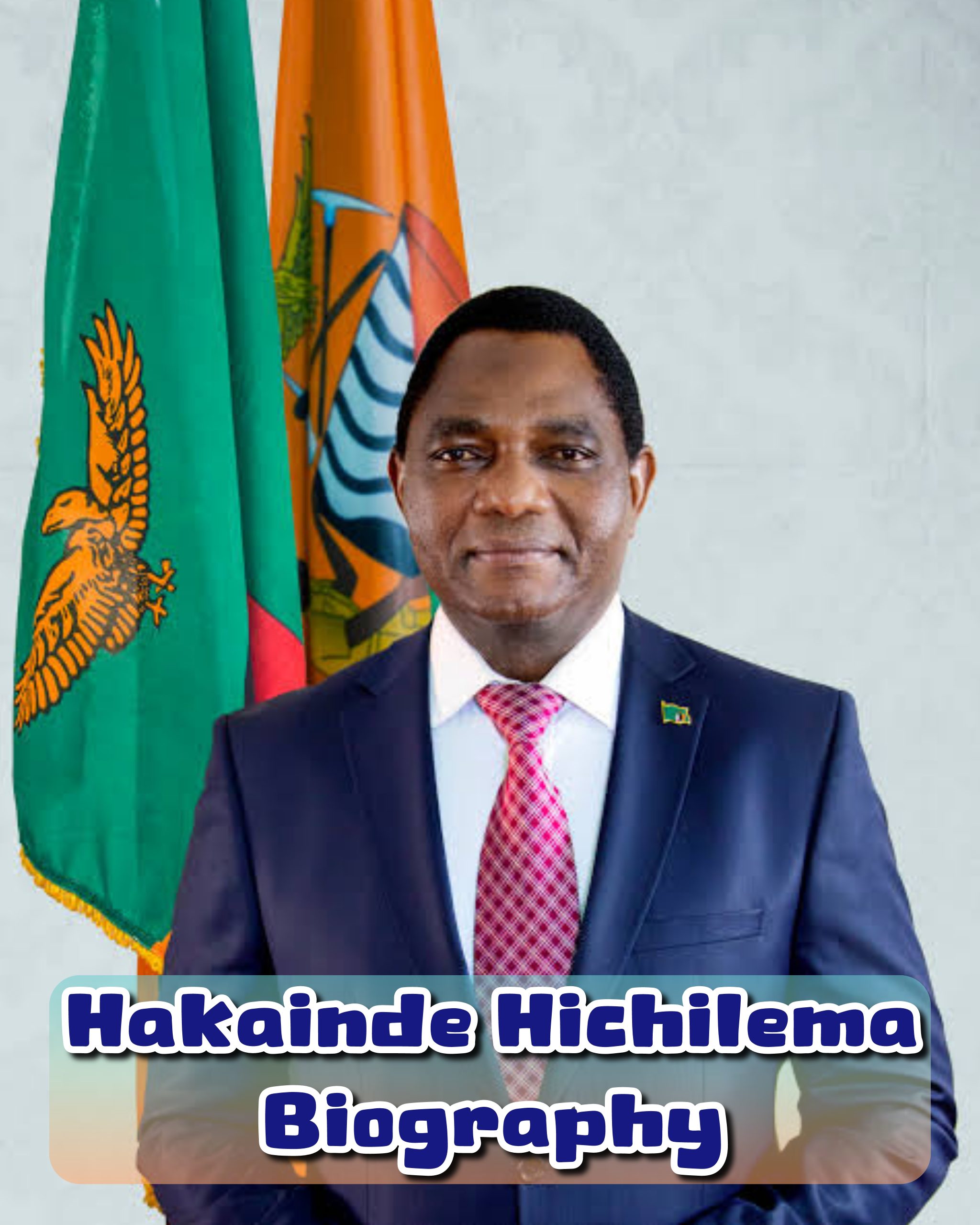
Hakainde Hichilema was born on 4 June 1962 in the Monze area of what is now Zambia’s Southern Province. He grew up in a rural environment and has often connected his early experiences with farming, cattle and village life to his later interests in agriculture and rural development. His journey from rural Zambia to the country’s highest political office has become a central part of his public biography. Zambia’s State House describes him as a businessman, entrepreneur and farmer who rose from humble beginnings.
Education played an important role in Hichilema’s early development. He obtained opportunities to pursue higher education and eventually built a professional career around economics, finance and business management. His academic background later became an important part of his public identity, particularly because economic management and private-sector development have featured prominently in his political platform.
Hichilema’s early professional interests were closely connected to business and finance. Rather than entering politics immediately after university, he developed experience in Zambia’s corporate sector and eventually rose to senior executive positions. His background in business, together with his agricultural interests, preceded his emergence as one of Zambia’s leading opposition politicians and ultimately as president.
Hakainde Hichilema Education
Hakainde Hichilema studied at the University of Zambia, where he earned a Bachelor of Arts degree in Economics and Business Administration. Available biographical records place his graduation in 1986. His university education gave him a foundation in economics and business that later shaped both his corporate career and his political focus on economic policy.
He subsequently pursued postgraduate studies in the United Kingdom at the University of Birmingham, where he earned an MBA in Finance and Business Strategy. His postgraduate training strengthened his knowledge of financial management, business strategy and corporate decision-making.
Hichilema has continued to emphasize education as a major influence on his life. In a 2025 address, he described education as foundational to who he became, while his administration has also made free education one of its major social-policy initiatives. He has additionally received honorary doctorates from institutions including Valley View University, Heriot-Watt University and the University of Zambia.
Hakainde Hichilema Career
Before entering politics, Hakainde Hichilema developed a prominent corporate career in Zambia. He became Chief Executive Officer of Coopers Lybrand Zambia in 1994 and later served as CEO of Grant Thornton Zambia from 1998. He also held positions on the boards of several major companies and chaired boards associated with institutions including Barclays Bank Zambia, Sun International and Africa Trade Insurance.
Hichilema later became increasingly active in politics and took leadership of the United Party for National Development (UPND) in 2006 following the death of party founder Anderson Mazoka. He contested Zambia’s presidency several times before winning the 2021 election. His political career included periods as a leading opposition figure, including his 2017 arrest on treason charges, which were later dropped.
In August 2021, Hichilema was elected Zambia’s seventh president, succeeding Edgar Lungu. His first administration focused on economic stabilization, debt restructuring, mining, investment and social programmes including free primary and secondary education. In the 13 August 2026 presidential election, the Electoral Commission declared Hichilema the winner with 2,965,326 votes, giving him a second five-year term.
Following his 2026 reelection, Hichilema began his second presidential term and his government outlined priorities including domestic manufacturing, energy resilience, agricultural modernization and continued social-sector investment. In September 2026, he reappointed Situmbeko Musokotwane as Finance Minister as his administration continued its economic programme.
Hakainde Hichilema Personal Life and Family
Hakainde Hichilema is married to Mutinta Hichilema, who became First Lady of Zambia after his election as president in 2021. The couple married in 1988 and have three children. Hichilema and his family have generally maintained a relatively private personal life despite his high-profile political career.
Mutinta Hichilema has accompanied her husband through his political journey and has undertaken public and humanitarian activities as First Lady. The couple are also associated with the Seventh-day Adventist Church and were invested as Master Guides in Lusaka in 2020.
Hichilema’s family life is also closely connected to his longstanding interest in agriculture. Outside government, he has been described as a major cattle rancher and farmer with interests in tourism and other sectors. His public biography therefore combines family, business, farming and political service rather than focusing exclusively on his presidency.
Hakainde Hichilema Age, Religion, Nationality, Height and Physical Appearance
Hakainde Hichilema is 64 years old as of 18 September 2026, having been born on 4 June 1962. He is Zambian by nationality and is a Christian associated with the Seventh-day Adventist Church. His exact height is not reliably documented by authoritative sources, although some biographical websites estimate it at approximately 1.85 metres (6 feet 1 inch); that figure should therefore be treated as an estimate. He has a lean, tall-looking build, closely cropped hair and is frequently photographed wearing formal suits or traditional Zambian attire at official events.
Hakainde Hichilema Social Media Presence
Hakainde Hichilema maintains a significant social-media presence through platforms used to communicate presidential activities, government programmes, national events and political messages. His Instagram account is @hhichilema, which is identified by multiple social-media tracking sources as his official account.
He is also associated with the X account @HHichilema, where he has used the platform to communicate directly with the public. His digital presence has become an important part of his public communications, particularly during elections, international engagements and presidential events.
Hakainde Hichilema Net Worth
Hakainde Hichilema’s exact net worth is not publicly verified through audited financial records, so figures circulating online should be treated as estimates rather than confirmed wealth. His financial background predates his presidency and is primarily associated with his corporate career, agriculture, cattle ranching, property and other private investments.
Some online wealth databases currently estimate Hichilema’s net worth at approximately US$50 million, while other websites publish substantially higher figures. Because these estimates are not supported by a publicly available comprehensive asset statement, there is insufficient evidence to present any single figure as his confirmed net worth.
A reasonable biography should therefore describe Hichilema as a wealthy businessman, farmer and cattle rancher rather than state an exact fortune as fact. His former executive positions at Coopers Lybrand Zambia and Grant Thornton Zambia, together with his agricultural and investment interests, provide the documented basis for his substantial private wealth. His presidential salary should not be treated as the principal source of the wealth he accumulated before entering State House.
Legacy
Hakainde Hichilema’s political legacy is closely connected to his unusually long journey from opposition politics to the presidency. After several unsuccessful presidential campaigns, he won the 2021 election and became Zambia’s seventh president. His eventual victory ended his long period as a leading opposition figure and established him as one of the country’s most prominent contemporary politicians.
His first presidential term became particularly associated with economic reforms, debt restructuring, international investment and the expansion of social programmes. His administration also introduced free education at primary and secondary levels, with the government later reporting that more than 2.5 million children returned to school following the policy.
As of September 2026, his longer-term legacy remains a developing historical subject because he has only recently begun his second term. His reelection means that his administration is now expected to pursue another five-year programme focused on areas such as manufacturing, energy, agriculture and social investment. His record will continue to be assessed through both documented economic and social outcomes and the wider debate surrounding governance and political institutions in Zambia.
Conclusion
Hakainde Hichilema’s biography reflects a career spanning economics, corporate leadership, agriculture, opposition politics and the presidency of Zambia. Born in 1962, he progressed from rural beginnings and university education to senior corporate positions before becoming UPND leader and eventually president in 2021. After winning reelection in August 2026, he entered a second presidential term with his government emphasizing economic growth, manufacturing, energy, agriculture and social investment. His family life with Mutinta Hichilema, his Christian faith, business background and long political journey remain important parts of his public profile, while his ultimate historical legacy will continue to develop throughout his second term.
Frequently Asked Questions
Who is Hakainde Hichilema?
Hakainde Hichilema is a Zambian businessman, farmer and politician who has served as President of Zambia since August 2021. He won reelection in the August 2026 presidential election.
How old is Hakainde Hichilema?
Hakainde Hichilema is 64 years old as of September 18, 2026. He was born on June 4, 1962.
Who is Hakainde Hichilema’s wife?
Hakainde Hichilema’s wife is Mutinta Hichilema. The couple married in 1988 and have three children.
How many children does Hakainde Hichilema have?
Hakainde Hichilema and his wife, Mutinta, have three children.
What did Hakainde Hichilema study?
He studied Economics and Business Administration at the University of Zambia and later earned an MBA in Finance and Business Strategy from the University of Birmingham in the United Kingdom.
What is Hakainde Hichilema’s religion?
Hakainde Hichilema is a Christian and a member of the Seventh-day Adventist Church. He and his wife were invested as Master Guides in the church in 2020.
What is Hakainde Hichilema’s nationality?
Hakainde Hichilema is Zambian. He was born in the Monze area of Zambia’s Southern Province.
What is Hakainde Hichilema’s Instagram handle?
Hakainde Hichilema’s Instagram handle is @hhichilema.
What is Hakainde Hichilema’s net worth?
His exact net worth has not been publicly verified. One current wealth database estimates it at around US$50 million, but other online estimates differ substantially, so the figure should be treated as an estimate rather than an established fact.
What is Hakainde Hichilema known for?
Hichilema is known for his career as a businessman and farmer, his leadership of the UPND, his long period as an opposition politician, and his presidency of Zambia beginning in 2021.
When did Hakainde Hichilema become President of Zambia?
Hakainde Hichilema became President of Zambia in August 2021, succeeding Edgar Lungu.
Did Hakainde Hichilema win the 2026 Zambian election?
Yes. The Electoral Commission of Zambia declared Hichilema the winner of the 13 August 2026 presidential election, after he received 2,965,326 votes.
What is Hakainde Hichilema’s political party?
Hakainde Hichilema is the leader of the United Party for National Development (UPND).
What is Hakainde Hichilema’s height?
His exact height has not been reliably confirmed by an authoritative source. Some online biographies estimate his height at approximately 1.85 metres (6 feet 1 inch), but this should be treated as an unverified estimate.
What is Hakainde Hichilema doing in 2026?
As of September 2026, Hichilema is serving his second term as President of Zambia following his August election victory. His government has outlined priorities including manufacturing, energy resilience, agricultural modernization and social investment.