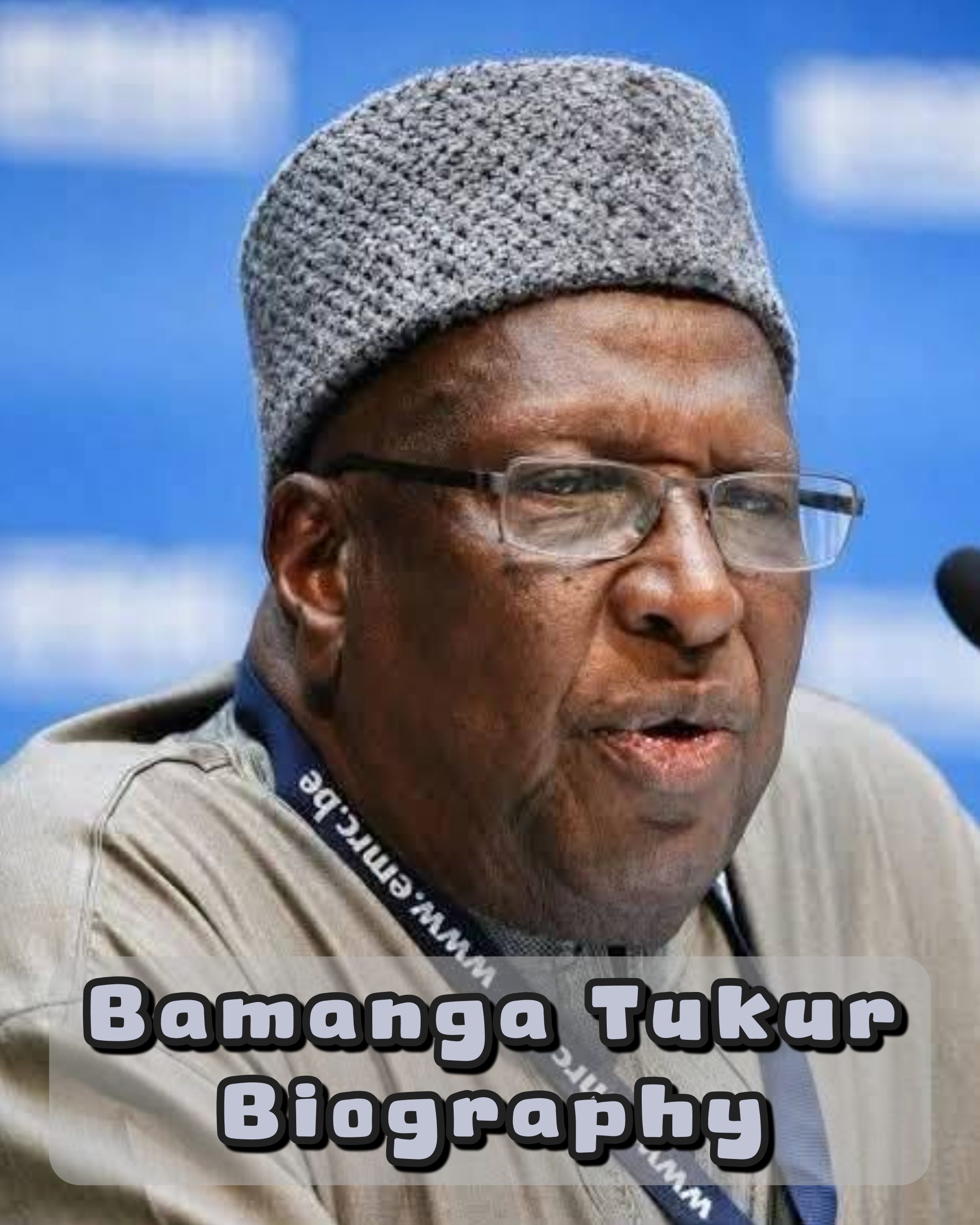
Bamanga Muhammad Tukur was born on September 15, 1935, in present-day Adamawa State, Nigeria. He grew up in a family that placed importance on both Islamic and Western education. His father was described as a teacher and headmaster who encouraged his children to acquire both Qur’anic and formal education. This upbringing later influenced Tukur’s approach to public service, administration and business.
Tukur began his formal education at Jada Elementary School, where he studied from 1946 to 1949, before attending Yola Middle School from 1949 to 1953. He subsequently attended Government Secondary School, Bauchi, where he studied from 1954 and completed his secondary education in 1957. His academic performance and interest in administration helped prepare him for his first professional appointment in the public service.
After completing secondary school, Tukur entered public service and began building the administrative experience that would eventually take him into Nigeria’s maritime industry and politics. He was initially employed in the Adamawa Native Authority as an accountant and supervisor, where he was involved in local government finances, budgets and development projects. His early experience in accounting and administration became an important foundation for his later career.
Bamanga Tukur Education
Bamanga Tukur’s higher education began at the Institute of Administration in Zaria, associated with Ahmadu Bello University, where he studied accountancy and public finance. His professional training complemented his early work in local government and gave him a foundation in financial administration and public-sector management.
He later continued his studies in the United Kingdom. His educational record includes studies at North-Western Polytechnic in London and the London School of Economics, where accounts of his education associate him with marine transportation, transportation economics and statistics. His exposure to transportation studies was particularly relevant to his subsequent career in Nigeria’s maritime sector.
Tukur also undertook postgraduate studies in the United States at the University of Pittsburgh, where biographical sources describe him as studying public administration and international relations and obtaining a master’s-level qualification. Later in life, he received an honorary Doctor of Law degree from Benue State University and was recognised as a fellow of the Nigerian Institute of Transport Technology.
Bamanga Tukur Career
Bamanga Tukur’s career began in public administration before moving into the maritime sector. He joined the Nigerian Ports Authority (NPA) as a management cadet in 1963 and rose through several positions, including Assistant Chief Traffic and Commercial Manager and Ports Manager. He eventually became General Manager and Chief Executive of the NPA, serving from 1975 to 1982. His tenure occurred during a major period of pressure on Nigeria’s ports associated with heavy importation and congestion.
After leaving the NPA, Tukur entered electoral politics. In 1983, he became governor of the former Gongola State, which then covered territory that later became Adamawa and Taraba states. His administration lasted only about three months before the military coup of December 1983 ended the Second Republic. He subsequently developed his private-sector interests and became associated with BHI Holdings and the DADDO Group of Companies.
Tukur later returned to federal government as Minister of Industries, serving during the administration of General Sani Abacha in the 1990s. He also became active in African business and economic organizations, including the African Business Roundtable and the NEPAD Business Group. In March 2012, he became National Chairman of the Peoples Democratic Party (PDP), serving until his resignation in January 2014.
Bamanga Tukur Personal Life and Family
Bamanga Tukur was a Muslim and was closely associated with Adamawa’s traditional institutions. He held the traditional title Tafidan Adamawa and was also identified with the title Wakilin Ganye. His public life therefore extended beyond elected and appointed positions into traditional and community leadership.
Tukur was married and was survived by two wives, Hajiya Fatima Tukur and Hajiya Asiya, according to reports published after his death. He was also the father of 18 children. Among the children publicly identified in biographical records are Awwal Tukur, Lami Danburam, Zainab Mustapha Jaji, Mahmud Bamanga Tukur and Mohammed Raji Fahad Tukur.
His children were also associated with professional and public activities. His death announcement was made with the consent of his children Awwal Tukur and Lami Tukur, who were specifically named in reports. Tukur had previously said that his children were educated abroad and that they were self-employed rather than working for government.
Bamanga Tukur Death and Cause of Death
Bamanga Tukur died on September 12, 2026, at the age of 90, according to his family and multiple Nigerian news reports. He died just three days before his 91st birthday. His death was announced by his former media aide, Oliver Okpala, with the consent of his children.
Reports stated that Tukur died at about noon at his residence in Abuja. His remains were to be taken to Adamawa for burial in accordance with Islamic rites. Following his death, the Adamawa State Government declared a three-day mourning period, while political and business leaders paid tribute to his decades of public service.
As of September 17, 2026, reliable reports have not publicly disclosed a specific medical cause of death. Premium Times reported that detailed circumstances surrounding his death were not immediately made public. Therefore, claims attributing his death to a particular illness or medical condition should not be treated as confirmed unless his family or another authoritative source provides that information.
Bamanga Tukur Age, Religion, Nationality, Height and Physical Appearance
Bamanga Tukur was 90 years old when he died on September 12, 2026. He was Nigerian by nationality and was identified as a Muslim. He was born on September 15, 1935, and was from present-day Adamawa State. He was also known by the traditional title Tafidan Adamawa. A reliable official record giving his exact height is not readily available, so a specific height should not be presented as confirmed. In his later years, photographs commonly showed him dressed in traditional northern Nigerian attire or formal clothing, reflecting his position as an elder statesman and traditional titleholder.
Bamanga Tukur Social Media Presence
Bamanga Tukur belonged to a generation of Nigerian public figures whose public activities largely predated the widespread use of social media. Available biographical information does not establish a verified official Instagram account belonging to him. Consequently, Instagram accounts using his name should not automatically be treated as authentic personal accounts.
There are social-media pages and accounts that may use Bamanga Tukur’s name or publish photographs and information about him, but no consistently verified personal Instagram handle has been identified in reliable sources. For biography purposes, it is therefore more accurate to state that Bamanga Tukur had no publicly verified official Instagram handle rather than attach an unverified username to him.
His public profile was instead documented extensively through newspapers, government statements, political records and archival biographies. Following his death, social-media discussions and online tributes increased, but these should be distinguished from an official account operated by Tukur himself.
Bamanga Tukur Net Worth
Bamanga Tukur’s exact net worth was not publicly disclosed through an independently verified financial statement. He accumulated professional experience across government, maritime administration, private business and African economic organizations, making it difficult to calculate his personal wealth simply from public-sector salaries. Available sources describe him as a businessman and entrepreneur who founded or chaired several companies.
His income sources over the decades included senior executive positions, business interests and leadership roles. He served as NPA chief executive, governor of Gongola State, federal Minister of Industries and chairman or executive leader of private-sector organizations. His private-sector activities included BHI Holdings and the DADDO Group of Companies, with interests described as including manufacturing, agriculture, logistics and trading.
Some websites have published numerical estimates, including an estimate of around $2 million, but such figures are not supported by an independently audited public record. Because Tukur’s business holdings, investments, properties and liabilities were not comprehensively disclosed, it is more accurate to describe his net worth as undetermined rather than present a speculative number as fact.
Legacy
Bamanga Tukur’s legacy is strongly associated with Nigeria’s maritime sector. His rise through the Nigerian Ports Authority culminated in his leadership of the organization from 1975 to 1982, a period when Nigeria was dealing with significant port congestion and the challenges created by large-scale imports. His maritime career established him as one of the country’s notable port administrators.
His political legacy covers several different periods of Nigerian history. He served as governor of the former Gongola State, later became Minister of Industries and eventually led the PDP as National Chairman from 2012 to 2014. His career consequently connected Nigeria’s Second Republic, military-era administration, later democratic politics and the country’s evolving business environment.
Beyond Nigerian politics, Tukur contributed to African business organizations and promoted private-sector participation in continental economic development. He served as Executive President of the African Business Roundtable and Chairman of the NEPAD Business Group. Following his death, President Bola Tinubu and other Nigerian leaders described him as an important elder statesman whose career covered governance, business, politics and African economic affairs.
Conclusion
Bamanga Tukur was a Nigerian businessman, administrator, politician and elder statesman whose career spanned more than five decades. From his early work in local government and his rise through the Nigerian Ports Authority to his service as Gongola State governor, Minister of Industries, African business leader and PDP National Chairman, he occupied important positions across Nigeria’s political and economic history. He died on September 12, 2026, aged 90, leaving behind two wives, 18 children and a long public record that continues to form part of the history of Nigeria’s maritime, business and political development.
Frequently Asked Questions
Who was Bamanga Tukur?
Bamanga Tukur was a Nigerian businessman, politician, administrator and elder statesman. He served as governor of the former Gongola State, Minister of Industries, Chief Executive of the Nigerian Ports Authority and National Chairman of the PDP.
How old was Bamanga Tukur when he died?
Bamanga Tukur was 90 years old when he died on September 12, 2026. He was born on September 15, 1935, three days before his 91st birthday.
When did Bamanga Tukur die?
Bamanga Tukur died on September 12, 2026, at his residence in Abuja, according to reports citing his family and former media aide.
What was Bamanga Tukur’s cause of death?
As of September 17, 2026, a specific medical cause of Bamanga Tukur’s death had not been publicly confirmed by his family or another authoritative source.
Who was Bamanga Tukur’s wife?
Bamanga Tukur was survived by Hajiya Fatima Tukur and Hajiya Asiya, according to reports published after his death.
How many children did Bamanga Tukur have?
Bamanga Tukur had 18 children, according to reports about his family. Publicly identified children include Awwal Tukur, Lami Danburam, Zainab Mustapha Jaji, Mahmud Bamanga Tukur and Mohammed Raji Fahad Tukur.
What was Bamanga Tukur’s religion?
Bamanga Tukur was a Muslim.
Where was Bamanga Tukur born?
Bamanga Tukur was born on September 15, 1935, in present-day Adamawa State, Nigeria.
Where did Bamanga Tukur study?
His education included Jada Elementary School, Yola Middle School, Government Secondary School, Bauchi, the Institute of Administration in Zaria, studies in London and postgraduate studies at the University of Pittsburgh in the United States.
Was Bamanga Tukur a governor?
Yes. Bamanga Tukur served as governor of the former Gongola State from October to December 1983 before the military takeover that ended the Second Republic.
Was Bamanga Tukur a former PDP chairman?
Yes. He served as National Chairman of the Peoples Democratic Party (PDP) from March 2012 until January 2014.
What was Bamanga Tukur’s net worth?
Bamanga Tukur’s exact net worth was not independently verified. Although some websites have published estimates, there is no publicly available audited figure establishing his personal fortune.
Did Bamanga Tukur have an Instagram account?
No verified official personal Instagram handle has been reliably established for Bamanga Tukur. Accounts using his name should therefore be treated cautiously unless independently verified.
What was Bamanga Tukur’s height?
A reliable public record confirming Bamanga Tukur’s exact height has not been identified. Specific figures circulating online should therefore be treated as unverified.
What traditional title did Bamanga Tukur hold?
Bamanga Tukur held the traditional title Tafidan Adamawa and was also associated with the title Wakilin Ganye.