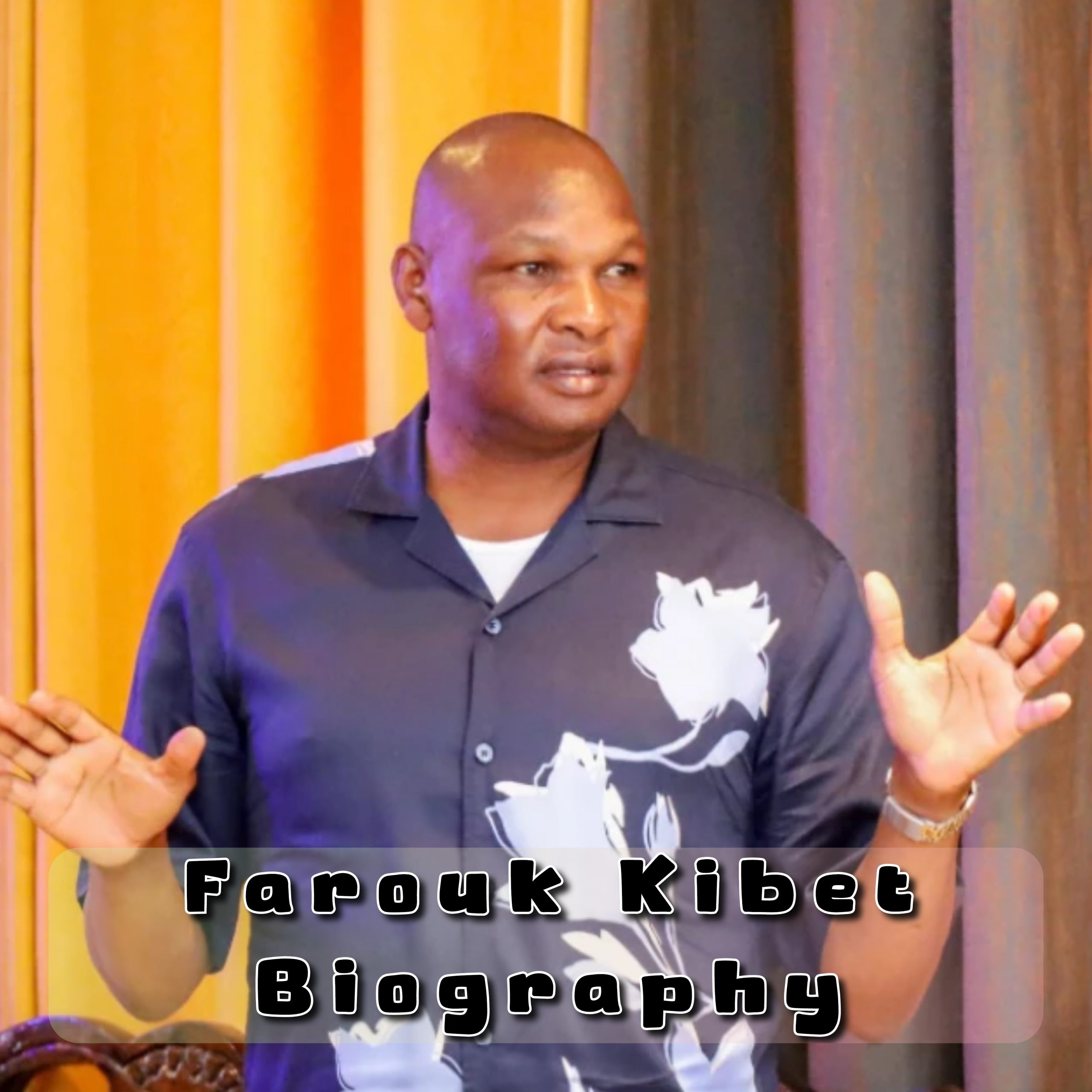
Farouk Teigut Kibet is a prominent Kenyan political strategist and longtime aide of President William Ruto, known for his influential behind-the-scenes role in Kenyan politics. Born on March 31, 1965, in Kapkechui village in Turbo Constituency, Uasin Gishu County, Kibet has spent decades building a reputation as a political organiser, strategist and trusted member of Ruto’s inner circle. As of September 2026, he is 61 years old if the widely reported date of birth is used.
Kibet’s public profile has grown substantially over the years because of his close relationship with William Ruto. His political journey began in grassroots politics during the KANU era before he became closely associated with Ruto. He later served as a councillor in the former Wareng County Council and eventually became one of the most recognisable figures around Ruto during his periods as an MP, Deputy President and President of Kenya.
In 2026, Farouk Kibet’s political future has become an important subject of discussion in Uasin Gishu County. His increasing grassroots activities in Turbo Constituency, including meetings with local leaders, education programmes, church activities and community empowerment initiatives, have fuelled speculation that he could contest the Turbo parliamentary seat in the 2027 Kenyan general election. As of September 9, 2026, however, reports indicate that he has not formally declared his candidacy.
Farouk Kibet Early Life
Farouk Teigut Kibet was born on March 31, 1965, according to several biographical records, in Kapkechui village, Chepsaita, Turbo Constituency, Uasin Gishu County, Kenya. His home area is located in the Rift Valley region, an area that has played an important role in Kenyan politics and particularly in William Ruto’s political base. Some older publications have given different estimates for his birth year, but the March 31, 1965 date is the most consistently cited in recent profiles.
Kibet was raised in a rural environment and came from a family associated with farming. His late father, Mzee Paul Teigut, was described in biographical accounts as a respected maize farmer in the area. Paul Teigut died in November 2018, and his funeral attracted several prominent political figures, reflecting the family’s connections within the region.
Growing up around Turbo and later becoming involved in Eldoret’s political environment exposed Kibet to grassroots mobilisation from an early age. By the 1990s, he was reportedly active among KANU youth activists in Eldoret, where he interacted with politicians and community leaders. This early experience helped him develop the political networks and organisational skills that would later become central to his career.
Farouk Kibet Education
Farouk Kibet’s formal educational background remains one of the least documented aspects of his biography. Available reports consistently associate him with Chepkemel Primary School in Turbo Constituency, where he is said to have received his primary education.
There is no reliable, independently verified public record clearly identifying the secondary school he attended or confirming a university degree. Several biographies have speculated about his education, while others suggest that his later political knowledge was acquired largely through practical experience, grassroots activism and years of working within political circles. The Standard has similarly noted that his academic background is unclear.
Kibet’s career therefore illustrates a different route to political influence from the traditional university-to-politics pathway. His understanding of political networks, personalities, logistics and grassroots mobilisation appears to have been developed primarily through years of direct political involvement. His ability to maintain relationships across political circles eventually became one of his most valuable assets.
Farouk Kibet Career
Farouk Kibet began making his mark in Kenyan politics during the 1990s, when he was associated with the Kenya African National Union (KANU) and its grassroots structures in the Rift Valley. He became known as a political activist and organiser in Eldoret and Turbo, working within a political environment dominated by KANU during the final years of Daniel arap Moi’s presidency.
His relationship with William Ruto became particularly important during the late 1990s. Accounts of their political history describe Kibet as initially being on the opposing side before eventually moving into Ruto’s camp. Their political relationship subsequently became extremely close and endured through Ruto’s rise from MP to Cabinet minister, Deputy President and eventually President of Kenya.
In 1997, Kibet was nominated as a councillor in the then Wareng County Council, a position he held until around 2003 according to biographical accounts. His work in local politics expanded his network and gave him greater experience in organising political activities and dealing with local leaders.
Kibet subsequently became one of William Ruto’s closest aides. During Ruto’s tenure as Deputy President, Kibet was widely described as an important gatekeeper and organiser around Ruto’s office. Reports portrayed him as someone who monitored political engagements, managed access and paid close attention to the personalities and alliances surrounding his boss.
After Ruto became President in 2022, Kibet continued serving within his inner circle. His influence has frequently been discussed by Kenyan media, with supporters portraying him as a highly effective organiser and loyal strategist while critics have questioned the extent of influence exercised by an unelected presidential aide. His role has nevertheless made him one of the best-known behind-the-scenes political figures in Kenya.
A major development in Kibet’s career came in 2026, when his grassroots activities in Turbo began attracting increased attention. On September 8, 2026, he hosted MCAs and other political aspirants from all six wards of Turbo Constituency at his Chepsaita residence. The meeting focused on development, voter registration and the political future of the constituency.
The meetings have intensified speculation that Kibet may seek the Turbo parliamentary seat in 2027. He has not formally declared his candidacy, but his growing grassroots presence, community programmes and slogan “Turbo Kwanza, Mambo Baadaye” have strengthened speculation about an eventual elective political debut.
Beyond politics, Kibet has developed a reputation for community involvement. He has been associated with the Chepsaita Cross Country Run, educational scholarships, church fundraising, medical initiatives, youth programmes and other development activities. Recent reports say programmes associated with his grassroots work have benefited thousands of learners.
Farouk Kibet Personal Life and Family
Farouk Kibet is known for keeping his personal life away from the public spotlight. He is widely reported to be married, but the identity of his wife has not been reliably established in reputable public reporting. Consequently, claims naming his wife should be treated cautiously unless supported by a direct and credible source. There is also no reliable evidence that he currently has a fiancé, as he is generally described publicly as a married man.
Kibet is reported to have at least one son, commonly identified in biographical sources as Farouk Kibet Jr. However, very little verified information is publicly available about his children, and Kibet has generally avoided making his family life a subject of political or media attention.
His father, Mzee Paul Teigut, is one of the better-documented members of his immediate family. Paul was described as a prominent maize farmer from the family’s home area and died in November 2018. Kibet’s family background and connection to the Turbo community remain relevant to his political identity, particularly as his grassroots activities have expanded ahead of the 2027 election cycle.
Farouk Kibet Age, Religion, Nationality, Height and Physical Appearance
Farouk Kibet is 61 years old as of September 9, 2026, based on the reported date of birth of March 31, 1965. He is Kenyan by nationality and is associated with the Kalenjin community of the Rift Valley. Reports also describe him as a Christian and as someone who has actively supported churches and religious fundraising initiatives in his home region.
His exact height has not been officially documented by a reliable source. Some online biography sites list him at approximately 5 feet 9 inches (1.75 metres), but this figure should be regarded as an estimate rather than a verified measurement. Public photographs generally show Kibet as a medium-to-tall adult Kenyan man who frequently appears in formal shirts, suits or other smart political attire, with a closely cropped hairstyle and a distinctive mature appearance.
Farouk Kibet Social Media Presence
Farouk Kibet maintains a relatively low-key public presence compared with many Kenyan politicians. His political activities and community engagements are more commonly reported through news organisations and local political platforms than through a heavily publicised personal social-media brand. Recent reports have nevertheless referred to posts made through his official social-media pages, particularly concerning voter registration and development activities in Turbo.
A social-media account using the name Farouk Kibet operates on X under the handle @faroukkibet, but the available public record does not independently establish that this account belongs to President Ruto’s aide. Searches conducted for this updated biography did not identify a reliably verified official Instagram handle for Farouk Teigut Kibet. For that reason, an Instagram username should not be invented or attributed to him without stronger verification.
Farouk Kibet Net Worth
Farouk Kibet’s exact net worth is not publicly known. Unlike elected politicians and senior public officials whose salaries and assets may be subject to formal public scrutiny, his precise earnings from his work as a presidential aide, political strategist and any private interests have not been comprehensively disclosed. Several online biographies have nevertheless attempted to estimate his wealth.
One commonly repeated estimate places Kibet’s net worth at approximately KSh 300 million, or around US$2 million, while other websites have published substantially different figures. Because these numbers are not supported by audited financial statements or a verified asset declaration, the KSh 300 million figure should be treated only as a media estimate, not an established fact.
His potential sources of income are believed to include long-term political work, advisory or strategic activities and private business interests. However, his exact official salary as a presidential aide has not been reliably disclosed in public sources, so it would be misleading to calculate his net worth directly from a supposed government salary. A cautious biography can therefore describe his wealth as estimated in the hundreds of millions of Kenyan shillings, while emphasising that the true figure remains unknown.
Legacy
Farouk Kibet’s emerging legacy is closely connected to his extraordinary longevity within William Ruto’s political circle. For decades, he has remained near one of Kenya’s most powerful politicians, surviving major political transitions and continuing to play an important role as Ruto moved from MP to Cabinet minister, Deputy President and President. His loyalty and political discretion have become central elements of his public reputation.
His legacy is also increasingly connected to grassroots development. Through the Chepsaita Cross Country Run, education scholarships, church support, youth and women’s empowerment programmes and other community activities, Kibet has developed a public identity beyond his role at State House. Recent reports say his initiatives have supported more than 5,000 learners, while his involvement in local development has strengthened his visibility in Turbo.
The next chapter of Kibet’s legacy could depend heavily on whether he enters electoral politics. His growing involvement in Turbo politics in 2026 has created expectations that he may attempt to turn his long experience as a behind-the-scenes strategist into an elected political career. If he contests the Turbo seat in 2027, his campaign would represent a significant transition from presidential aide and political operator to frontline politician. As of September 9, 2026, however, his candidacy remains unconfirmed.
Recent 2026 Developments
The most important current development surrounding Farouk Kibet is his increasing political activity in Turbo Constituency. On September 8, 2026, he met MCAs and other aspirants from all six wards of Turbo at his Chepsaita home. He said the meeting included discussions about increasing voter registration and encouraging residents to participate in shaping the future leadership of Uasin Gishu County.
Kibet’s possible 2027 parliamentary bid comes after several years of expanding grassroots programmes. His community work, including the Chepsaita Cross Country initiative, church fundraisers, education support and empowerment activities, has made him increasingly visible among voters in his home constituency. Despite the speculation, he has not yet formally announced that he will contest the Turbo MP position.
There were also misinformation campaigns about Kibet in 2026. In March and April, documents circulated online claiming that President Ruto had expelled him from State House and that the Directorate of Criminal Investigations had declared him wanted. Africa Check found no evidence supporting the expulsion claim and separately established that the alleged DCI wanted notice was fake. These developments are important when assessing claims about Kibet’s current status.
Conclusion
Farouk Teigut Kibet has built one of the most unusual political careers in contemporary Kenya, rising from grassroots politics in Turbo and Eldoret to become a trusted longtime aide of President William Ruto. Although much of his personal life, education and finances remain private, his political influence, community activities and close relationship with Ruto have made him a prominent figure behind the scenes. With his grassroots mobilisation intensifying in Turbo in 2026 and speculation growing about a possible 2027 parliamentary bid, Farouk Kibet’s next political move could determine the next major chapter of his career and public legacy.
Frequently Asked Questions About Farouk Kibet
Who is Farouk Kibet?
Farouk Kibet, whose full name is Farouk Teigut Kibet, is a Kenyan political strategist and longtime aide of President William Ruto. He is known for his close relationship with Ruto and his influential behind-the-scenes role in Kenyan politics.
How old is Farouk Kibet?
Farouk Kibet is 61 years old as of September 9, 2026, based on the widely reported date of birth of March 31, 1965.
When was Farouk Kibet born?
Farouk Kibet was reportedly born on March 31, 1965, in Kapkechui village, Turbo Constituency, Uasin Gishu County, Kenya.
Where was Farouk Kibet born?
Farouk Kibet was born in Kapkechui village in Turbo Constituency, Uasin Gishu County, Kenya, in the Rift Valley region.
Who is Farouk Kibet’s wife?
Farouk Kibet is widely reported to be married, but his wife’s name has not been reliably disclosed in reputable public sources. He keeps his family life private.
Does Farouk Kibet have children?
Yes. Public biographical sources report that Farouk Kibet has children, including at least one son identified as Farouk Kibet Jr. Detailed information about his children is not widely publicised.
Who is Farouk Kibet’s father?
Farouk Kibet’s father was Mzee Paul Teigut, a maize farmer from the family’s home area. Paul Teigut died in November 2018.
What did Farouk Kibet study?
Farouk Kibet is reported to have attended Chepkemel Primary School. Reliable public information about his secondary and university education is limited, and no verified university degree has been clearly established.
What is Farouk Kibet’s job?
Farouk Kibet is best known as a political strategist and longtime aide to President William Ruto. He has been associated with managing political engagements, access, organisation and grassroots mobilisation around Ruto.
Is Farouk Kibet running for Turbo MP in 2027?
Farouk Kibet is widely being discussed as a possible candidate for the Turbo parliamentary seat in the 2027 Kenyan general election. However, as of September 9, 2026, he has not formally declared his candidacy.
What is Farouk Kibet’s net worth?
Farouk Kibet’s exact net worth is unknown. Some online sources estimate it at approximately KSh 300 million (about US$2 million), but this figure has not been independently verified through publicly available financial records.
What is Farouk Kibet’s religion?
Farouk Kibet is generally described in public biographies as a Christian. He has also been associated with church fundraising and community religious activities in the Rift Valley.
What is Farouk Kibet’s nationality?
Farouk Kibet is Kenyan. He was born and raised in Uasin Gishu County in Kenya’s Rift Valley region.
How tall is Farouk Kibet?
Some online biography sites estimate Farouk Kibet’s height at approximately 5 feet 9 inches (1.75 metres). However, there is no reliable official source confirming his exact height, so this figure should be regarded as an estimate.
What is Farouk Kibet’s Instagram handle?
A reliably verified official Instagram handle for Farouk Teigut Kibet could not be confirmed as of September 9, 2026. An X account using the name Farouk Kibet and the handle @faroukkibet exists, but its connection to Ruto’s aide has not been independently established.
Is Farouk Kibet still working with William Ruto?
Yes. Recent September 2026 reporting continues to identify Farouk Kibet as President William Ruto’s aide and reports on his ongoing political and grassroots activities. Claims that he had been expelled from State House in 2026 were found by Africa Check to lack evidence.
What is Farouk Kibet known for?
Farouk Kibet is best known for his longstanding relationship with William Ruto, political strategy, grassroots mobilisation, presidential access and community-development activities. His role has made him one of Kenya’s most influential behind-the-scenes political figures.